
Coinbase Delisting on August 26: Ten Perpetual Futures Go, Open Positions Are Settled
Coinbase is removing ten perpetual futures from trading on August 26, 2026, among them the contracts on The Sandbox, Axie Infinity and Blur. Anyone leaving a position open does not sell it themselves but is settled at an average price from the final hour of trading.




Which topics should we dive deeper into?
Select what genuinely interests you. Your picks feed directly into our editorial planning.
Crypto news that's actually worth your time.
Weekly. 60 seconds. Carefully curated by our editors: no hype, no promo flood, no spam.
Coinbase is withdrawing ten perpetual futures from trading on August 26, 2026. The contracts affected are those on Memecoin (MEME), The Sandbox (SAND), Moonbirds (BIRB), Blur (BLUR), Katana (KAT), SPX6900 (SPX), Zora (ZORA), Axie Infinity (AXS), Gensyn (AI) and LayerZero (ZRO). Anyone who leaves a position open does not sell it themselves: Coinbase settles it automatically, at an average price taken from the final hour of trading. Close it yourself and you set the price; wait and it is assigned to you. That is the whole difference, and on a thinly traded contract it decides real money.
The delisting is part of a series. In June, Coinbase ended six perpetual futures in the same way, and nine more follow on September 3. The procedure is therefore not an isolated case but a recurring part of an exchange's product maintenance. Anyone trading derivatives should have understood the process once, rather than learning it the first time round on their own account.
Coinbase Delisting on August 26: These Ten Perpetual Futures Are Going
According to the announcement, which several industry outlets reproduce consistently, trading ends in ten perpetual contracts. These are without exception smaller assets from the gaming, NFT, memecoin and infrastructure segments. The full list in the exchange's own notation: MEME-PERP, SAND-PERP, BIRB-PERP, BLUR-PERP, KAT-PERP, SPX-PERP, ZORA-PERP, AXS-PERP, AI-PERP and ZRO-PERP.
Liquidity as the Deciding Criterion
The common denominator is liquidity. Coinbase justifies such steps with an ongoing review of trading volume, market quality and regulatory requirements. A contract in which barely anyone trades is expensive for an exchange and dangerous for investors: the spread between bid and ask widens, and a larger order moves the price against whoever places it.
Important for context: the delisting concerns the futures contract, not the coin. What that means in detail is set out further down.
Perpetual Futures Explained: What Sets a Perp Apart From a Classic Future
A perpetual future, perp for short, is a futures contract without an expiry date, used to bet on the price of an underlying without owning that underlying. A classic future expires on a fixed day and is settled then. A perp runs on indefinitely as a matter of principle.
So that the price of a perpetually running contract does not drift away from the spot market, there is the funding rate. The funding rate is a periodic payment between the long and short sides that pulls the contract price towards the index price. If the perp sits above the index, long positions pay short positions, and the other way round.
The index price in turn is a reference price for the underlying composed from several trading venues. It is the bridge between derivative and spot market and, as will be seen shortly, also the basis of settlement on delisting. How this mechanism looks on decentralised venues we described in detail in the piece What is a perp DEX; a market comparison of the platforms is in the hub Best perp DEXs.
Two things follow for practice. First, a perp carries leverage, and leverage magnifies every price move in both directions. Second, the result depends not only on the price but also on the running funding payments, which over weeks become a cost block of their own.
Forced Settlement Instead of a Sale: How Coinbase Closes Open Positions
When a perpetual future is delisted there is no buyer to whom the position is handed over. The exchange ends the contract and credits or debits everyone involved with the calculated value. The announcement states that all positions still open after the suspension will be settled automatically.
The difference from selling yourself is greater than it sounds. In a sale you choose the moment and the order type; you can work with a limit and wait. In a forced settlement both fall away. The price is fixed as soon as trading ends, and you find out what it was afterwards.
Why an Open Order Is No Substitute for Closing
An unexecuted limit order offers no protection. As long as nobody trades on the other side, the order merely sits in the order book and expires at the end along with the contract. Only an executed order closes the position. In the final hours before a delisting, liquidity typically thins out because market makers withdraw as well. A limit that was still realistic yesterday can be out of reach today.
In earlier rounds Coinbase expressly reserved the right to suspend trading early as well and to set the final settlement price at a level it considers appropriate. Anyone stretching the deadline to the last minute is therefore relying on a moment the exchange is permitted to move.
We know the same pattern from the spot market: in the Kraken delisting with forced liquidation the exchange realised remaining holdings on its own initiative after the deadline had passed.
Settlement Price by Index: Why the Final 60 Minutes Decide the Outcome
The final settlement price is not a closing price and not the last traded price. It is the average index price of the 60 minutes immediately before trading is suspended. This construction has a good reason and an unpleasant side effect.
The good reason: an average over an hour is harder to manipulate than a single price in one second. In contracts with a thin order book in particular, a closing price would be an invitation to anyone wanting to push the last candle their way.
The side effect: the average also smooths out what would work in your favour. If the underlying rises sharply in the last half hour, you only get part of it. That is why the outcome of a forced settlement is almost never identical to the price you see on screen when trading ends. A premium or discount of a few percent is already a noticeable amount in a leveraged contract.
In practice that means anyone wanting to control the outcome closes well before the cut-off date, not in the final hour. Because it is precisely in that final hour that the price is formed at which everyone else is settled.
Funding Rate Set to Zero: What the Last Payment Period Means for You
One detail of the announcement is lost in most summaries: the funding rate for the last payment period is set to zero. For the final period before the delisting, then, no payment flows between the long and short sides any more.
That is a relief for the side that would have paid last, and a lost inflow for the other side. Above all, though, it takes an incentive out of the market: without a funding payment there is no longer any reason in the closing phase to trade the contract price towards the index. The perp can diverge from the index more strongly in the final hours than it otherwise would.
Because settlement nevertheless hangs on the index, anyone still trading in this phase is trading against a price that is not decisive for the final result at all. That is the second reason not to schedule your exit for the close.
 Crypto exchanges compared
13:00 UTC or 21:00: Why the Time Given in the Reports Differs
On the time of day the accounts differ, and that belongs in the open rather than smoothed over. Some reports give “around 21:00 on August 26”, others 13:00 UTC. Both figures come from the same announcement.
The most likely explanation is a time zone: 21:00 in East Asia corresponds to 13:00 UTC. The pattern of the neighbouring rounds supports this. The June round with six contracts ended at around 13:00 UTC, and 13:00 UTC is likewise given for the September round. This cannot be proved from the available sources; what is documented is the date, not the minute.
For you this has one plain consequence. What counts is the information in your own account and in the notice the provider sends you directly. A time of day from a news report is a guide, not an undertaking. When two figures are eight hours apart, you plan your exit before the earlier one, not before the later.
Coinbase Futures in Germany: Who Can Trade These Contracts at All
Without the European angle this would be a story for American accounts. But the angle exists: Coinbase extended its futures offering in the spring of 2026 to users of Coinbase Advanced in 26 European countries, Germany expressly included. The exchange announced this step in a post of its own (Futures Contracts Now Available on Coinbase in Europe), and trade media reported it independently.
MiFID or MiCA: Which Supervision Applies to Derivatives
The offering is carried by a European company holding an authorisation from the Cypriot securities regulator CySEC, which takes effect throughout the European Economic Area via the MiFID II passport. That is the decisive legal point of this article: such contracts are financial instruments under MiFID and therefore precisely do not fall under the European crypto regulation MiCA. Anyone sorting providers by their authorisation will find the systematics in the hub Best regulated crypto exchanges; classic broker offerings sit side by side in the hub Best crypto brokers.
Whether any particular one of the ten contracts was actually tradable in a given account cannot be established from outside. The product range differs by country, account type and activation. The reliable answer is in the contract list of your own account, not in a press release.
Spot Stays Tradable: What the Delisting Does Not Mean for SAND, AXS and Blur
A misunderstanding is expensive at this point. The delisting concerns the perpetual contracts alone. The coin itself does not thereby disappear from Coinbase or from other venues, and holdings in your own wallet are unaffected.
Anyone holding SAND, AXS or BLUR in the spot market need do nothing on account of this date. Something else applies to a delisting in the spot market, where withdrawal deadlines genuinely run. We took the difference apart in Delisting: what happens when a token can no longer be traded.
A second point for context, because the two coincide in time: The Sandbox had an incident at its cross-chain bridge in August, independently of this, after which the project shut down the bridges to two networks. We described the case in The SAND bridge exploit at The Sandbox. A connection with the Coinbase decision is not documented in the available publications, and we are not constructing one here.
Derivatives and Tax: Why Section 20 of the German Income Tax Act Applies and Not the Holding Period
For German investors the tax classification is the most important difference between a perp and a purchased coin, and it is regularly confused.
A forward transaction is a contract in which the gain arises from a cash settlement or from the value of a variable reference figure, not from owning an asset. That is exactly what the law says: under section 20 subsection 2 sentence 1 number 3 of the German Income Tax Act, the gain on forward transactions through which the taxpayer obtains a cash settlement or an amount of money or advantage determined by the value of a variable reference figure counts as income from capital assets.
Three things follow from this. First, the separate tariff for investment income under section 32d of the Act applies instead of your personal tax rate. Second, there is no one-year holding period here: the tax exemption after a year that many know from Bitcoin and Ethereum held privately comes from a different provision and does not apply to forward transactions. Third, forced settlement is treated for tax purposes like a closing-out, because what matters fiscally is the ending of the transaction, not its cause.
Annex KAP: What to Do Without a Domestic Paying Agent
With a provider that has no domestic paying agent, nobody withholds tax automatically. The income then belongs in Annex KAP of your tax return, and the burden of proof is on you. A clean transaction history is not a convenience here but the basis of the return. Which tools evaluate derivative positions cleanly at all is set out in the hub Crypto tax tools and portfolio trackers. How a forced ending works for tax purposes in the spot market we set out in Forced sale on a crypto exchange and tax.
Loss Offsetting on Forward Transactions: What Our Own Look at the Statute Shows Today
Forced settlements hit positions in the red disproportionately often, because those in profit mostly close of their own accord. That makes the question of what happens to a loss from a forward transaction an important one.
cryptoticker.io compiled this analysis itself on August 26, 2026. Method: we retrieved the official full text of section 20 of the German Income Tax Act at gesetze-im-internet.de and counted through subsection 6 sentence by sentence. Exactly one provision was examined, in the version published today.
Result: subsection 6 contains five sentences. Sentence 1 bars the offsetting of losses from capital assets against other categories of income, sentence 2 permits a carry-forward into later years within investment income, sentence 4 restricts share losses to share gains, sentence 5 requires a loss certificate for the offsetting. A separate offsetting circle for forward transactions no longer appears in it, and the character string for the former ceiling is nowhere to be found in the entire section.
This matches the legal position that tax portals have described since the 2024 Annual Tax Act: the separate loss-offsetting circle for forward transactions with its limit of 20,000 euros a year was abolished, retroactively and in all open cases. Losses from a perp have since been offset against investment income generally, not only against gains of the same kind.
What this analysis does not show belongs here too: the count says nothing about how an individual provider implements this in its annual tax statement, it is a snapshot of today's statutory text, and it is no substitute for tax advice in an individual case. What we examined was the wording of the law, not its application to your account.
 Crypto tax tools compared
Not the First Round: Coinbase Settled Six Perpetual Futures in June
On June 24, 2026 Coinbase ended six perpetual contracts: Spark (SPK), Zama (ZAMA), Gunz (GUN), Turbo (TURBO), Moo Deng (MOODENG) and Nomina (NOM). The procedure was identical to the present one. Open positions were settled automatically at the moment of suspension, and the settlement price came from the average index price of the preceding 60 minutes.
This repetition is the real news for investors. A procedure an exchange applies twice a quarter is routine, and routine can be prepared for. Anyone holding perpetual futures on smaller assets should assume that a delisting is possible at any time, and choose their position size accordingly.
Next Round on September 3: Kaspa, POPCAT and Seven More Contracts
The next date is already set. On September 3, 2026, at 13:00 UTC according to the available reports, Coinbase is withdrawing nine further perpetual futures: Espresso (ESP), DoubleZero (2Z), RedStone (RED), Aevo (AEVO), Aethir (ATH), Kaspa (KAS), Sky (SKY), Popcat (POPCAT) and Brett (BRETT).
Anyone exposed in one of these contracts therefore still has a good week and should use it rather than steering towards the cut-off date. The point from the section on timing applies here too: the figure in your own account trumps every report.
Reading a Delisting Announcement Properly: How to Spot a Hard Deadline
Delisting notices look alike and mean different things. Four points separate the harmless announcement from the expensive one.
First, the kind of ending. Does only trading end, or does the possibility of withdrawing the asset end as well? With a derivative as here there is nothing to withdraw, the position is settled in money. With a spot delisting, by contrast, a separate withdrawal deadline often runs on after trading closes, as recently in the Bitfinex delisting with a withdrawal deadline.
Second, the intermediate stages. Many exchanges switch into a mode before the end in which positions can only be reduced. Anyone missing that suddenly finds themselves in an account where a hedge can no longer be built.
Third, the price rule. Does the notice state an averaging window, a closing price or a reservation of discretion by the exchange? That decides how much control you have left at all.
Fourth, the scope. Does the measure hit the coin or only one product on it? This distinction is almost always lost in headlines. How differently it can turn out is shown by two current cases in the spot market: the OKX delisting of MAJOR and J and the Binance delisting of ICX, SCRT and STORJ.
Checking the Coinbase Delisting: Your Key Takeaways
- Look at the contract list today, not at the headline. Open your derivatives account and check whether one of the ten positions is open. If something is there, close it well clear of the deadline, because the settlement price is formed in the final hour. If you are thinking about your trading venue anyway while you are at it, the market comparison in the hub Best crypto exchanges helps.
- Place your provider's authorisation. With European providers, derivatives run under a securities authorisation pursuant to MiFID, spot trading by contrast under MiCA. Each means different rights and different supervision. Which provider operates under which authorisation is set out in the hub Best regulated crypto exchanges.
- Secure the settlement records for your tax return. Download the settlement documents and the account statement while the contract can still be found in the account. Gains and losses from forward transactions belong in Annex KAP, and without records they become an estimate. Suitable evaluation tools are in the hub Crypto tax tools and portfolio trackers.
(As of August 26, 2026. This article is not investment advice. Prices and fee structures change; check the terms with the provider before you buy.)
Transparency note: This article was produced with the assistance of artificial intelligence and reviewed by our editorial team before publication. All figures and claims were checked against the primary sources linked in the text. The feature image was generated with AI.
Related articles
- Funding Rate on Perpetual Futures: How to Calculate What Your Position Really Costs
- Coinbase International Exchange merges into Deribit: what happens to open positions and collateral
- Shorting Quant: Where QNT Can Be Traded After Its Sixfold Run and What It Costs
- NEAR Falls Almost 8 Percent After a 62 Percent Week: What to Check on Perps, Buying Route and Holding Period
- Open Interest Climbs After the Short Squeeze: Why the Longs Are Paying Now
Which topics should we dive deeper into?
Select what genuinely interests you. Your picks feed directly into our editorial planning.
Crypto news that's actually worth your time.
Weekly. 60 seconds. Carefully curated by our editors: no hype, no promo flood, no spam.

September 9, 2026 1:26 PM

Bitcoin Options Expiry of September 25: What Holders of Leveraged Positions Should Know in Hindsight
Recap as of September 27, 2026: Bitcoin options worth $14.39 billion were due to expire on September 25, alongside Ether options worth $1.81 billion. This article describes the situation before that date, our own count of the derivatives market and what holders of leveraged positions should have checked at the time.

August 11, 2026 5:24 PM

Perp DEX Explained: How Funding Rate, Liquidation and Taxes Work on Perpetual Futures
Perpetual contracts run without an expiry date, and in exchange you pay funding for as long as you hold them. This article explains the mechanics behind perp DEX, the liquidation thresholds and the regulatory and tax framework in Germany.
September 19, 2026 7:19 PM

Binance Launches FX Perpetuals With 100x Leverage: What Is Allowed in Germany
Binance launches a perpetual future on the US dollar and the Brazilian real with up to 100x leverage on September 21. For German retail investors, what counts is less the announcement than the question of which leverage is permitted here and which tax rule applies to futures transactions.
September 30, 2026 10:13 PM
Robinhood Announces Perp Futures With 10x Leverage for US Customers: “Markets don’t work without traders”
Robinhood plans to offer eligible US customers perpetual futures on eight cryptocurrencies, with up to 10x leverage on Bitcoin and Ethereum. Nothing is tradable yet, and a different leverage cap applies in Europe.

May 31, 2026 12:25 PM
HYPE Token Hits $70 All-Time High: 4 Reasons for the Surge
Hyperliquid ($HYPE) hit a $70 all-time high, entering the top 10 cryptos. Here are the regulatory changes and revenue fundamentals driving the pump.
August 22, 2026 10:23 PM

XRP Explodes 40 Percent in Seven Days: Now the $1.50 Mark Counts
XRP jumps 40 percent in a week to $1.40, its highest level since May. Open interest, funding and the long-short ratio show how much fuel the rally has left and which levels count over the weekend.

September 30, 2026 4:36 PM

Dogecoin Price Prediction: 28 Billion DOGE Make $0.098 the Level That Decides
Dogecoin trades at around $0.0973 on Wednesday midday and keeps failing at the zone at $0.098, where roughly 28 billion DOGE changed hands. At the same time $1.50 billion sits in open leveraged positions, and the tax authority's one-year period runs separately for every purchase.
September 24, 2026 1:34 PM
Cardano Slides Below $0.24: What ADA Holders Should Check on Leverage, Liquidation and Holding Period
Cardano has given back its move above $0.25 and trades around seven percent below the high of the past 24 hours. What that means for leveraged positions, the holding period of your tranches and the buying route under MiCA.
November 11, 2025 10:25 AM

US Government Reopens After 41 Days – What It Means for Bitcoin, Crypto, and Global Markets
The US government reopens after a record 41-day shutdown. Rate cuts, QT ending, and new crypto laws could reshape markets—here’s what investors must know.
May 22, 2024 7:27 PM

SEC 'APPROVES' Ethereum Spot ETF: Will It Happen TOMORROW?
May 23rd is the anticipated day for SEC to announce its decision concerning ETH spot ETF. In less than 24 hours, an approval, rejection, or postponement will be among the top headlines, but what do analysts foresee?
September 30, 2026 4:45 PM
CFTC Registers Coinbase Clearing for Fully Collateralised Derivatives: What Matters for Investors in Europe
The US regulator CFTC registered Coinbase Clearing as a clearing house on September 28, but only for fully collateralised contracts without leverage. For investors in Europe another decision counts for more: ESMA's CFD classification of perpetual futures.
September 30, 2026 1:29 AM
Goldman Sachs Brings a $105 Billion Fund to an Avalanche Chain: What Investors Need to Know
The broker tZERO is opening the Goldman money market fund FTIXX to qualified US firms through the settlement network Lynq, which runs on a private Avalanche chain. We show why the fund is expressly not being tokenised and what the AVAX price jump is worth to you in Europe.
September 28, 2026 10:12 PM

Dogecoin Futures Hold $1.5 Billion in Open Leverage: What Investors Need to Know
The Dogecoin price fell 4.2 percent on Monday to $0.0932. What matters more is where it is set: $1.5 billion in leveraged positions sit open on the derivatives market, a good tenth of market capitalisation. What that means for leverage, liquidation distance and German tax.
September 25, 2026 7:14 PM
Chainlink Above the September High: What Open Interest, Funding Rate and Liquidation Risk Mean for LINK
Chainlink stands at $13.86, 11.2 percent higher than 24 hours ago. Our own query at OKX and Hyperliquid shows funding at the baseline rate, and what that means for leverage, buying route and tax.
September 24, 2026 4:16 AM
Trump-Xi Summit at the White House: The Crypto Positions to Check Before the Meeting
Xi Jinping is on a state visit to Donald Trump today, and the crypto market comes into the meeting carrying the gains of an exceptionally strong week. What to check on leverage, holding period and custody before the first headline runs.
July 23, 2024 11:43 AM

XRP Price Prediction: Why Is XRP Price Surge Highly Anticipated?
Why XRP might be the next big investment opportunity? Here are the insights from top analysts with indicators signaling XRP price and promising market trends.
September 6, 2023 5:08 PM
Those 2 Cryptos were Delisted from Binance, ADA is one of them…
Binance, recognized as one of the top crypto exchanges, made the decision to remove the perpetual future contracts for Cardano (ADA) recently.
August 30, 2026 10:13 PM
Coinbase Halts STORJ and BADGER Trading on September 28: What Holders Must Check Now
Coinbase is ending trading in Badger DAO and Storj on September 28, 2026, and both order books have run in limit-only mode since the announcement on August 28. Withdrawals remain possible; selling at Coinbase does not.
June 18, 2026 9:43 AM
Oil Crashes 38% to a 3.5-Month Low — Why This Is Bullish for Crypto
Oil crashed 38% to $74, near pre-war levels. Lower oil means lower inflation and more rate-cut odds — and that's a tailwind for Bitcoin and crypto.
June 17, 2026 7:21 PM

Binance EU Access at Risk: What MiCA Could Mean for BNB and Crypto Users
Binance is facing one of its biggest regulatory tests in Europe as the MiCA deadline approaches. Could this put BNB and EU crypto users under pressure?
June 5, 2024 5:03 PM

Crypto Market Up: Bitcoin Breaches $71K, Altcoins Follow Suit, Eyes on New Highs
Cryptocurrencies are experiencing a surge, with Bitcoin leading the charge by surpassing $71,000. This bullish trend extends to altcoins, igniting optimism across the market. Will Bitcoin reach new highs?
January 30, 2026 7:20 PM

Copper Price Slides as Gold and Silver Crash — What It Signals for Crypto and Markets
Copper prices are sliding as gold and silver suffer a historic selloff. What copper’s weakness reveals about growth, rates, and crypto.

September 28, 2019 3:17 PM
Bitcoin Hash Rate Doubles Regardless of Price Drop: Why Hash rate Matters?
Bitcoin hasn’t had the best of days. After Sunday, the cryptocurrency has dropped in price by more than 20%. Due to the unexpected movement, investors also tried to figure out possible spurs. BTC price dropped but Bitcoin Hashcrash never happened? […]
July 25, 2026 11:27 AM
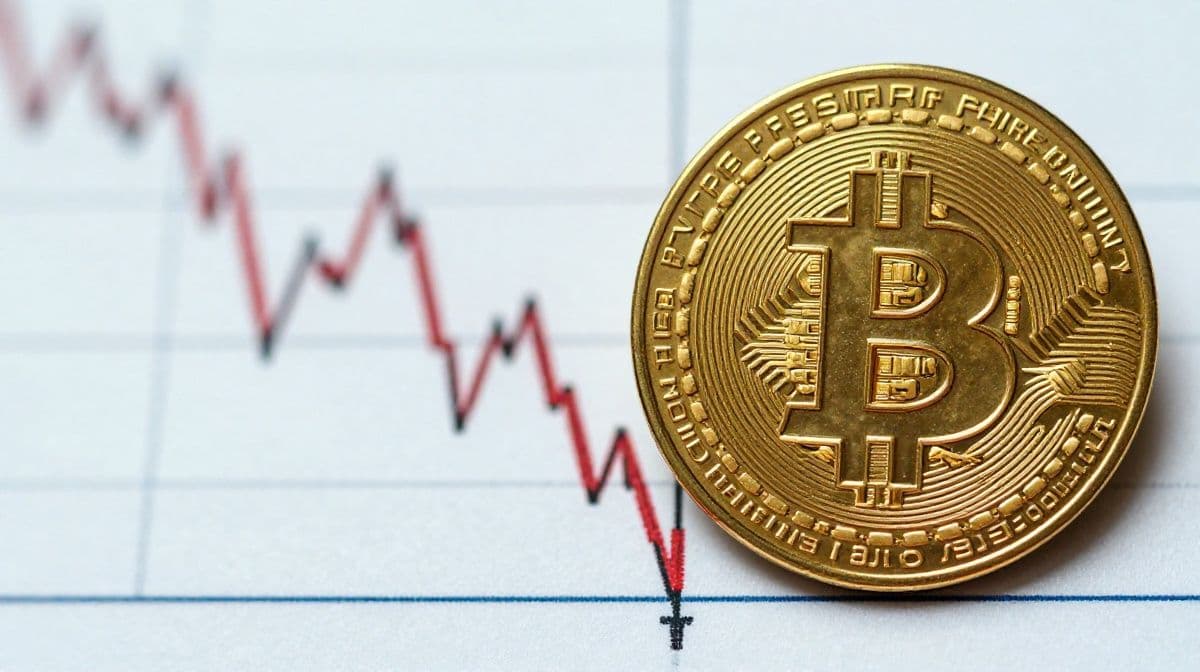
Crypto Price Today: Market Slides Again as Bitcoin Fails at $67,000
Bitcoin slipped back under $64,000 after tapping $66,990. Oil, ETF outflows and Fed nerves are dragging the whole crypto market lower.
September 15, 2026 9:20 AM
Crypto Price Today: Bitcoin Stuck Near $77,000 as the Fed and the CLARITY Act Collide
Crypto prices barely moved today, but two events this week decide the next leg: the Senate CLARITY Act vote and a Fed meeting priced for a rate hike.


More from CryptoTicker