
Coinbase Fees: What a Purchase Really Costs, and Where the Spread Is Hidden
The fee Coinbase shows you before a purchase is not the whole price. Alongside it sits the spread, built into the rate, and limit orders add another percent on top. We read the current terms at the source and show the four places where the exchange earns.




Which topics should we dive deeper into?
Select what genuinely interests you. Your picks feed directly into our editorial planning.
Crypto news that's actually worth your time.
Weekly. 60 seconds. Carefully curated by our editors: no hype, no promo flood, no spam.
Anyone buying Bitcoin on Coinbase for the first time sees one number before confirming: the Coinbase fee. What few people know is that a second item sits alongside it, easy to miss because it never appears as a fee at all but is built into the price itself. We looked up the terms in Coinbase's official fee overview on September 20, 2026, and sorted out where the exchange actually earns its money.
The most important point first: Coinbase quotes no fixed percentage for a simple purchase. The fee depends on the payment method, the order size, the market and the country. That is exactly why it pays to check the preview before every single order, and exactly why the question "what does this cost" cannot be answered with a single number.
The four places where Coinbase earns
First, the Coinbase fee on buying, selling and converting. It is charged on the order and shown in the preview. Second, the spread, which is contained in the displayed price on simple buy and sell orders and sits inside the conversion rate when you convert. Third, a separate execution fee of one percent on limit orders. And fourth, the commission on staking, which by default amounts to 35 percent of the rewards.
Free of charge, by contrast, are holding a balance, transfers between two Coinbase accounts, and staking itself, which carries no fee but a commission on the yield. Anyone sending crypto to their own wallet outside Coinbase pays the network fee.
The spread: the item that is not called a fee
A spread is the gap between the price at which you buy and the price at which you could sell in the same moment. At Coinbase it is baked into the displayed price, so you pay it without it appearing as a separate line on the bill. Coinbase justifies this by noting that the price is briefly locked in while the order is processed, and states explicitly that excess spread may be retained.
It is visible all the same: in the order preview you tap the note next to the unit price on buy and sell orders, and the one next to the conversion rate on convert orders. That single step before confirming is the only way to see the full price.
Limit orders: the one percent many people overlook
A limit order is an instruction to buy only at a set price. It generally counts as the more prudent route, because you fix the price instead of accepting it. At Coinbase it costs extra: every purchase or sale by simple limit order carries a separate execution fee of one percent of the amount traded. On top of that can come the usual Coinbase fee, which runs to as much as 1.875 percent depending on the payment method.
Both items appear in the order preview, in the transaction history and on the receipt. Anyone working regularly with limit orders should build that surcharge into their calculation, because it applies to every single transaction rather than once.
Does Coinbase One really make trading free? No
Coinbase One is the subscription advertised with fee-free trading, and it does keep that promise, though only for part of the costs. Coinbase itself names three limitations, and all three are why the bill ends up looking different from what people expect.
First, a spread may still be built into the displayed price on certain trades. Second, the fee exemption explicitly does not cover the one percent execution fee on limit orders. Third, trading through the DEX function carries a separate service fee that the subscription does not cover either. What we wrote about the subscription itself is in our piece What is Coinbase One?.
Staking: 35 percent of the reward, not of the stake
For staking itself Coinbase charges no fee, but it does take a commission on the rewards paid out by the respective protocol. The standard rate is 35 percent and applies to ADA, ATOM, AVAX, DOT, ETH, MATIC, SOL and XTZ, among others. Coinbase One subscribers pay 31.75, 28.5 or 25.25 percent depending on their tier, though not across all of those currencies.
What matters for your own calculation: the commission applies to the yield, not to the amount staked, and the rewards shown in the account are already the figure after deduction. Anyone exiting staking early also pays a fee for the immediate unstake; anyone who waits out the regular period pays nothing for it.

What you can do to buy more cheaply
The biggest lever is the place of execution rather than the subscription. On a simple purchase through the app you pay the fee and the spread. On Coinbase Advanced you trade directly in the order book, and there, according to Coinbase, no spread is included. Anyone moving larger amounts regularly should take a look at that interface, even if it seems less tidy at first glance.
Three habits help alongside it. First: open the preview before every purchase and reveal the spread, because Coinbase itself points out that terms can differ across similar transactions and are tested from time to time. Second: check the payment method, since it feeds directly into the fee. Third: make a few larger purchases instead of many small ones, because every transaction carries its own costs.
Whether a switch is worth it depends on how often and how much you trade. Our overview of the best crypto exchanges sets fee models and EU authorization side by side. Check the terms with the provider before you sign up all the same, because they change.
Fees and taxes: how they connect
Crypto assets held as private wealth fall under the one-year holding period set out in Section 23 of the German Income Tax Act. Anyone who holds for longer and then sells pays no tax on the gain. Anyone who sells earlier is taxed at their personal rate, as soon as all private disposals in the year together reach the exemption threshold of 1,000 euros.
The link to the fees is a practical one: incidental acquisition costs reduce the taxable gain, and the costs of the purchase count among them. Anyone who fails to document them gives them away. The spread shows up in no fee line at all, yet it is in the price actually paid, and that price is the acquisition basis.
Coinbase fees: what to remember
- There is no single percentage. The Coinbase fee depends on payment method, order size, market and country. Only the preview shown before the order in question is reliable.
- The spread is the invisible part. It sits in the displayed price rather than in the fee line. On Coinbase Advanced it falls away, because trading there happens directly in the order book.
- Coinbase One does not cover everything. Neither the one percent on limit orders nor the service fee on DEX trades, and a spread can still be included.
- Document costs and swaps. Incidental purchase costs reduce the taxable gain, and every swap restarts the holding period. A crypto tax tool records both automatically.
(As of September 20, 2026, 9:00 p.m. All figures are taken from Coinbase's official fee overview, retrieved that day. Coinbase itself points out that fees and spreads can change. This article is not investment advice. Prices and fee structures change; check the terms with the provider before you buy.)
Transparency note: This article was produced with the assistance of artificial intelligence and reviewed by our editorial team before publication. All figures and claims were checked against the primary sources linked in the text. The feature image was generated with AI.
Related articles
- Crypto Fees at Neobrokers: Why the PFOF Ban Raises Your Stock Costs but Leaves Your Coin Purchase Untouched
- Bitpanda fees from 0.99 to 2.49 percent: what is behind it
- Setting Crypto Order Types Correctly: Market, Limit and Stop-Loss Compared
- 100 Euros Into Bitcoin Without Fees: What Actually Arrives at Five Providers
- Bitget Review 2026: Is Bitget a Good Crypto Exchange? What You Need to Know
Which topics should we dive deeper into?
Select what genuinely interests you. Your picks feed directly into our editorial planning.
Crypto news that's actually worth your time.
Weekly. 60 seconds. Carefully curated by our editors: no hype, no promo flood, no spam.

September 6, 2026 10:27 PM
Crypto Through Sparkasse and Volksbank: 1.5 Percent Commission Plus a Spread, and No Product Page Names the Price
Crypto trading through your own bank costs twice over: a commission and a spread. A survey of 41 institutions carried out for this article shows that not one of the reachable product pages names a figure.
September 14, 2026 7:40 PM
Bitcoin Order Before the Fed Decision: What Slippage Really Costs You
Two days before the US central bank's rate decision the euro order books are thin, and a market order pays the difference. We measured the order book depth of five exchanges ourselves: between the cheapest and the most expensive execution lay a factor of 31.

April 7, 2020 2:31 PM
With Paymium exchange you will be paid for every trade
Starting this week, Paymium, the world’s first bitcoin exchange launched in 2010, introduces negative trading fees. Market makers, i.e., traders who place limit orders, receive a refund of 0.1% on their order size for every transaction. In other words, they […]
August 30, 2026 10:13 PM
Coinbase Halts STORJ and BADGER Trading on September 28: What Holders Must Check Now
Coinbase is ending trading in Badger DAO and Storj on September 28, 2026, and both order books have run in limit-only mode since the announcement on August 28. Withdrawals remain possible; selling at Coinbase does not.

September 26, 2026 10:12 AM
Canton Jumps 15.6 Percent to $0.13: What to Check on Trading Volume Before You Order
Canton (CC) gains 15.64 percent in 24 hours to $0.13443, making it the strongest mover in the top 25. Our own count shows that CC trades at just 0.94 percent of its market capitalisation, a fifth of the median.
August 20, 2026 4:29 AM

Euro Trading Pairs at Crypto Exchanges: At Coinbase Exchange 34 of 399 Assets Have a Euro Order Book
On August 17, 2026 we counted the market directories of four crypto exchanges: 2,629 active trading pairs, 821 base assets. Where the euro pair is missing, one purchase turns into a chain of two trades, and the intermediate step is a separate transaction for tax.

October 6, 2023 3:30 AM

Ethereum Transaction Costs Take a Steep Dive to $1.13, ETH Pumping soon?
Ethereum's average transaction fees plummet to a mere $1.13. What does this tell us about the network's activity, and could this signal a potential price rebound for the cryptocurrency?
March 22, 2023 1:44 AM
The Top Crypto Exchanges to Consider in 2023
Looking for the best crypto exchanges to use in 2023? Read our article for a list of the top exchanges, including Binance, Coinbase, and Bybit. Learn about their features, fees, security measures, and more.

June 29, 2026 9:08 AM
What Is Coinbase One? Inside Coinbase's Zero-Fee Subscription
Coinbase One is a paid membership offering zero-fee trading, USDC rewards, and priority support. Here's what's inside and who it's for.

May 8, 2026 9:59 AM
Coinbase Down for 5 Hours Following Critical AWS Heat Failure
Coinbase experienced a 5-hour outage today due to AWS server overheating. Trading has resumed in stages, and the exchange confirms all customer funds are safe.
September 11, 2026 1:40 PM
Inactivity Fees at Crypto Exchanges: How to Check Whether Your Dormant Account Loses Money Every Month
Two providers have just raised their rates for dormant accounts, one of them to as much as 52 US dollars a month. Our own survey of 15 fee pages shows why you will almost never find the answer for your account without logging in.
August 20, 2026 1:28 PM

Crypto Trading Bots: How They Work, What They Cost and When They Pay Off
A crypto trading bot trades around the clock to fixed rules, and every one of those rules costs a fee. This guide works the costs through over twelve months, sets out the German tax position under Section 23 EStG and shows when a provider needs a BaFin licence.
April 16, 2026 7:11 PM
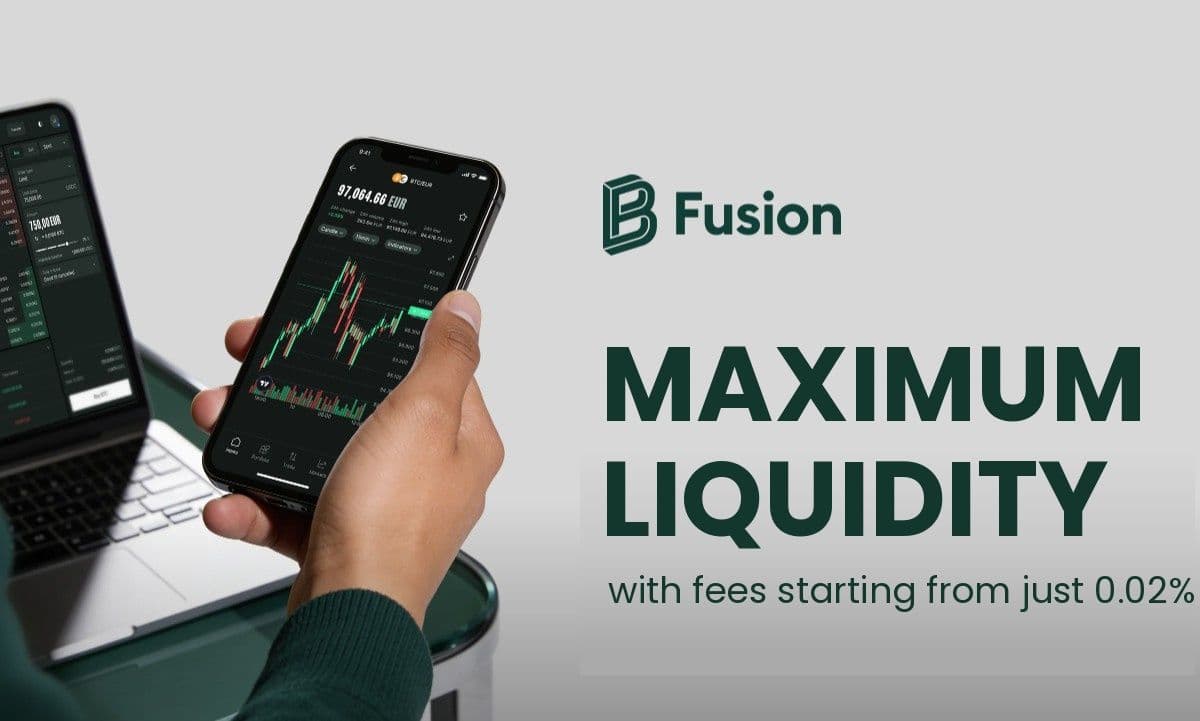
Bitpanda Launches Bitpanda Fusion 2.0: Here's What to Expect...
Bitpanda Fusion launches as a pro-grade platform, aggregating 12+ global order books to provide deep liquidity and tighter spreads for European traders.
June 17, 2024 10:59 AM
TOP 3 DEX for June 2024
What are the best DEXs to use in 2024? Here are the top 3 for June 2024!
September 12, 2026 1:11 AM
Bitcoin ETP Trading Hours Before the Fed Decision: When Your Venue Is Really Open
Forty-five percent of Bitcoin's price movement falls into hours when German securities trading is closed. Our own survey across 720 hours shows where the gaps open up and which three settings to check in your brokerage account.
August 16, 2023 7:46 PM
Crypto News: Coinbase Approved for Crypto Futures Trading in US
Crypto News: Coinbase has recently received the green light to delve into the futures market within the United States.
July 2, 2019 4:34 PM

Breaking: Crypto exchange Coinbase is down
The US crypto exchange Coinbase is down. The exchange is down because of the server provider Cloudfare the company utilizes, reported Metro. Cloudflare gives server assistance to more than twelve million websites. Last week, Coinbase had some difficulties too. The […]
October 4, 2026 1:42 AM

Five crypto apps for beginners: costs and custody compared
Fee-free rarely means free of charge with crypto apps: between 0.15 and 2.49 percent per purchase lies a factor of ten. What five apps cost German beginners, who holds the coins and which app permits a transfer to your own wallet.
September 24, 2026 4:28 AM

Crypto Trading Bots and Tax: What Applies With Thousands of Trades a Year
A bot turns one investment decision into hundreds of disposals, and the tax office counts every single one. This guide explains the holding period, FIFO, the exemption limit and the record-keeping duties, and what to set up before the bot makes its first trade.
August 20, 2026 1:17 AM

Crypto Withdrawal Fees: What Moving Coins to Your Own Wallet Really Costs
We measured the withdrawal fees for 475 assets on August 17, 2026 and set them against the actual network fee. For Bitcoin, the exchange charged eight to sixteen times what a transaction cost in the same minute.
October 29, 2023 2:38 PM
Crypto Exchange: How to use Bitget Exchange?
Bitget exchange stands as a strong option. In this article, we guide you step by step on how to start trading cryptos with the lowest fees.
September 23, 2026 10:11 AM
Kraken: 45 coins are on cancel only, 21 were announced – what to check when trading pairs are blocked
On September 23, 2026 we counted the public market directories of three trading venues. At Kraken, 82 of 1,450 trading pairs are listed as cancel only, a state in which an order can only be cancelled and no longer executed. The 45 underlying assets affected include just 21 that appear in the delisting notice we reported on September 3.
September 10, 2026 1:21 AM
Crypto Exchanges Head to Head: Which Pairing Is Cheaper Where
Before opening an account, the question is rarely which exchange is best overall, but whether it should be this one or that one. This article sorts through the most searched head-to-heads, puts the cost per 1,000 euros side by side and explains the most expensive mix-up: one provider with two interfaces and a factor of seventeen between them.
September 9, 2026 10:11 PM
Crypto Trading for Beginners: Order Types, Charts and Risk Explained
Trading is a different exercise from buying and holding. This introduction explains the three order types, what a chart really shows, how position size is calculated and what trading triggers for your taxes.
September 4, 2026 10:24 AM
IoTeX on Coinbase: What IOTX Holders Should Know After the September 23 Trading Halt
Recap as of September 27, 2026: Coinbase had announced it would halt trading in IOTX on September 23, 2026, and eight days earlier Trust Wallet dropped the IoTeX network from the app. Our own query of the Coinbase API on September 27 shows IOTX-USD as delisted. This article describes the situation before the deadline.
September 3, 2026 4:24 AM
Crypto.com Changes Its Card Fees: From October 1 the Paid Tiers Pay a Foreign Transaction Fee Too
From October 1, 2026 the foreign transaction fee on the Crypto.com card also applies to Ruby, Jade and Indigo, and the inactivity fee rises from 5 to 6 euros a month. We checked nine card offers in the European Economic Area to see who discloses such fees at all.
August 18, 2026 4:45 PM

Crypto Savings Plans Compared: What Bison, justTRADE and Kraken State on Fees, Minimum Instalment and Interval
Crypto savings plans advertise free execution, yet the price almost always sits in the spread. On August 14, 2026 we retrieved nine provider pages and evaluated which terms actually stand there.
More from CryptoTicker