
USDC on Circle's new Arc chain: what to check before your first transfer
Circle opens the mainnet of its blockchain Arc on September 16, 2026, and on it USDC is the fuel as well. We queried the chain ourselves and show the four points to check before you send USDC there for the first time.




Which topics should we dive deeper into?
Select what genuinely interests you. Your picks feed directly into our editorial planning.
Crypto news that's actually worth your time.
Weekly. 60 seconds. Carefully curated by our editors: no hype, no promo flood, no spam.
Circle opens the mainnet of its own blockchain, Arc, to the general public on this September 16, 2026. For you as an investor, exactly one thing changes for now: an additional entry will gradually appear in the withdrawal menus of exchanges and in the network lists of wallets, and it lets you send USDC. Before you click that entry for the first time, four points are worth a checking look: the network data, the fee model, the bridge and the address.
Here they are in order, with measured figures instead of announcement prose. We queried the chain ourselves on the morning of the opening rather than retelling press releases.
Arc in one sentence: Circle's own layer 1 with USDC as the gas token
Arc is a standalone blockchain built by Circle, the company that issues the dollar stablecoin USDC. A layer 1 is a blockchain that settles its transactions itself and needs no other chain beneath it. That sets Arc apart from rollups such as Arbitrum or Base, which draw their security from Ethereum and whose price you can follow on our Ethereum price prediction.
The distinctive part sits in the fuel. On almost every other chain you pay the network fee in a fluctuating currency: in ETH on Ethereum, in SOL on Solana, in BNB on BNB Chain. Anyone wanting to move stablecoins there always needs two assets, the stablecoin and the fuel. Arc asks for both in the same unit. The gas token is the asset a chain uses to pay for its computation, and on Arc that asset is USDC.
In practice this means the balance you bring onto the chain is also what pays for forwarding it. The familiar annoyance of holding funds on a chain and being unable to move them for lack of fuel disappears.
Circle is visibly aligning the chain with institutions. The trade outlet crypto.news names eleven founding validators, among them BlackRock, DTCC, Visa, Mastercard, Standard Chartered and SBI Group; the validators are selected by Circle at first, and according to the same report a move from the authority procedure to a stake procedure is still only on the roadmap. If you hope for decentralization in the sense of an open validator set, do not expect it today.
Chain ID 5042 and the RPC endpoint: the network data your wallet needs
If you enter Arc into a wallet by hand, you need four details. Circle lists them in the network overview of the Arc documentation: network name Arc, chain ID 5042, RPC endpoint https://rpc.mainnet.arc.io, currency symbol USDC.
The chain ID is the value that matters here. It is the identification number a wallet uses to identify a chain unambiguously, and it is folded into every signature. A transaction signed for chain ID 5042 is valid on no other chain. That is exactly why a transposed digit at this point is not a cosmetic flaw but the reason a transfer fails without a word.
We did not take the value from the documentation. We asked the chain itself. The mainnet reports the chain ID 0x13b2, hexadecimal for 5042. Documentation and running network therefore agree.
One point you should know before relying on the official block explorer: the host explorer.arc.io named in the documentation redirected our request at 03:57 UTC on September 16 to a Cloudflare Access sign-in page. For you that means a transaction cannot readily be looked up in public there at the moment. If you want to prove that a transfer arrived, query the chain directly through the RPC endpoint for now, or wait until a freely accessible explorer is available.
What "currency symbol USDC" means in your wallet
Wallets are designed on the assumption that the fuel of an EVM chain is called ETH. Circle points out explicitly in the documentation that wallets without support for custom gas tokens can still sign and send, but may under certain circumstances label the balance as "ETH" even though USDC sits underneath. So do not be alarmed if your wallet shows an ETH line after you add the network. Check instead whether the symbol can be set to USDC by hand in the network settings.
Measured ourselves: block height, block time and fee on the morning of the opening
This analysis was carried out by cryptoticker.io itself on September 16, 2026. The basis is the data published by the mainnet itself. One network, two blocks a hundred positions apart and four contracts were examined.
The result is surprising in one respect. The chain stood at block 21,096,586 at the time of measurement, and the genesis block carries the timestamp May 12, 2026, 00:00 UTC. So Arc does not start at zero this Tuesday. It has been running for months and is merely being opened to the general public today. That matches the statement from crypto.news that a private mainnet was already in operation with more than a hundred institutional participants.
Across a hundred consecutive blocks we measured an average spacing of 0.5 seconds. The block we opened in detail carried 23 transactions against a block limit of 30 million gas. The base fee stood at exactly 20.0 Gwei, and the gas price was 20.000000001 Gwei.
Three questions remain open: the composition of the validator set, the actual distribution of balances across holders, and the question of how the fee behaves under load. The 20 Gwei are the floor named in the documentation, and a network at the bottom of its fee range is a quiet network, not a strained one.

Gas in USDC: why a token transfer on Arc costs 0.0013 USDC
The fee can be calculated directly from the measured values. A simple transfer of the network balance consumes 21,000 gas, which at 20 Gwei works out to roughly 0.00042 USDC. A standard token transfer under the ERC-20 norm sits at around 65,000 gas and therefore at roughly 0.0013 USDC. In its fee documentation Circle names a target value of about 0.001 dollars per ERC-20 transfer under normal conditions. Our calculation lands in the same order of magnitude.
The model behind it is no fixed price. By its own description Arc uses EIP-1559 with an additional smoothing step through a weighted moving average that gives recent blocks more weight than older ones. The base fee moves between a floor of 20 Gwei and a ceiling of 20,000 Gwei. In the theoretical worst case a token transfer would therefore be a thousand times more expensive than today, which still amounts to a good one dollar.
The practical consequence for you is simple: always keep a small USDC remainder on Arc. Anyone who clears the balance down to the last cent can move nothing afterwards, because the next transaction can no longer pay its own fee.
18 or 6 decimal places: the display quirk you have to reckon with
One detail causes confusion on Arc, and it is purely technical. As a token, USDC usually carries six decimal places. As a gas balance, however, Arc calculates with eighteen decimal places, because the entire EVM world is designed for that resolution. According to the documentation both views show the same balance, only at a different resolution.
So if a wallet suddenly shows you a number with twelve additional zeros or states a fee in Gwei, that is no error in your holdings. It is the gas view of the same amount. You can check it yourself: 65,000 gas times 20 Gwei gives 1.3 trillion wei, and that is 0.0013 USDC.
The contract with the ERC-20 interface sits on Arc at the address 0x3600000000000000000000000000000000000000. We queried it: the symbol reads USDC, the number of decimal places is six. At the time of measurement the contract reported a circulating supply of 373,811,829.11 USDC. That is the figure with which the chain enters its public phase.
Withdrawing from an exchange: why Arc is missing from your network menu for now
Here lies the point that affects you first in daily use. A new chain does not appear automatically in your exchange's withdrawal menu. Every provider has to connect, test and enable it independently, and experience shows that takes weeks to months. Until then you simply cannot withdraw USDC to Arc there.
Check this concretely instead of assuming it: open the USDC withdrawal form at your provider and read the network list. If Arc is not in it, the direct route is closed. Anyone who regularly moves between chains should know which networks their provider supports in any case; our crypto exchange comparison lists the providers along with their deposit and withdrawal routes.
A second point concerns the opposite direction. A deposit from Arc to an exchange also works only if the provider knows the chain. If you send USDC over Arc to a deposit address intended for Ethereum, the balance lands at an address your provider does not watch on that chain. The credit never appears, and whether the amount can be retrieved depends solely on whether the provider controls the key to that address on the foreign chain.
CCTP instead of a bridge vault: how USDC reaches Arc by burn and mint
As long as the exchanges are missing, the route runs through Circle's own transfer procedure. CCTP stands for Cross-Chain Transfer Protocol and works on a burn-and-mint basis: your USDC is destroyed on the source chain, and after a confirmation Circle issues the same amount anew on the target chain. That is the decisive difference from classic bridges, where a contract collects the deposits and issues a wrapped representation. If such a pooled vault falls victim to an attack, the representation is worthless. With CCTP there is no pool that could be drained.
What you pay are two network fees, once on the source chain for the burn and once on Arc for the issuance. Anyone coming from Ethereum pays Ethereum prices on the source side. Anyone coming from a cheap rollup chain stays in the cent range. The waiting time depends on the confirmation threshold; Circle's guide for the route from Ethereum to Arc describes the fast mode and the regular route via full confirmation separately from each other.
Domain 26: the identifier the destination hangs on
CCTP numbers chains not with the chain ID but with an identifier of its own, the domain. Arc carries number 26 there. The associated contracts on Arc read 0x28b5a0e9C621a5BadaA536219b3a228C8168cf5d for the TokenMessenger and 0x81D40F21F12A8F0E3252Bccb954D722d4c464B64 for the MessageTransmitter. If an interface shows you a different domain or divergent contracts while bridging, stop and compare with the documentation.
One distinction, so that nothing gets mixed up: the shutdown of the first CCTP version, which we described in our piece on the shutdown of the USDC bridge CCTP V1, concerns older applications on existing chains. Arc has been connected to the second version from the start. These are two separate processes that merely share the same name in the headline.

Same 0x address, different network: the costliest mistake when switching
Arc is EVM compatible. Your receiving address there looks as it does on Ethereum, on Arbitrum and on Polygon: 42 characters beginning with 0x. That sameness is convenient and at the same time the cause of most losses when switching networks, because the address on its own says nothing about which chain you are currently on.
Three checks protect you from that, and together they cost less than a minute. First: compare the chain selected at the top of your wallet with the chain named in the counterparty's withdrawal menu. Second: send a small amount ahead and wait for the credit before the rest follows. Third: with a wallet address, check whether you hold the private key yourself. With an address in your own custody you reach your balance on any EVM chain by adding the network afterwards. With an exchange address that does not apply, because there the provider decides which chains it watches.
This calculation is a good occasion to put your own custody in order. Anyone holding their own keys can add a new chain at any time and loses nothing if a provider never supports it; which devices come into question is set out in our hardware wallet comparison. Also reckon with the fact that a bridge transaction is not credited by the second: the waiting time depends on how many confirmations the source chain demands before release.
 Hardware wallets compared: keep your own keys
EURC on Arc: what the euro stablecoin's MiCA status covers
For investors in Germany a second contract is more interesting than the dollar one. Alongside USDC, Arc also carries EURC, Circle's euro stablecoin, at the address 0xbEf5f6d51CB62b58e6A8f77868681825C6fe21c1. Our query on September 16 returned a circulating supply of 5,555,685.86 EURC. For comparison: the dollar holding on the same chain stood at a good 373 million in the same minute. The euro is therefore still a footnote on Arc.
Legally the same applies to both tokens as everywhere else. Circle issues USDC and EURC in the EU through an e-money institution licensed in France; both are therefore e-money tokens within the meaning of the European crypto regulation MiCA. This status attaches to the issuer and its licence, not to the chain a token currently sits on. The fact that USDC now also exists on Arc changes nothing about your redemption claim against Circle.
What the status explicitly does not cover is the chain itself. MiCA regulates the issuer and the service providers, not the technical infrastructure. If a validator consortium does not include a transaction or the chain comes to a standstill, e-money status will not help you. Which issuers are licensed in the EU at all is set out in the public MiCA register of the European supervisor; Circle appears there with its French licence, while many well-known names do not.
No freely tradable network token: how to spot airdrop traps
A new chain attracts pages promising a free allocation within hours. Stick to what is documented: on the project page and in the documentation Circle names USDC as the network's gas token. Circle does not advertise there an allocation of a network token of its own to retail investors. A possible coordination asset for validators and governance has been reported on since the spring, and Circle itself has so far described its own position as under review.
In practice that means any page holding out to you a claim to an Arc token today and demanding a wallet connection, a signature or an approval for it is unsubstantiated to begin with. The classic sequence consists of obtaining an approval over your holdings by deception. Safe handling: do not connect your main wallet at all, check unknown providers against BaFin's company database, and give announcements weight only once they appear on the issuer's official channels.
Tax and record keeping: how to document a network switch
A switch between two chains is no sale as long as the same asset remains under your own control. You are not swapping USDC for something else, you are moving the same claim to a different place. The case is different if you actually swap while bridging, say a euro stablecoin for a dollar stablecoin. That is a disposal, and we have gathered the details on it in our piece on stablecoins and taxes.
What matters for your records is traceability. With the burn-and-mint procedure the trail ends on the source chain and begins anew on the target chain. Two transactions, two timestamps, no visible connection unless someone documents it. So when bridging, note the transaction identifier on both sides, the date and time, the amount and the interface used. Without that assignment, tax software can later book the process as an inflow out of nowhere and impute to you an acquisition without acquisition costs.
That the acquisition data are preserved lies in your responsibility. Since the start of 2026 providers have reported holdings and transactions automatically to the tax administration, yet a bridge transaction between two self-custodied addresses does not appear in that report.
Checking the Arc network: what you take away from this
For most investors there is no pressure to act today. Anyone holding USDC on an exchange or on Ethereum need do nothing; nothing about your holdings changes because a further chain exists. If you nevertheless want to use the new chain, proceed in this order:
- Check the network list before you send anything. Open the USDC withdrawal form at your provider and look whether Arc is offered at all. If the entry is missing, the direct route is closed. Which providers support which networks can be found in the crypto exchange comparison.
- Match the network data against the source. Chain ID 5042, RPC endpoint
https://rpc.mainnet.arc.io, currency symbol USDC. If you enter that by hand, take the values from the documentation and not from a forum post. For addresses you hold yourself this applies in any case: the key belongs on a device you control, see the hardware wallet comparison. - The test amount first, then the rest. Send a small sum ahead, wait for the credit and note both transaction identifiers for your tax records. Only after that does the actual amount follow. Anyone preferring the euro route should know that EURC on Arc is so far in circulation with a good 5.5 million units. For assigning the transactions in your tax software, the comparison of crypto tax tools helps.
(As of September 16, 2026. This article is not investment advice. Prices and fee structures change; check the terms with the provider before you buy.)
Transparency note: This article was produced with the assistance of artificial intelligence and reviewed by our editorial team before publication. All figures and claims were checked against the primary sources linked in the text. The feature image was generated with AI.
Related articles
- USDC Bridge CCTP V1 Is Shutting Down: How to Check Whether Your Stablecoin Can Still Change Chain From December
- AVAX withdrawals: C-Chain vs X-Chain, and which address yours needs
- ICX to SODA Migration: 1.109 Billion ICX Still Sit on the ICON Chain, and Neither Chain Shows a Swap Count
- The Polygon Network Runs on POL Instead of MATIC: What to Watch in Your Wallet, Fees and Polygonscan
- Seven Days of Waiting: Base, Basescan and the Cheapest Way Onto Coinbase's Network
Which topics should we dive deeper into?
Select what genuinely interests you. Your picks feed directly into our editorial planning.
Crypto news that's actually worth your time.
Weekly. 60 seconds. Carefully curated by our editors: no hype, no promo flood, no spam.

September 28, 2026 7:24 AM
Base Token: No Date, No Quota, but 6.27 Billion Dollars on the Chain
There is no Base token, only the statement that Coinbase is exploring one. What is measurable instead is 6.27 billion dollars of deposited capital, fees in the hundredths of a cent and an AERO price that has risen 68 percent in thirty days.
September 28, 2026 7:16 AM
Ethereum Gas at One Cent: What Gwei and Etherscan Mean for Your ERC20 Transfers
An ether transfer cost around one cent on September 27, 2026, while a swap on a decentralised exchange cost eight. This guide explains how gas is billed in gwei, what to look up on Etherscan and which three mistakes are the most common in an ERC20 transfer.
September 4, 2026 4:55 AM
Silicon Network Is Shutting Down: You Have Until December 31 to Bridge Your Balance Out
The Ethereum layer 2 Silicon Network is ceasing operations: since September 2 the bridge has accepted no deposits, and the withdrawal window closes on December 31, 2026. Our own measurement shows a chain that keeps ticking by the second while carrying nothing at all.

May 3, 2026 9:28 AM
LAB Token Crash: Why the Multi-Chain Hub Fell 70% in 24 Hours
LAB token plummeted 70% just hours after hitting an all-time high of $3.64. Was this a "sell the news" event or a coordinated exit?
September 28, 2026 4:31 PM
Robinhood Chain After September 29: What the End of Free Gas Changes for the Stock Chain
The Robinhood Chain holds $1.02 billion and more trading volume than Polygon, carried by a meme token launchpad. The gas subsidy ends on September 29, fees are already falling, and this is what the ecosystem of Pons, Uniswap and tokenised stocks really rests on.
September 10, 2026 10:12 AM

Lisk Is Shutting Down Its Blockchain: Why Your Real LSK Deadline Is October 21
The Lisk Chain will be switched off for good on October 31, 2026, and whatever is still sitting on it is lost beyond recovery. Because unstaking takes three days and the bridge to Ethereum at least seven, your window really closes ten days earlier.
August 28, 2026 1:33 AM
Sending Crypto: Why the Wrong Network Costs You the Balance on 51 of the 100 Largest Crypto Assets
When you withdraw from a crypto exchange, the network you pick decides whether your balance arrives or is lost for good. Our own analysis of August 26, 2026 shows that 51 of the 100 largest crypto assets exist on several chains at once.
February 25, 2021 1:15 AM

Lightning Network Can Be Paralyzed With 0.25 BTCs Spend, Research Shows
Blockchain security researchers analyze a low-cost on the Bitcoin’s Lightning Network, which can lead to it’s paralyzation.
August 26, 2024 7:44 PM

DOGS Token Major 120% Surge Within Hours Of Its Listing: BUY NOW?
The DOGS token experienced a dramatic surge of over 120% on Binance following its listing. How did the Telegram Open Network (TON) drive this surge?
July 12, 2024 7:00 AM
Animoca Token Is LIVE: How To Buy MOCA On Bitget?
Here is how the new MOCA token, launched by Animoca Brands and Moca Network is set to revolutionize the Web3 landscape with its unique utilities.
October 3, 2026 12:12 AM
Blast Shutdown: Ethereum L2 Closes After 98% Token Crash, Withdraw Your Funds Now
Blast is shutting down. The Ethereum L2 says costs exceed revenue. Here is how to withdraw from Blast before the October 26 deadline.
September 28, 2026 7:17 PM
Polygon 2026: Polymarket Takes 84 Percent of the Fees With It to Its Own Chain
Polygon holds $765 million, and 83.6 percent of its fees come from a single protocol that has announced a move to its own chain. What is left of the ecosystem afterwards, what POL is still worth and what holders in Germany should watch.
September 22, 2026 10:15 PM
Stablecoin Reserves: Why the ECB Wants the Bank Deposit Rule Scrapped
The European System of Central Banks filed its response to the MiCA review on September 22 and calls in it for an end to the requirement to hold 30 to 60 percent of stablecoin reserves as a bank deposit. What lies behind it, and what you can check on your own token.
September 21, 2026 4:19 PM

Arbitrum Up 150 Percent In A Month: Is Robinhood Carrying The Price?
ARB is the strongest performer of the past four weeks. Behind the advance sit Robinhood's own chain and trading in tokenised assets. Two dates decide whether the rally holds.
September 17, 2026 6:30 AM

Robinhood Chain: The Free Gas Ends in Late September - the Stress Test for Its Memecoins
Nobody has paid gas on Robinhood Chain since mainnet. That window closes on 29 September, and it hits a memecoin ecosystem minting roughly 10,000 new tokens a day.
August 6, 2026 1:00 PM
Robinhood Built a Blockchain for Stocks. The Cat Memecoins Took It Over.
$13 million in tokenised equities, memecoins worth ten times that: what Robinhood Chain is, why CASHCAT flooded it, and how investors actually get access.
March 12, 2022 12:32 PM
How to Add Binance Smart Chain to Metamask?
How to add Binance Smart Chain to Metamask? In this easy guide, we take you step by step and show you how exactly to plug Metamask to BSC.

November 25, 2021 11:13 AM
Everything You Need To Know About Polkadot in 2021
Layer 2 solutions have debatable consensus mechanisms. That's where the Polkadot Network is making a difference. Let's talk about Polkadot.
August 28, 2024 10:33 PM
How to Migrate from MATIC to POL: Full Guide
How to update and migrate Polygon Tokens from MATIC to POL, when and why? Here is all you need to know...
January 22, 2025 11:31 AM
How to Identify Fake TRUMP tokens: A Guide to Staying Safe in the Crypto World
The rise of fake TRUMP and MELANIA tokens is alarming crypto enthusiasts. Learn how to distinguish the official tokens from scams and protect your investments with this essential guide.
September 22, 2026 10:25 PM

Binance Buys Into Circle: What the USDC Deal Means for Your Balance
Binance is taking a $100 million stake in Circle and extending the USDC agreement by five years. For investors in Germany, the sum matters less than the question of who earns money from stablecoins left sitting idle.
March 24, 2026 4:06 PM
Circle (CRCL) Stock Plummets 17% on Stablecoin Yield Crackdown Fears
Circle Internet Group (CRCL) shares dropped 17% today following reports of a potential legislative crackdown on stablecoin yields. USDC remains pegged to $1 (for now).
June 7, 2025 12:19 PM
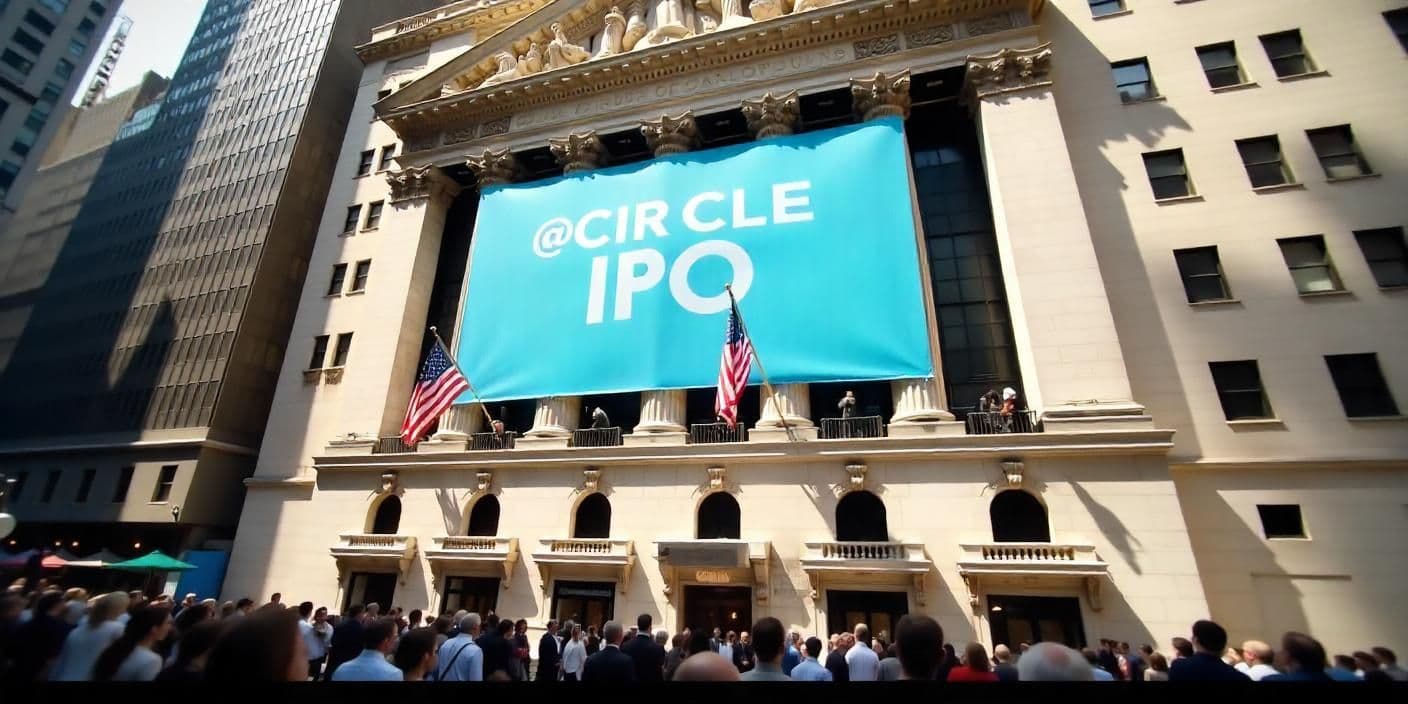
Circle Stock Explodes After IPO: What’s Behind USDC's Wild Debut?
Circle, the company behind USDC, just made Wall Street history. After pricing its IPO at $31, the stock soared to over $100. But what’s driving the hype—and is it sustainable?
January 10, 2025 11:00 PM
Bitget Token Price Surge amid Market Downturn: New 2025 BGB ATH?
In this week's turbulent crypto market taken by downward pressure, BGB made it the top gainer with an impressive price surge. Will it end the week with a new ATH in 2025?
December 21, 2024 12:23 PM
What is MOVE Token and How It Rose to the Top 100 Cryptos
MOVE token is dominating the charts as one of the best-performing cryptocurrencies this month. Learn how it rose to the top 100 cryptos list despite the market's latest corrections.
September 27, 2026 7:25 PM
BNB Chain in Practice: BEP20, BscScan and the Fees
A BEP20 transfer on BNB Chain costs less than half a cent, yet the address format does not tell you whether you are on the right network. We measured eleven real transfers on the chain and show wallet, explorer, approvals and the trap in the decimal places.

More from CryptoTicker