
AVAX withdrawals: C-Chain vs X-Chain, and which address yours needs
Avalanche runs three blockchains, and only the C-Chain carries tokens, smart contracts and DeFi. This guide shows how to recognise a C-Chain address, what a transfer costs and how to trace it in Snowtrace.

Which topics should we dive deeper into?
Select what genuinely interests you. Your picks feed directly into our editorial planning.
Crypto news that's actually worth your time.
Weekly. 60 seconds. Carefully curated by our editors: no hype, no promo flood, no spam.
Anyone moving AVAX from an exchange into their own wallet faces a question that no other major network poses in quite this form: which chain? Avalanche consists of three blockchains that run in parallel and each use their own addresses. The Avalanche C-Chain is the only one of them where tokens, smart contracts and the entire DeFi world live. Send your balance to an address on the neighbouring chain by mistake and it will not arrive where you expect it.
This guide shows you how to identify the right address, what a transfer on the C-Chain currently costs, how to trace a transaction in the Snowtrace explorer and where an AVAX withdrawal most often goes wrong. It is the final part of our series on the major networks; the shared overview is at Adding a network, bridges and explorers.
C-Chain, X-Chain and P-Chain: what the three Avalanche chains are for
Avalanche calls its core the Primary Network. It consists of three blockchains with clearly separated jobs, and every wallet, every exchange and every explorer always refers to exactly one of them.
The C-Chain (Contract Chain) is an implementation of the Ethereum Virtual Machine, the computing environment in which smart contracts are executed. Everything an investor normally associates with Avalanche runs here: tokens, exchanges such as LFJ, lending protocols, NFTs. Because it is EVM-compatible, it works technically like Ethereum and uses the same addresses, which begin with 0x.
The X-Chain (Exchange Chain) handles the issuance and trading of what are known as Avalanche Native Tokens. This chain does not know smart contracts; its model is simpler, and its addresses carry the prefix X-avax. Historically it was the standard chain for plain AVAX transfers, and that is precisely where the risk of confusion comes from.
The P-Chain (Platform Chain) manages validators, staking and the creation of custom networks. Addresses on this chain begin with P-avax. Anyone delegating AVAX moves their balance there. For an investor's day-to-day it matters only for staking. The official description of all three chains is in the Avalanche developer documentation.
The consequence is what matters: the same AVAX can sit on three different chains. That does not make them lost, but on the wrong chain they remain invisible to smart contracts, and the way back costs an extra step.
How to recognise a C-Chain address
The distinction is simpler than it sounds once you look at the prefix. A C-Chain address looks exactly like an Ethereum address: 42 characters, beginning with 0x. An X-Chain address begins with X-avax, a P-Chain address with P-avax. So you can only confuse them if you are not looking at all, or if an exchange offers you two options and you click the wrong one.
That is exactly how a failed withdrawal unfolds: the exchange's withdrawal window has a field for the address and below it a menu for the network. For AVAX, both chains frequently appear there, sometimes with an additional entry for an Ethereum version of the token. Copy a 0x address out of your wallet but select X-Chain as the network, and in the best case the exchange rejects the withdrawal. In the worse case it sends the balance to an address your wallet cannot reach.
The rule of thumb: the chain your wallet shows you decides, not the one you are used to. Open the wallet, check whether the address begins with 0x, and then select the same network at the exchange. The same check applies on every EVM network, for instance when switching to Arbitrum One, where picking the wrong network has the same consequences.
Core Wallet and MetaMask: the Avalanche network in your own wallet
Core is the wallet developed by Ava Labs. It knows all three chains out of the box and can move funds between them. Anyone planning more with Avalanche than a single transfer is most comfortable there, because switching between C-Chain and P-Chain is a built-in operation rather than a detour.
MetaMask and most other EVM wallets do not know the C-Chain by default, but can be set up for it in one step. You need four details, all of them from the official documentation: the chain ID 43114, the RPC endpoint https://api.avax.network/ext/bc/C/rpc, the currency symbol AVAX and Snowtrace as the explorer address. Once added, Avalanche appears like any other network in the list, and your familiar 0x address applies there too.
One point is often overlooked: a browser wallet extension is convenient, but it sits on a device that is connected to the internet. For amounts you intend to hold for longer, the private key belongs on a device without an internet connection. Which models are suitable and how to spot a tampered device is set out in our hardware wallet comparison.
Whatever the wallet, one rule holds: the recovery words are written down once and never photographed, never put in a cloud and never typed into a form. No reputable provider asks for them.

Fees in AVAX: what a transfer on the C-Chain costs
Payment on the C-Chain is made exclusively in AVAX, just as it is in ETH on Ethereum. The arithmetic behind it is the same: every transaction consumes a certain number of gas units, and every unit costs a price that depends on how busy the network is. A simple transfer consumes 21,000 units, a swap on a decentralised exchange a multiple of that.
These prices have fallen sharply twice in the past two years. Until December 2024 the minimum price was 25 nAVAX per gas unit, after that 1 nAVAX, and since the Octane upgrade of April 2025 it has stood at one wei, the smallest fraction that can be represented at all. Octane replaced the fixed gas target with a mechanism in which the price adjusts continuously to actual demand.
In practice that means the following. On the evening of September 29 the base price stood at around 5 nAVAX per gas unit. A simple AVAX transfer therefore cost roughly 0.000105 AVAX. At a price of around 9.91 euros per AVAX, that is about a tenth of a cent. Even a swap on a decentralised exchange stays in single-digit cents, as long as the network is not unusually busy.
One feature sets Avalanche apart from Ethereum: both components of the fee, the base price and the voluntary tip, are burned in full. Validators receive none of it; the amount leaves circulation permanently. If you want to understand the concept of gas and its components from the ground up, the detailed explanation is in our piece on Ethereum gas and Etherscan; the mechanics are the same, only the order of magnitude differs.
What matters day to day is the consequence: you always need a small AVAX balance on the C-Chain, even if all you want to move is a stablecoin or another token. Without the fee token every transaction stalls, however large the token holding.
 Find a crypto exchange with an EU licence
From the exchange straight to the network, or across a bridge
There are two ways to get AVAX or other tokens onto the C-Chain, and they differ considerably in cost and effort.
The easier route is a withdrawal from a trading platform. You buy AVAX, select the C-Chain in the withdrawal window and enter your 0x address. The exchange covers the network fee internally but usually charges a withdrawal flat fee of its own, which depending on the provider can sit well above the actual network cost. The amount is shown in the summary before you confirm, and it is worth reading: on small sums it eats a noticeable share. Which platforms in Germany operate under European supervision and what their terms look like is set out in our overview of crypto exchanges.
The second route is a bridge from another network. If your balance is already on Ethereum or another EVM network, a bridge transfers it to the C-Chain. Core includes such a function, and there are providers that connect several networks. Unlike the optimistic rollups, where bridging back to Ethereum involves a seven-day wait, Avalanche operates as an independent network and has no such lock-up period. A transfer is usually complete within minutes.
Bridges carry a different caveat, though: they are smart contracts holding large sums, and they have been among the most frequently attacked building blocks in crypto for years. For a one-off transfer of a manageable amount, the exchange route is therefore usually the calmer one.
Reading Snowtrace: following a transaction in the explorer
A block explorer is a network's public ledger. For the C-Chain it is called Snowtrace and has been run by Routescan since the previous operator handed it over. Every transaction, every address and every token balance can be looked up there, without registration and without connecting a wallet.
The explorer is useful above all in four situations. First, when a withdrawal does not arrive: you enter your address and see immediately whether a transaction came in at all. If nothing is there, the fault lies with the exchange or the chain, not with your wallet. Second, when a transaction hangs for a long time: the status reveals whether it is confirmed, still pending or failed. A failed transaction still costs fees but changes nothing about the balance.
Third, for tokens that do not show up in the wallet. The token transfers of an address list what has actually arrived. If a token is missing only from your wallet's display, you have to add it there manually using its contract address. And fourth, when checking a token before buying: the explorer shows how many addresses hold it and when the contract was created. A token that came into being three days ago and has twelve holders is not an established project.
A warning belongs with this: anyone can create a token and call it whatever they like. Counterfeit tokens bearing well-known names regularly turn up in wallets uninvited. What counts is always the contract address, taken from the project's official site or from an established price database, never the name displayed.
The most common mishaps in an AVAX withdrawal
Four patterns can be read out of the accounts that reach us, and three of them cost not the balance but only time.
The wrong network comes first. A balance that lands on the X-Chain instead of the C-Chain is not lost: a wallet that knows both chains will move it across. Anyone using only MetaMask needs Core, or a comparable wallet with the same recovery words, once for that.
The missing fee token is the second most common cause. There are tokens in the wallet but no AVAX, and so nothing can be moved. The remedy is plain: send over a small amount of AVAX before trying anything else.
The stuck transaction arises when it was sent at a very low gas price. On Avalanche this has become rare thanks to the dynamic pricing, but it still happens with manually set values. Most wallets offer to replace the same transaction at a higher price.
The fourth mishap is the only one that really costs money: a withdrawal to an address belonging to someone else. It happens through malware that swaps the address in the clipboard as you copy it. Only one thing helps against it: before sending, compare the first and last four characters of the address in the withdrawal window with the wallet. That second is the only control the process has, because a transaction once sent cannot be recalled.
Token approvals and phishing: where the biggest risks lie
The C-Chain works with the same approval model as Ethereum, and that is the most underestimated danger in daily use. When you want to swap a token on a decentralised exchange, you first grant the associated smart contract an approval. That contract may then debit the token in question from your address. Many applications request an unlimited approval by default, because it saves a confirmation on every further swap.
The approval remains in place until you withdraw it. If the contract is attacked later, or was malicious from the start, it can pull the approved token at any time, even months afterwards, without you clicking anything. That is why going through the approvals you have granted from time to time, and revoking everything you no longer need, belongs to the routine. The revocation is an ordinary transaction and costs only the fraction of a cent mentioned above on the C-Chain.
With phishing the pattern has been the same for years, only the packaging changes. A message announces a reward, an urgent verification or a network migration and leads to a cloned site. There you are asked either to enter your recovery words or to sign an approval that clears you out. Against the first variant, the rule that those words are never typed in anywhere is enough. Against the second, it helps to read what is actually being permitted in the wallet's confirmation window, instead of pressing approve.
Find the right exchange for your tokensTax in Germany: holding period and allowance for AVAX
For private investors in Germany, the same rules apply to AVAX as to other crypto assets. A sale within one year of purchase is a private disposal; the gain from it is taxable as long as the sum of all such gains in a year exceeds the allowance of 1,000 euros. After one year has elapsed the sale remains tax-free. What counts is the date of acquisition, and that does not change because you move the balance from the exchange into your own wallet.
This is the point at which many become unsure: a withdrawal to the C-Chain is not a sale and therefore does not trigger tax. It is a movement between two places of custody belonging to the same owner. A taxable event only arises when you exchange AVAX for euros, for another coin or for goods.
With fees it gets more granular. The network fee you pay in AVAX when swapping on a decentralised exchange is itself a disposal of a fraction of your holding. At the scale of tenths of a cent this makes no practical difference, but it does for documentation: anyone making many transactions should carry the fee lines along. That is exactly what portfolio tools are for, reading transactions in automatically and tracking the holding periods per tranche; which of them support German tax offices is set out in our overview of tax tools and portfolio trackers.
A note on staking: anyone delegating AVAX and receiving rewards has income that is treated differently from a pure capital gain. Because the classification depends on the individual case, that is the point at which a visit to a tax adviser pays off more than a search in a forum.
Avalanche: the key points for your decision
Practice on Avalanche is less laborious than the three-chain structure first suggests. Once you have grasped that the C-Chain is the chain with the 0x addresses and that everything else is a special case, there is little to get wrong in a withdrawal. Fees have been so low since the Octane upgrade that they barely weigh on the decision, and with Snowtrace every operation can be traced publicly.
- Settle the purchase route. First compare the withdrawal flat fee of the platform you buy AVAX from; on small amounts it is the largest cost item. Our exchange comparison lists the terms of the providers available in Germany.
- Decide on custody. Before the first withdrawal, decide whether the balance stays in a browser wallet or moves to a device without an internet connection. For amounts meant to sit for longer, the hardware wallet comparison lists the models and their differences.
- Set up your records. Note the purchase date and quantity from the first tranche onwards, so that the one-year period can be evidenced later. A portfolio tracker does this automatically and saves reconstructing it after the fact.
(As of September 29, 2026. This article is not investment advice. Prices and fee structures change; check the terms with the provider before you buy.)
Frequently asked questions about the Avalanche C-Chain
Partner links: some links on this page are partner links. If you become a customer through one of them, we may earn a commission at no extra cost to you. Selection, ratings and ranking are decided independently by our editorial team. Ethics and Independence · Ownership and Funding
Transparency note: This article was produced with the assistance of artificial intelligence. Figures and claims are based on the primary sources linked in the text. The feature image was generated with AI.
For later? Save this article and find it again in your profile.
Related articles
- GTA 6: which console runs it best, and where to buy PS5 Pro, Xbox and the game
- Crypto losers of the week: Avalanche falls 17.6 percent, bitcoin 13.2 percent
- MetaMask fees: 0.875 percent per swap, while gas on Ethereum costs less than one euro
- Avalanche crashes to $7.08: the level that decides is August's $6.78 close
- Avalanche below $8: AVAX One still budgets for $9 and stakes 14 million AVAX
Which topics should we dive deeper into?
Select what genuinely interests you. Your picks feed directly into our editorial planning.
Crypto news that's actually worth your time.
Weekly. 60 seconds. Carefully curated by our editors: no hype, no promo flood, no spam.

November 14, 2026 7:23 AM

Buying an NFT with euros: paying by card can cost you 4.6 percent
You can buy an NFT with euros either through a crypto exchange and your own wallet or directly by card on the marketplace. We work through both routes with real fees from November 14, 2026, and show what MiCA does and does not cover.
November 13, 2026 7:13 PM
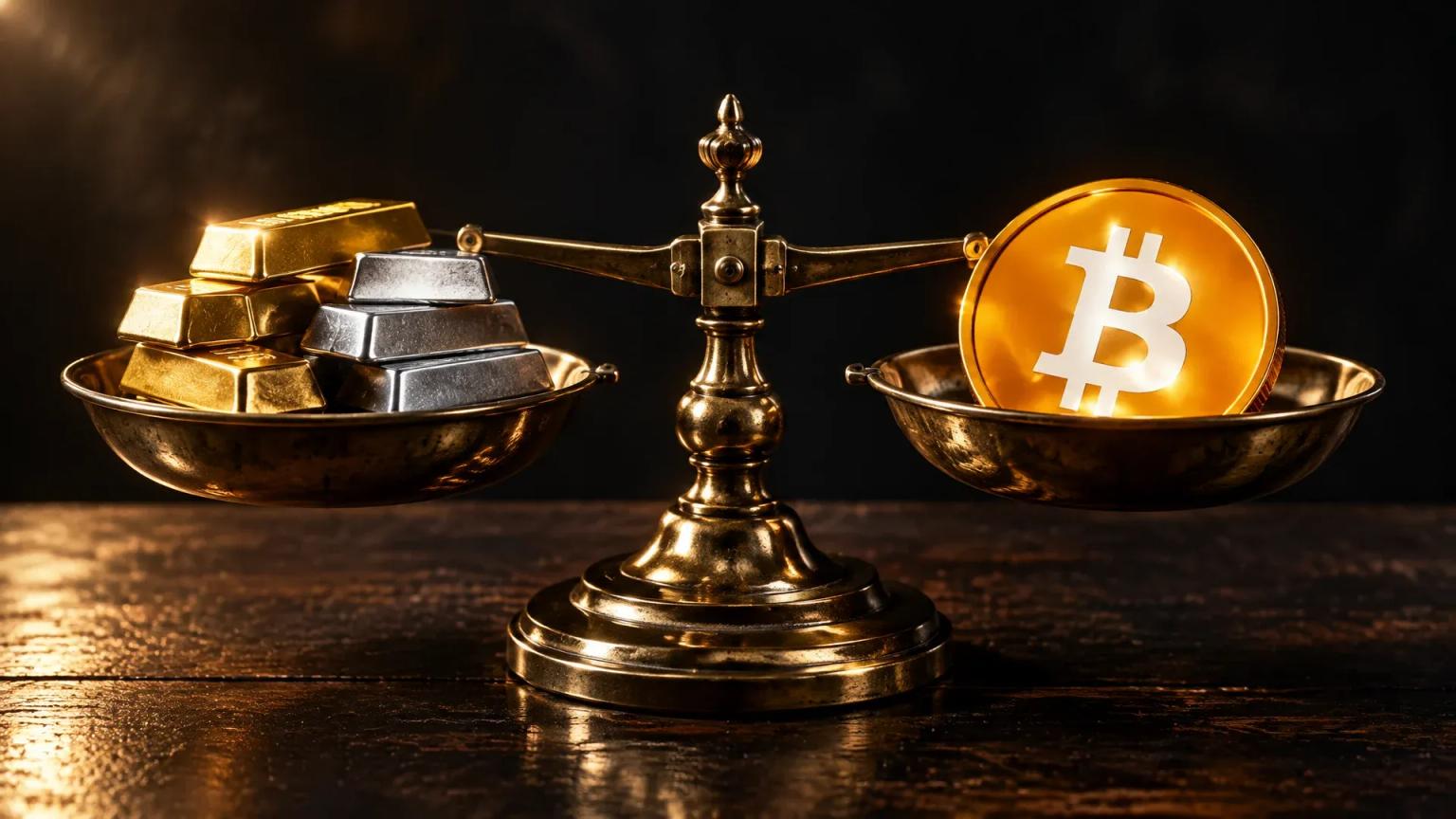
Gold vs bitcoin: one bitcoin now buys only about 18 ounces of gold
Gold, silver and bitcoin have all gained since 2024, but the balance of power has shifted: one bitcoin is now worth just 18.4 ounces of gold, down from almost 40 in December 2024. Our analysis also shows that bitcoin and precious metals have fallen together strikingly often in 2026.

November 10, 2026 9:14 PM

NYSE picks Avalanche to settle tokenized stocks, but AVAX holders gain only indirectly
Ava Labs is supplying the technology for clearing and settlement on a planned NYSE platform for tokenized stocks. The NYSE is running its own blockchain for it, however, and the AVAX price has already given back Monday's jump.
November 7, 2026 7:38 PM

OKX Fees: Trading, Futures and Withdrawal Fees by Region
OKX charges 0.08 percent maker and 0.10 percent taker on spot and 0.02 or 0.05 percent on futures. All fee tiers, the rates in Europe, the US and Australia, withdrawal, SEPA and card fees, and a comparison with Bitget, Kraken and Coinbase.
November 7, 2026 6:58 PM
Bitget Fees: Spot, Futures and How BGB Lowers Them
Bitget charges 0.1 percent on spot and 0.02 or 0.06 percent on futures. All VIP levels, the BGB discount, funding and withdrawal fees, copy trading costs and a comparison with Bybit and OKX Australia.
November 5, 2026 8:27 AM
How to use Etherscan: reading transactions, gas fees and smart contracts with real examples
Etherscan shows every movement on the Ethereum blockchain, free of charge and without sign-up. This guide uses real examples to explain how to read transactions, fees, tokens and smart contracts, and how to protect yourself from address poisoning.
November 3, 2026 9:29 PM
Binance withdrawals phase 2: Cardano and Litecoin only via BEP20 for now
Binance has been reopening more withdrawals since November 3, but Cardano, Litecoin, Polkadot and three other coins only come out as BEP20 tokens on BNB Smart Chain. Pick the wrong network or use a Cardano-only wallet, and the coins may never arrive.
November 3, 2026 2:36 AM
Crypto withdrawal deadlines: where to get your funds out now
Blur, Binance Pool, Sophon, Abstract, CoinEx and Kraken: deadlines at these services run out by January. Every cut-off date in one table, with instructions, a checklist and what still works after a missed deadline.
November 1, 2026 3:30 AM

Buying Pepe: 22.5 million PEPE for 100 euros, and the fee decides the rest
Bitvavo, Kraken and Bitpanda list Pepe with a MiCA licence. At midday on Wednesday the order books were 14 cents apart, the fees by more than a euro.
October 27, 2026 6:48 PM
Buy BNB in Germany: three exchanges with a MiCA licence, and the fee that decides
At midday on Tuesday, 100 euros bought 0.150875 BNB at Kraken and 0.150820 at Bitvavo. Once the fee is counted Bitvavo is ahead, and on withdrawal the right network is what matters.
October 24, 2026 7:24 PM
Avalanche (AVAX) 10.3 Percent Weaker in Seven Days, Grayscale Opens In-Kind Subscriptions From $235,800: What Matters Now
Grayscale opened in-kind subscriptions for ten crypto funds on October 21, among them the Avalanche Staking ETF from around $235,800. At the same time no fresh money has flowed into the Avalanche funds since October 8, and AVAX is down 10.34 percent over the week.
October 14, 2026 1:21 AM
BNB zero fees for USDC and USD1 until October 31: what changes for investors in Germany
On the BNB Smart Chain, withdrawals and wallet transfers in USDC, USD1 and U cost no gas until October 31. The 37th auto-burn is also due, and total supply still sits 33.16 million tokens above the target of 100 million.
October 12, 2026 1:30 PM
Avalanche climbs 7.2 percent against a falling market: what to watch in the 49 percent rally
Avalanche trades at $11.09 and adds 7.2 percent within 24 hours, while bitcoin, ether and Solana are down over the week. Our own analysis of the chain data shows the capital on Avalanche growing more slowly than the price.
October 4, 2026 1:23 AM

Avalanche adds $266 million in new RWA in 30 days, price at $11.11: What to watch now
Avalanche took on more tokenised stocks in September than any other chain, and the price stands at $11.11. Nearly half of the increase, however, traces back to a single issuer.
September 30, 2026 10:39 AM
The Polygon Network Runs on POL Instead of MATIC: What to Watch in Your Wallet, Fees and Polygonscan
MATIC has become POL, one to one and without any haircut in value. What that means for your holding, how to set Polygon up, what a transfer costs and how to read Polygonscan.
September 30, 2026 1:29 AM
Goldman Sachs Brings a $105 Billion Fund to an Avalanche Chain: What Investors Need to Know
The broker tZERO is opening the Goldman money market fund FTIXX to qualified US firms through the settlement network Lynq, which runs on a private Avalanche chain. We show why the fund is expressly not being tokenised and what the AVAX price jump is worth to you in Europe.
September 29, 2026 1:35 PM
Seven Days of Waiting: Base, Basescan and the Cheapest Way Onto Coinbase's Network
You get onto the Base network in minutes for fractions of a cent; getting back to Ethereum takes seven days. We walk through the chain ID, the fees, Basescan and the traps in bridging.
September 29, 2026 10:26 AM

Shiba Inu after the Shibarium switch: the old RPC endpoints are off, what you can do now
Shibarium replaced its public access points in September 2026, and the old RPC endpoints no longer answer. What holders of SHIB and BONE now need to update in their wallet, at the bridge and in their records.
September 28, 2026 7:16 AM
Ethereum Gas at One Cent: What Gwei and Etherscan Mean for Your ERC20 Transfers
An ether transfer cost around one cent on September 27, 2026, while a swap on a decentralised exchange cost eight. This guide explains how gas is billed in gwei, what to look up on Etherscan and which three mistakes are the most common in an ERC20 transfer.
September 27, 2026 1:21 AM

Adding a Network, Bridges and Explorers: Switching Blockchains in 2026
Typing in an RPC by hand is a thing of the past. When you still have to add a network yourself, how to read Etherscan, Basescan and ApeScan, whether you still need bridges in 2026 and what smart accounts change.
September 19, 2026 10:21 PM
Avalanche Price Jumps 18 Percent: Why AVAX Is Leading the Crypto Market
Avalanche gains a good 18 percent within 24 hours to $9.78, making it the strongest coin among the 30 largest. What is behind the move, which figures are documented, and what to check before you buy or sell.
September 16, 2026 1:28 PM
Crypto Withdrawal to Your Own Wallet: Ten Providers Checked, Three Will Not Let Your Coins Out
Seven of ten providers available in Germany offer a payout to a wallet address you control yourself; three do not. Our survey of September 16, 2026, shows how to spot the difference before you buy, and why the question matters right now.
September 16, 2026 10:13 AM

USDC on Circle's new Arc chain: what to check before your first transfer
Circle opens the mainnet of its blockchain Arc on September 16, 2026, and on it USDC is the fuel as well. We queried the chain ourselves and show the four points to check before you send USDC there for the first time.
September 10, 2026 10:12 AM
Lisk Is Shutting Down Its Blockchain: Why Your Real LSK Deadline Is October 21
The Lisk Chain will be switched off for good on October 31, 2026, and whatever is still sitting on it is lost beyond recovery. Because unstaking takes three days and the bridge to Ethereum at least seven, your window really closes ten days earlier.
September 4, 2026 4:55 AM
Silicon Network Is Shutting Down: You Have Until December 31 to Bridge Your Balance Out
The Ethereum layer 2 Silicon Network is ceasing operations: since September 2 the bridge has accepted no deposits, and the withdrawal window closes on December 31, 2026. Our own measurement shows a chain that keeps ticking by the second while carrying nothing at all.
September 1, 2026 7:11 PM
ICX to SODA Migration: 1.109 Billion ICX Still Sit on the ICON Chain, and Neither Chain Shows a Swap Count
Four weeks before the first cut-off date, cryptoticker.io read both blockchains itself: 1,108,792,074.22 ICX on ICON, 1,499,555,266.83 SODA on Sonic. The swap shows up in neither total supply, and there is no public progress indicator.
August 20, 2026 1:17 AM

Crypto Withdrawal Fees: What Moving Coins to Your Own Wallet Really Costs
We measured the withdrawal fees for 475 assets on August 17, 2026 and set them against the actual network fee. For Bitcoin, the exchange charged eight to sixteen times what a transaction cost in the same minute.
More from CryptoTicker