
TRUMP Crypto Executive Order to make America the Capital of AI and Crypto - Bitcoin Reserve Coming?
Following one of the most awaited Trump actions, the Trump crypto executive order, empowering AI, cryptos, and technology, what would be David Sacks role in this? Here is all you need to know...


Which topics should we dive deeper into?
Select what genuinely interests you. Your picks feed directly into our editorial planning.
Crypto news that's actually worth your time.
Weekly. 60 seconds. Carefully curated by our editors: no hype, no promo flood, no spam.
On January 23, 2025, President Trump signed a groundbreaking Executive Order aimed at positioning the United States as the global leader in digital finance and cryptocurrency innovation. The order outlines a forward-thinking approach to digital assets while addressing regulatory clarity, technological advancement, and economic sovereignty.
Trump Pro-Crypto Announcement at Davos: U.S. as Future AI and Crypto Capital
At the World Economic Forum in Davos, President Trump further underscored his administration’s ambitions by announcing plans to position the United States as the future capital of artificial intelligence (AI) and cryptocurrency. His speech highlighted:
- A commitment to fostering technological advancement through deregulation and supportive economic policies.
- Strategic efforts to make the U.S. a hub for AI and crypto industries, potentially redefining economic policies related to these emerging technologies.
This announcement aligns with the objectives of his pro-crypto administration previously mentioned. It was shortly followed by the Trump Crypto Executive Order signed at the Oval Office, and perhaps, one of the most awaited of Trump's actions.
Tump Crypto Executive Order Highlights
1. A Federal Framework for Digital Assets
The Executive Order establishes a President’s Working Group on Digital Asset Markets, chaired by the White House AI & Crypto Czar, David Sacks. This group will include senior officials from key agencies such as the Department of the Treasury, Securities and Exchange Commission (SEC), and Commodity Futures Trading Commission (CFTC). The group’s primary objectives include:
- Developing a Federal regulatory framework for digital assets, including stablecoins.
- Evaluating the feasibility of creating a national digital asset stockpile, potentially sourced from cryptocurrencies lawfully seized by federal agencies.
- Collaborating with industry leaders and experts to ensure robust, informed decision-making.
2. Prohibition of Central Bank Digital Currencies (CBDCs)
A significant move within this order is the prohibition of CBDCs within U.S. jurisdiction. Agencies are directed to terminate any ongoing plans or initiatives related to CBDC development, citing concerns over privacy, financial stability, and the sovereignty of the U.S. dollar.
3. Revocation of Previous Policies
The order rescinds Executive Order 14067 (March 2022) and the Treasury’s “Framework for International Engagement on Digital Assets” (July 2022). These policies were criticized for stifling innovation and undermining economic liberty.
David Sacks: Crypto Executive Order Executer
A pivotal figure in this initiative is David Sacks, the White House AI & Crypto Czar, who will chair the President’s Working Group on Digital Asset Markets. Sacks’s extensive experience in technology and venture capital places him at the forefront of efforts to:
- Coordinate between federal agencies and industry experts.
- Develop comprehensive policies that promote innovation while ensuring consumer protection.
- Engage with private-sector leaders to align national goals with industry advancements.
Under Sacks’s leadership, the working group aims to position the U.S. as a leader not only in crypto but also in artificial intelligence, leveraging synergies between these transformative technologies.
A Bold Step Towards a Bitcoin Reserve?
One intriguing aspect of the Executive Order is the directive to evaluate a national digital asset stockpile. While no explicit mention of Bitcoin is made, this raises speculation about whether Bitcoin could serve as a strategic reserve asset, aligning with its position as the leading cryptocurrency and a recognized store of value globally.
The Executive Order has sparked widespread debate within the crypto community. Michael Saylor, Executive Chairman of MicroStrategy and a prominent Bitcoin proponent, expressed optimism, stating: “The United States will be the world capital of Crypto.” This vision aligns with the order’s goals of fostering innovation and regulatory clarity.
However, critics like Peter Schiff, a vocal Bitcoin skeptic, responded sharply: “He said crypto, not Bitcoin.” Schiff’s comment underscores the broader debate between Bitcoin maximalists and advocates for the broader cryptocurrency ecosystem. His remark reflects skepticism about the focus on cryptocurrencies beyond Bitcoin, which he frequently criticizes as speculative assets.
Notably, Senator Cynthia Lummis, a well-known advocate for Bitcoin and blockchain technology, praised the Executive Order. In her statement, she emphasized the importance of bipartisan support for Bitcoin and the need to resolve regulatory overreach and lawsuits against digital asset companies. “Under President Trump’s leadership, the United States will be the global leader in financial innovation and digital asset advancement,” she remarked.
Implications for the U.S. and Global Crypto Landscape
The Executive Order is a pivotal moment for the United States, signaling a clear intent to:
- Lead in Innovation: By fostering a regulatory environment conducive to blockchain and digital asset growth, the U.S. aims to attract talent, investments, and technological advancements.
- Enhance Dollar Sovereignty: Promoting lawful dollar-backed stablecoins while rejecting CBDCs ensures the U.S. dollar’s dominance in the digital age.
- Protect Privacy and Economic Liberty: The prohibition of CBDCs addresses growing concerns about surveillance and centralized control over financial transactions.

President Trump’s Executive Order represents a significant shift in the U.S. approach to digital finance. By prioritizing innovation, regulatory clarity, and individual economic liberty, this policy positions the United States as a global leader in cryptocurrency and blockchain technology. When coupled with the Davos announcement about AI and crypto leadership, the administration’s vision for the tech sector becomes even more ambitious and strategic.
The leadership of David Sacks as the AI & Crypto Czar further reinforces the administration’s commitment to fostering a dynamic and secure digital economy. While it remains to be seen whether Bitcoin will play a central role in the national digital asset stockpile, the order undeniably sets the stage for transformative developments in the industry. As Senator Lummis aptly stated, “This administration is fulfilling its promise to make the United States the global leader in digital asset innovation.”
Partner links: some links on this page are partner links. If you become a customer through one of them, we may earn a commission at no extra cost to you. Selection, ratings and ranking are decided independently by our editorial team. Ethics and Independence · Ownership and Funding
For later? Save this article and find it again in your profile.
More on Bitcoin: All Bitcoin news at a glance
Related articles
- German customs law: crypto over €100,000 can be seized without a criminal case
- Strategy Is $9 Billion Underwater as MSCI Kicks It Out: Will Saylor Sell Bitcoin?
- Bitcoin price falls below $70,000 as $1.3 billion in leveraged bets are wiped out
- Crypto Fear and Greed Index at 28: What Happened Every Time the Market Hit Extreme Fear
- Russia Opens Crypto to Retail Investors on November 17: What Bitcoin, Ethereum and USDT Access Really Means
Which topics should we dive deeper into?
Select what genuinely interests you. Your picks feed directly into our editorial planning.
Crypto news that's actually worth your time.
Weekly. 60 seconds. Carefully curated by our editors: no hype, no promo flood, no spam.

November 6, 2026 11:19 PM
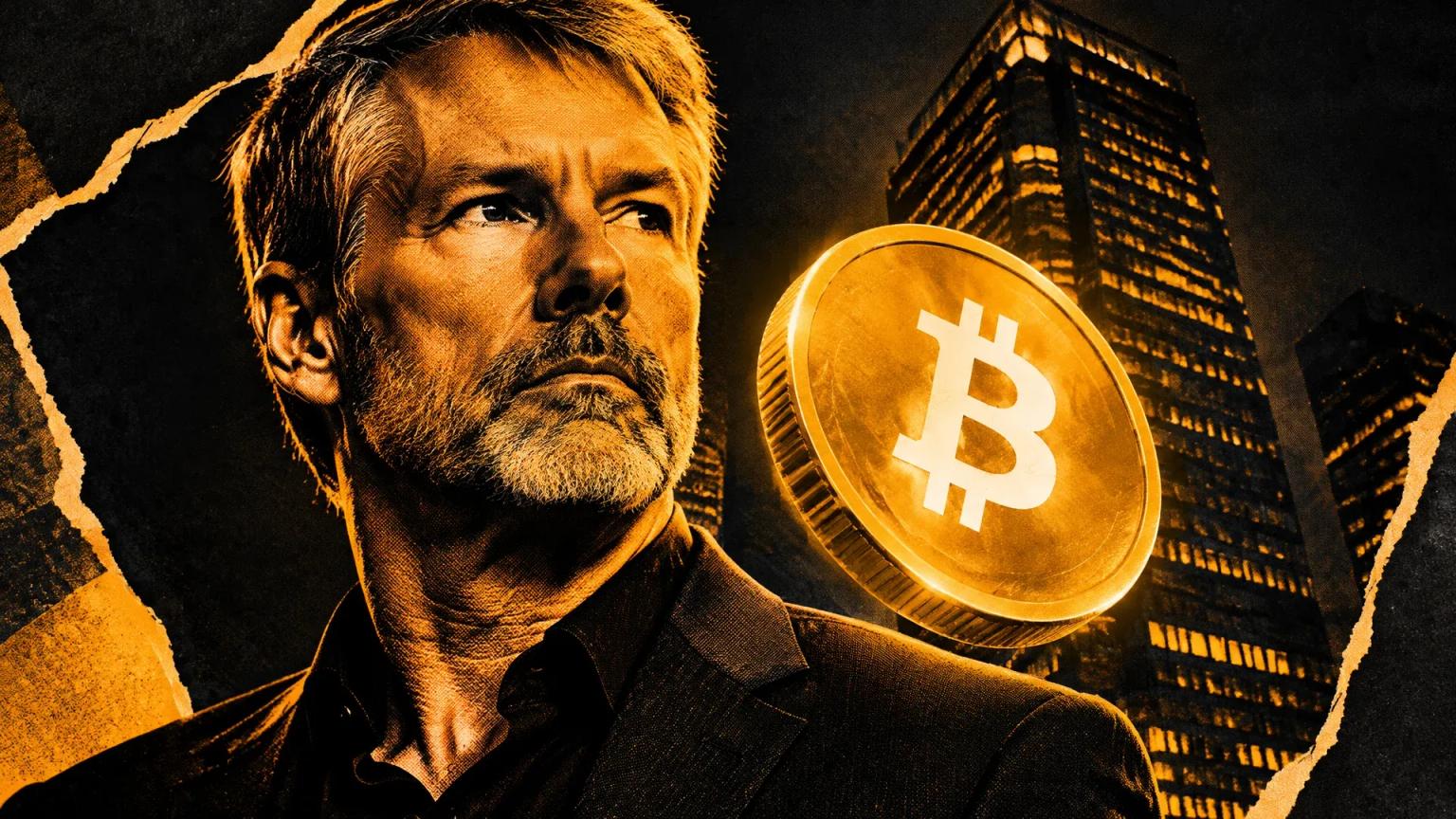
Michael Saylor: how Strategy became the largest corporate holder with 849,327 Bitcoin
Explainer: Michael Saylor turned the software company MicroStrategy into the largest publicly listed Bitcoin holder, with 849,327 BTC in early November 2026. How the model is financed, where its risks lie and how stock and Bitcoin differ for tax purposes for investors in Germany.
November 6, 2026 12:02 AM

Trump Predicts a Big Russia Deal That Could Involve All of Europe: What It Means for Bitcoin
After meeting Kremlin envoy Kirill Dmitriev, Trump expects a very big agreement with Russia that might involve all of Europe. Bitcoin fell anyway, oil rose. What was said, how markets traded it and which dates count for crypto investors in Europe.
October 31, 2026 12:36 AM

Binance Hack, Then a Stock Market Crash: Coincidence or Connection?
The largest crypto theft in history on Thursday evening, Wall Street's worst day since June on Friday. Are the Binance hack and the stock market crash connected? Our analysis of timeline, sizes and money flows, and where crypto and stocks really meet.
October 29, 2026 9:49 PM

Is This the End? How Low Bitcoin Could Fall After the Binance Hack
About $2.8 billion left a Binance hot wallet and Bitcoin slid below $79,000. Whether this turns into a real crash depends on one question. Three scenarios, the key price levels for Bitcoin, Ethereum and Solana and what to do now.

October 27, 2026 5:23 PM

China AI Bubble Bursts: $480 Billion Gone, So Why Is Bitcoin Not Crashing?
China’s AI stock bubble has burst, erasing $480 billion as the STAR50 drops 40%. Here is why it happened and what it means for Bitcoin and crypto.

October 19, 2026 7:22 AM

Bitcoin price at $82,769 after two days on a third of the turnover: the level that decides
Bitcoin opens the week at $82,769, 1.6 percent above Friday's close. The gain was built over two days running on a good third of the usual turnover, and that is exactly why the level at $81,501 now decides.
October 10, 2026 7:15 PM

ING and Bitcoin: Around 50 Crypto ETNs in the Portfolio, and What the Delivery Claim Means for Your Holding Period
Bitcoin can be bought at ING, but only as an exchange-traded note: around 50 crypto ETNs from five issuers, as a one-off purchase or a savings plan from one euro. What the offer really costs, and what the one-year holding period hangs on, is not in the advertising but in the key information document.
October 10, 2026 3:39 PM

Will AI Break Bitcoin? Vitalik Says Prepare for "Bunker Mode", Hoskinson Calls It Numerology
Vitalik Buterin says AI could crack crypto's encryption within 2 years. Charles Hoskinson says that is nonsense. Who is right, and what should you do?
October 9, 2026 1:18 PM

Bitcoin Tax: One Year Past the $126,080 Peak, Losses No Longer Count
Bitcoin trades at $82,558 on Friday morning, 34.5 percent below an all-time high that is now a good year old. Anyone who bought back then loses more than the prospect of a quick recovery when the one-year period expires: the tax value of the loss goes with it.
October 7, 2026 7:18 AM

Certificate, Bitcoin ETN or the coin itself: what each route means for tax and custody
A Bitcoin certificate, an ETN and the coin itself all lead to the same price, but to three different tax treatments and three different risks. The comparison shows which route fits your portfolio and why December 31, 2026 becomes the cut-off date.
October 6, 2026 4:32 AM

Bitcoin for a gift card: what paying with crypto means for your holding period
Paying for a gift card with Bitcoin is a sale for tax purposes. What counts as the disposal proceeds, when the twelve-month holding period bites, and the four records the tax office expects.
October 6, 2026 1:23 AM

50 euros a month in Bitcoin, 118 instalments since 2017: savings plan vs lump sum
118 monthly instalments of 50 euros since January 2017 add up to €5,900 paid in and around €54,500 today. The same instalment since January 2024 is up only 14.5 percent, and since October 2025 the savings plan beats the lump sum by almost 39 percentage points.
October 5, 2026 1:40 AM

Crypto at comdirect: 29 certificates with no order fee in a savings plan, but not a single coin
comdirect puts crypto into your securities account as a certificate, not as a coin. Our count of October 4, 2026 shows 29 securities from five issuers on 12 cryptocurrencies. On a one-off purchase the minimum fee of 9.90 euros amounts to 9.90 percent on 100 euros invested; in a savings plan the 1.5 percent is waived until the end of 2027.
October 1, 2026 7:36 PM

Crypto tax and withholding at source from 2028: what to check now
The German Federal Ministry of Finance’s draft bill goes to cabinet on October 14, 2026. The underexposed part of it is the deduction of tax from 2028: which providers are to withhold the tax on investment income, why self-custody and foreign platforms stay exempt from it, and what you should document by December 31.
September 29, 2026 10:38 AM
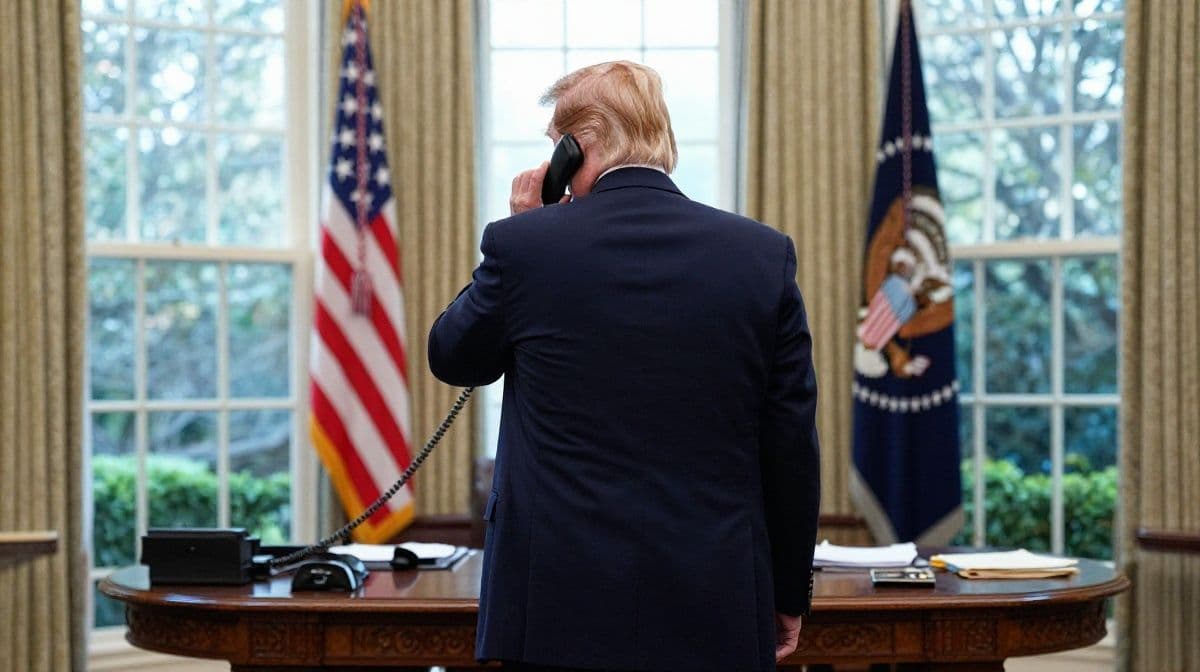
Bitcoin Falls Toward $83,000 as Trump Rejects Iran Ceasefire Deal
Bitcoin slipped toward $83,000 after Trump rejected Iran's Hormuz proposal, sending oil above $100 and wiping out $478 million in crypto liquidations.
September 25, 2026 10:26 PM

Selling bitcoin privately: the tax in Germany and the records you need
A direct sale to a private individual falls under the same one-year rule as an exchange sale, but there is no tax report to go with it. This guide walks through the calculation, the 1,000 euro threshold and the records the tax office wants to see.
September 25, 2026 7:24 PM

Bitcoin Forecast: What to Check on Levels, Holding Period and Buying Route Before the Quarter Ends
Bitcoin stands at $83,877 at 16:40 UTC on September 25, 2026, and the measured volatility of the past 30 days spans a band of $73,600 to $94,200 for the coming month. More important than that band before the quarter ends are three checks: holding period, buying route under MiCA and the reporting duty in force since January 2026.
September 24, 2026 10:19 PM

Bitcoin for Retirement: What Applies from 2027 and What You Decide Now
Bitcoin is not permitted in any state-subsidised retirement product, including the new retirement savings account from 2027. Anyone who still wants to use crypto assets for their own pension goes through private assets, and there a cutoff date at the end of 2026 is shifting the tax rules right now.
September 24, 2026 10:38 AM

Fed Rate Hike in October: What to Check on Leverage, Liquidation and Holding Period After the PMI Jump
The flash US purchasing managers' index has jumped to 58.4 points, its highest level since July 2021, and input prices are rising at a pace last seen in October 2022. The futures market now prices a further Fed rate hike on October 28 at almost 70 percent, and the crypto market is falling broadly.
September 19, 2026 7:12 PM

Bitcoin Sold Without Austrian Tax Withheld: What to Do Next
Sold Bitcoin but no Austrian capital gains tax was withheld? That does not make the sale tax free. When investors have to declare the gain themselves at 27.5 percent.

September 19, 2026 7:17 AM

Chainlink Jumps Above $12: What LINK Holders Should Check Now
Chainlink trades at $12.34, 7.4 percent higher than yesterday. What part of the move is the broad market rally, what Chainlink itself contributes, and the three things you should check as a LINK holder.
September 17, 2026 12:32 PM

Trump Says Oil Will Tumble When the Iran War Ends: What That Would Mean for Crypto
Trump expects the Iran war to end after the midterms and oil to fall hard. Oil is near a four-month high instead. Here is why crypto should still care.
September 11, 2026 10:18 AM

Bitcoin Tax Audit: What Proof Austria Requires
Which bitcoin records can the Austrian tax office examine? Purchase dates, wallet transfers, acquisition costs and sale proceeds are what count.
September 10, 2026 7:14 AM

Bitcoin Loan Liquidated: Tax Consequences in Austria
If a lender liquidates Bitcoin pledged as loan collateral, a taxable capital gain can arise in Austria. That holds even when the investor never chose to sell.
August 26, 2026 10:25 PM

Selling Bitcoin at a Loss: Loss Offsetting in Austria
Sold Bitcoin at a loss? Austria allows the loss to be offset against certain investment income. When loss offsetting is possible and which limits apply.


More from CryptoTicker