
Binance Is Out of the EU: How to Move to a MiCA-Regulated Exchange
Binance has left the EU market. Which exchanges hold a MiCA licence, how to verify an authorisation is real, and how to move your holdings across step by step.



Which topics should we dive deeper into?
Select what genuinely interests you. Your picks feed directly into our editorial planning.
Crypto news that's actually worth your time.
Weekly. 60 seconds. Carefully curated by our editors: no hype, no promo flood, no spam.
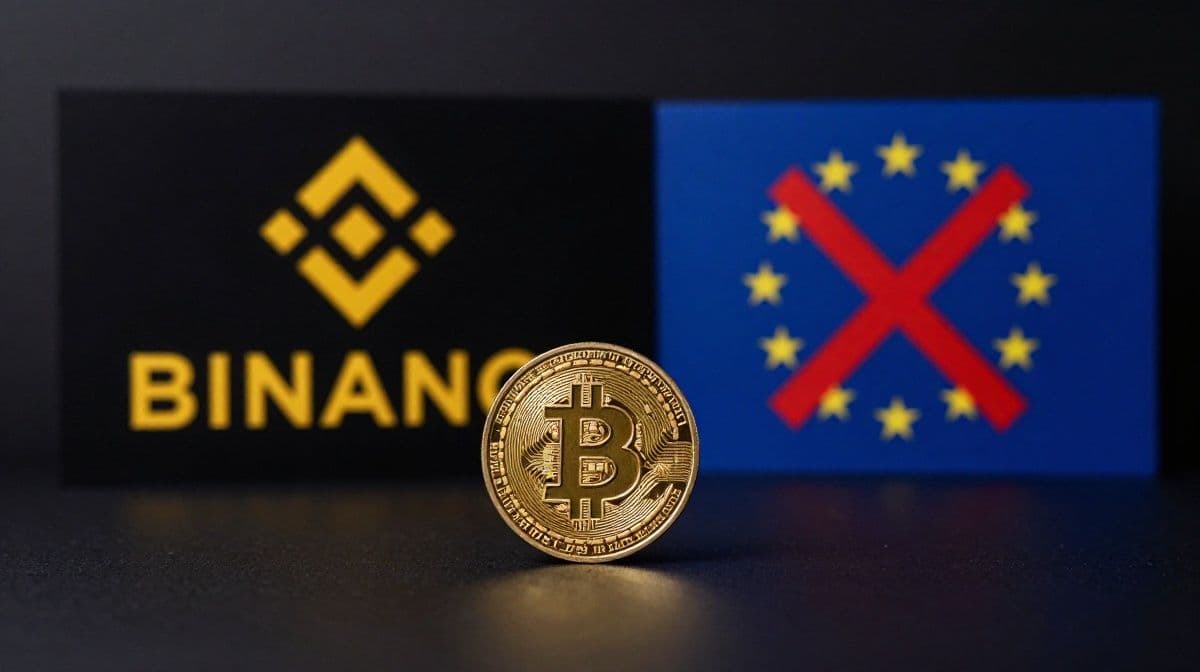
The transition period under the EU's Markets in Crypto-Assets Regulation (MiCA) closed on 1 July 2026. Since then, no exchange without a CASP licence — authorisation as a crypto-asset service provider — may lawfully serve customers in the European Economic Area. The most prominent casualty was the biggest name in the industry: Binance withdrew its MiCA application in Greece on 24 June and suspended core services for EU users.
If your holdings are still sitting on Binance — or on Bybit Global, or another platform that did not clear the bar — you need a new home. This guide covers which exchanges hold the licence, how to verify an authorisation is genuine, what actually matters in a comparison once you look past the marketing, and how the move works in practice.
A note on this article: over the summer of 2026, several licensed exchanges ran time-limited switching bonuses. Those campaigns ended in late July. This piece therefore no longer lists bonus amounts, but the terms that hold up over time — for offers that are genuinely running right now, see our comparison of regulated crypto exchanges.
Why Binance left the EU
MiCA is the EU's single rulebook for crypto-assets. To operate lawfully anywhere in the union, an exchange needs a CASP licence from one member state; that licence is then passported across the entire EEA. Authorise once, operate everywhere — which is exactly what makes it so valuable. The 18-month transition window closed on 1 July 2026, and ESMA had confirmed back in April that there would be no extension.
Binance bet on Greece as its point of entry and lost: the application was withdrawn days before the deadline. Of an estimated 1,100 to 1,300 established crypto providers in Europe, only around 200 secured a MiCA licence — a rate of roughly 15 percent. The market consolidated into a hard core within a single year.
One short but decisive point: MiCA protection applies to the specific authorised legal entity, not to the brand. Bybit Global, for instance, restricts EEA access, while the Austrian-licensed Bybit EU entity remains fully authorised. Always check which company your account actually contracts with — the name on the homepage tells you nothing about it.
What actually matters when you switch
Switching bonuses are the most visible difference between two exchanges and the least important one. They are time-limited, usually capped, and typically tied to lock-up periods. Four other things determine what you pay every month after the move.
The legal entity. Don't ask whether "the exchange" is licensed — ask which company holds your contract and in which country it is authorised. Only that entity is supervised; affiliates outside the EU fall outside MiCA protection entirely.
The fee model. The headline percentage almost always applies to the simple buy mode. Nearly every major exchange also runs a cheaper professional interface with an order book. If you buy regularly, moving to it saves more than any one-off bonus ever pays.
Withdrawal costs. These rarely appear in the advertising and only surface when you take money out. This is where licensed providers differ most — with one of them, exiting costs you more than a full year of trading fees at the next.
What the EU entity actually offers. Licensed European arms of global exchanges routinely offer less than the parent platform. Before you move, check whether the coins, savings plans or staking products you use exist in the EU version at all. Stablecoins are a special case: because Tether has not met MiCA's requirements for e-money tokens, USDT trading is restricted or discontinued for EU customers on several licensed exchanges.
The MiCA-licensed exchanges at a glance
Five major authorised providers — and what separates them.
Bitpanda — Vienna, MiCA licence via BaFin
The Austrian incumbent has been regulated under MiCA since early 2025 and is additionally supervised by Germany's BaFin. Euro deposits and withdrawals carry no separate fee. The real differentiator is breadth: alongside crypto assets, the same account holds precious metals and fractional shares and ETFs — the practical case for anyone who would rather not run several accounts. Trading is priced through a spread on the quote rather than a separately stated order fee, so a clean cost comparison has to look at the spread.
OKX — Malta, MiCA and MiFID II
OKX Europe holds both a MiCA and a MiFID II licence via Malta, and at 0.35 percent its trading fee sits at the cheaper end of the licensed field. Bank transfers in and out are free. It is also one of the few exchanges publishing a proof of reserve. Worth knowing: USDT has been delisted for EU users because Tether does not meet MiCA's stablecoin rules — USDC and USDG are the supported alternatives.
Coinbase — Luxembourg, publicly listed operator
Coinbase is MiCA-licensed through its Luxembourg entity and was the first company in Germany to hold a BaFin crypto custody licence. Its parent trades on the US tech exchange and files audited quarterly accounts — still the exception in crypto trading, and the strongest argument here for security-conscious investors. The cost of that governance shows up in the fee line: the simple buy mode is considerably more expensive than the professional Coinbase Advanced interface. If you settle on Coinbase, plan to move over to it.
Crypto.com — Malta, strong card programme
The European business runs through Foris DAX MT Limited in Malta, authorised as a crypto-asset service provider by the MFSA; the Visa prepaid card is issued by a separate e-money company. The strength is unmistakably the card and cashback programme — if you want to spend crypto in daily life, this is the most developed offering of the group. The weakness is just as unmistakably cost: withdrawal fees are among the highest in this comparison, and the standard trading fee is no bargain either.
Bybit EU — Austria, its own legal entity
Not to be confused with the restricted Bybit Global: Bybit runs its European business through a separate company authorised in Austria under a MiCAR licence from the FMA. EEA customers contract with that entity. Trading fees start at 0.1 percent, at the low end of the market, with a card, Earn products and a tiered VIP programme attached. The EU entity offers a narrower feature set than the global exchange — that is the trade-off for the licence, and the single most important thing to check before you move.
How do I verify an exchange really is MiCA-licensed?
Don't take a marketing banner's word for it. Check ESMA's public CASP register, which is updated regularly — if a platform is not listed there, it has not been permitted to serve EU citizens since 1 July. A properly licensed exchange will also state its CASP authorisation and the issuing supervisory authority itself, usually in the website footer or on a dedicated regulation page. If an exchange points only to an old national registration rather than a MiCA CASP licence, it is not authorised.
How the move works, step by step
1. Open the new account first. Register with the new exchange and complete identity verification before you move anything. Depending on demand, verification can take days — and you cannot deposit while it is pending.
2. Check what the destination actually supports. Not every licensed exchange supports every coin and every network. Confirm in advance that your holdings are tradable there, and pick a transfer network both sides recognise. A transfer sent over the wrong network is irreversible.
3. Test with a small amount. Send a small sum first and wait for it to credit. That single test transaction costs a few cents in network fees and is the cheapest insurance you can buy in this process.
4. Move the rest in tranches. Then shift the main balance. Keep in mind that the exchange you are leaving charges withdrawal fees — depending on the coin, a few large transfers beat many small ones.
5. Secure your records. Download the full transaction history from the old exchange before you close the account. A transfer between your own accounts is not a disposal, but without complete acquisition data your holding periods become hard to evidence later — and the old platform may not hand the data over once the account is closed. A crypto tax tool imports that history directly; where anything is unclear, the question belongs with a tax adviser.
6. Only then close the old account. Once everything has arrived and is documented.
The bottom line
The MiCA deadline forced the shake-out, and the European market that emerged is smaller but considerably more dependable. For investors, that is the genuinely good news: where marketing promises once drove the choice, a verifiable authorisation now does. Check the legal entity in ESMA's register, compare fees and withdrawal costs rather than bonuses — and give the transfer the time it deserves.
Frequently asked questions about Binance, MiCA and switching exchanges
Related articles
- MiCA Register 2026: Only 21 of 329 Licences Are Real Exchanges
- How to Switch from Binance to a MiCA Regulated Crypto Exchange
- Your Crypto Exchange Is Telling You to Withdraw: How to Spot Phishing After the MiCA Deadline
- ESMA puts reverse solicitation on its 2027 watch list: what investors need to know about exchanges without an EU licence
- Binance Is Leaving the EU on July 1 — What It Means for Your Funds
Which topics should we dive deeper into?
Select what genuinely interests you. Your picks feed directly into our editorial planning.
Crypto news that's actually worth your time.
Weekly. 60 seconds. Carefully curated by our editors: no hype, no promo flood, no spam.

July 10, 2026 10:30 AM
Binance Reveals Where Its EU Users Went After MiCA
Binance just revealed where most departing EU users moved their crypto after MiCA — and the answer is raising hard questions about the new rulebook.

July 9, 2026 10:12 AM
MiCA Wiped Out 92% of Europe's Crypto Firms: Here's Who Survived and Who's Cashing In
The July 1 deadline turned 3,000+ EU crypto firms into a few hundred. Binance is out, Tether's gone, and a handful of winners now own the market.

August 15, 2026 9:31 PM
Crypto Exchange Shutting Down: What to Do Before the Deadline Passes
Binance, BitMart, Luno and Revolut have ended or cut back their European business within seven weeks. This guide shows which deadline expires first, how a forced sale is treated for tax, and what to secure before the account closes.
June 17, 2026 7:21 PM

Binance EU Access at Risk: What MiCA Could Mean for BNB and Crypto Users
Binance is facing one of its biggest regulatory tests in Europe as the MiCA deadline approaches. Could this put BNB and EU crypto users under pressure?
August 19, 2026 10:26 PM

EU warning list for crypto providers: 167 entries, 165 of them from Italy, none from BaFin
ESMA maintains a Europe-wide register of non-compliant crypto providers. We counted it on August 16, 2026 and called up every web address stored in it. Three of 30 supervisory authorities supply any entries at all, and BaFin is not among them.
September 25, 2026 4:11 AM
Bitget Hack of $351 Million: What to Check at Your Crypto Exchange Now
Bitget reports unauthorised outflows of around $351.6 million and has suspended withdrawals. For existing customers in Europe, that closes the one route MiCA had left them.
June 25, 2026 11:19 AM
Binance Pulls Its EU Licence Bid: What It Means for Your Crypto
Binance just withdrew its MiCA licence application in Greece days before the EU deadline. Here's what it means for users, your funds, and the crypto market.
September 10, 2026 1:21 AM
Crypto Exchanges Head to Head: Which Pairing Is Cheaper Where
Before opening an account, the question is rarely which exchange is best overall, but whether it should be this one or that one. This article sorts through the most searched head-to-heads, puts the cost per 1,000 euros side by side and explains the most expensive mix-up: one provider with two interfaces and a factor of seventeen between them.
September 26, 2026 4:21 AM
Operation Herakles disconnects 13,888 phone numbers: what to check on crypto investment calls
Six authorities have disconnected 13,888 phone numbers used by investment fraudsters to call their victims in Operation Herakles, 9,304 of them in the past three months alone. What the Federal Network Agency now requires of telecoms providers and which three checks protect you from the scheme.
August 22, 2026 1:23 AM

Binance Withdrawal Deadline September 9: What ALCX, ARDR, NFP and POND Holders Should Know Now It Has Passed
Recap as of September 27, 2026: Binance had announced it would stop withdrawals of ALCX, ARDR, NFP and POND on September 9, 2026 at 03:00 UTC. Spot trading in these tokens had been suspended since July 10, and the exchange is winding down its EU business. This article describes the situation before the deadline.
September 30, 2026 10:40 PM

ESMA Calls for Advertising Rules on Crypto Influencers: Six Changes Now Sitting With the EU Commission
The EU securities watchdog filed its response to the MiCA review on the final day of the consultation. Among the demands are disclosure on staking, a licensable DeFi gateway and the power to freeze crypto assets.
September 15, 2026 4:12 AM

Using Hyperliquid from Germany: What Applies to Your Funds Without a MiCA Licence
Hyperliquid is not entered in any EU register as an authorised crypto-asset service provider, and for perpetual futures a MiCA licence would be the wrong paperwork anyway. Here is what that means in concrete terms for your funds, your keys and your tax return.
August 14, 2026 6:18 PM

Bitcoin From a Foreign Exchange to Austria: Which Tax Data You Need
Transferring Bitcoin from a foreign exchange to an Austrian platform: which tax data can be missing for the withholding tax. And what investors need to watch out for.
September 27, 2026 4:20 PM

Bybit's Counterparty List Runs to Over 50 Names: What to Check on Balances, Withdrawals and Custody
Bybit has published a list of more than 50 platforms, services and organisations whose involvement can, under its own rules, lead to an account freeze. What decides the outcome is not your next trade but the payment history you already have.
May 18, 2026 8:15 AM
Bitget Review 2026: Is Bitget a Good Crypto Exchange? What You Need to Know
Explore the key insights and safety considerations of trading on Bitget. Make informed decisions before you start trading. Read the full review now!
October 1, 2026 7:32 AM

Starting a crypto company in Germany: legal form, BaFin licence and capital
Setting up a crypto company in Germany: which business models need BaFin authorisation under MiCA, GmbH or UG, how much capital is required and where public support is available.
October 3, 2026 1:56 PM

Stellar Drops a Good 5 Percent, Altcoin Exchange Deposits at Their Highest Since October 2025: Why XLM Is Falling
Stellar falls to around $0.214 on October 3, 2026, without any bad news of its own. The documented background is a wave of deposits to trading venues that CryptoQuant puts at the highest level since October 2025.
September 27, 2026 4:32 AM

Hester Peirce Leaves the SEC: What Now Applies to Your Custody in Germany
The most crypto-friendly voice at the US securities regulator goes on October 2, 2026, and the commission shrinks to two members. For investors in Germany it is still the European rulebook that decides, and there a deadline falls in July 2027.
September 22, 2026 4:33 PM

Three of the 25 Largest Coins Have No Euro Pair: How to Check Your Buying Route Before the Order
Our own survey of five trading venues active in the EU, taken on September 22, 2026, shows that three of the 25 largest cryptocurrencies have no euro pair there at all, and four more only one. What that means for your next order and what the detours cost.
September 13, 2026 4:33 AM

Your Volksbank's Crypto Licence: Why You Have to Check Custody Separately
14 of the 16 newest CASP entries in the ESMA register were German cooperative banks, and each one carries order execution only. Our count of the BaFin database shows that not one of the 21 cooperative institutions is registered as a crypto custodian.
September 10, 2026 7:17 PM
Binance Delists USDP: You Have Until November 24 to Withdraw Your Pax Dollar
Binance is removing the Pax Dollar stablecoin from its platform altogether. For holders in the European Economic Area the date that counts is the withdrawal deadline on November 24, 2026, well after the trading halt on September 24.
August 18, 2026 10:19 AM

BaFin Warnings 2026: 24 Crypto Platform Series With 639 Domains, and How to Check Your Provider
In 2026 BaFin is increasingly warning about entire series of near-identical crypto websites rather than about single providers. Our own count of the complete stock of warnings shows how large the phenomenon has become and which two register checks reliably vet a provider.
August 21, 2026 7:17 AM

Checking a MiCAR White Paper: What the First Published MiCA Penalty Against Bitpanda Means for Investors
Austria's FMA has fined Bitpanda GmbH 70,000 euros because a crypto-asset white paper was filed late and advertised before it had been published. We explain what rights this mandatory document gives you, and called up all 972 white papers held in the ESMA register to see whether they can be reached at all.
July 6, 2026 11:17 AM

XRP Just Got a Massive EU Green Light — But There's a Catch Nobody's Talking About
Ripple scored preliminary MiCA approval to run crypto services across all 30 EEA countries — and $XRP is up ~8% this week. Here's what it really means.
October 1, 2026 2:16 PM

Open USD is live but absent from the EU register: what matters now for investors in Europe
The dollar stablecoin Open USD launched on September 30, 2026, backed by Coinbase, Mastercard, Shopify, Stripe and Visa. On October 1, 2026 the token was not notified in the MiCA register, and that decides what you can do with it in Europe.
September 26, 2026 4:14 PM

Bitget Withdrawals Resume on September 28: What to Check on a Residual Balance Now
Bitget is releasing the withdrawals frozen after the September 24 incident in four stages from September 28. For a residual balance held from Germany that is a deadline, not a reason to wait.
September 20, 2026 10:11 PM
Kraken Review: Fees, MiCA Licence and Withdrawals in Euro
A purchase through Kraken's standard interface costs 1 percent plus spread; on Kraken Pro it is 0.40 to 0.80 percent. What deposits, trading, withdrawals and tax records really cost at the crypto exchange, with the numbers from the official fee schedule.
More from CryptoTicker