
Crypto Lending: Where the Interest Comes From and Which Risks You Carry
Lending platforms advertise interest far above an instant-access savings account. What you hand over is your coin; what you keep is a claim. This guide explains the mechanics, the regulatory gap and the tax treatment in Germany.





Which topics should we dive deeper into?
Select what genuinely interests you. Your picks feed directly into our editorial planning.
Crypto news that's actually worth your time.
Weekly. 60 seconds. Carefully curated by our editors: no hype, no promo flood, no spam.
Interest on cryptocurrencies sounds like the best of both worlds: you keep your holdings and still earn a running return. That is how platforms advertise their lending products, at rates well above an instant-access savings account.
The claim is only half true. What you keep, as a rule, is not your coin but a claim to get it back. What that claim is worth depends on who sits on the other side and which law applies when things go wrong. In the European Union the answer to the second question is thinner than most people expect: the regulation that has ordered the European crypto market since 2024 expressly carves this very business out of its scope.
Crypto lending means handing over your balance and holding a claim afterwards
In crypto lending you leave your coins for a certain period with another market participant, who puts them to work and pays you a fee for it. In tax terms this is a temporary transfer of use; in everyday language almost every provider calls it interest.
The decisive step happens when you press the confirmation button: your coins move into the custody of a company or into a smart contract, and what remains in your account is a number representing a right to repayment. Anyone holding coins themselves carries the price risk and the risk of losing access; anyone lending them carries both of those and adds the counterparty’s default risk on top. The return is the payment for that third risk.
Where the interest in crypto lending actually comes from
Interest does not arise out of the blockchain itself. Someone has to be willing to pay for borrowed coins, and that is mainly traders who want to enlarge a position with borrowed capital: whoever bets on rising prices borrows stablecoins and buys coins with them, and whoever bets on falling prices borrows the coin itself and sells it.
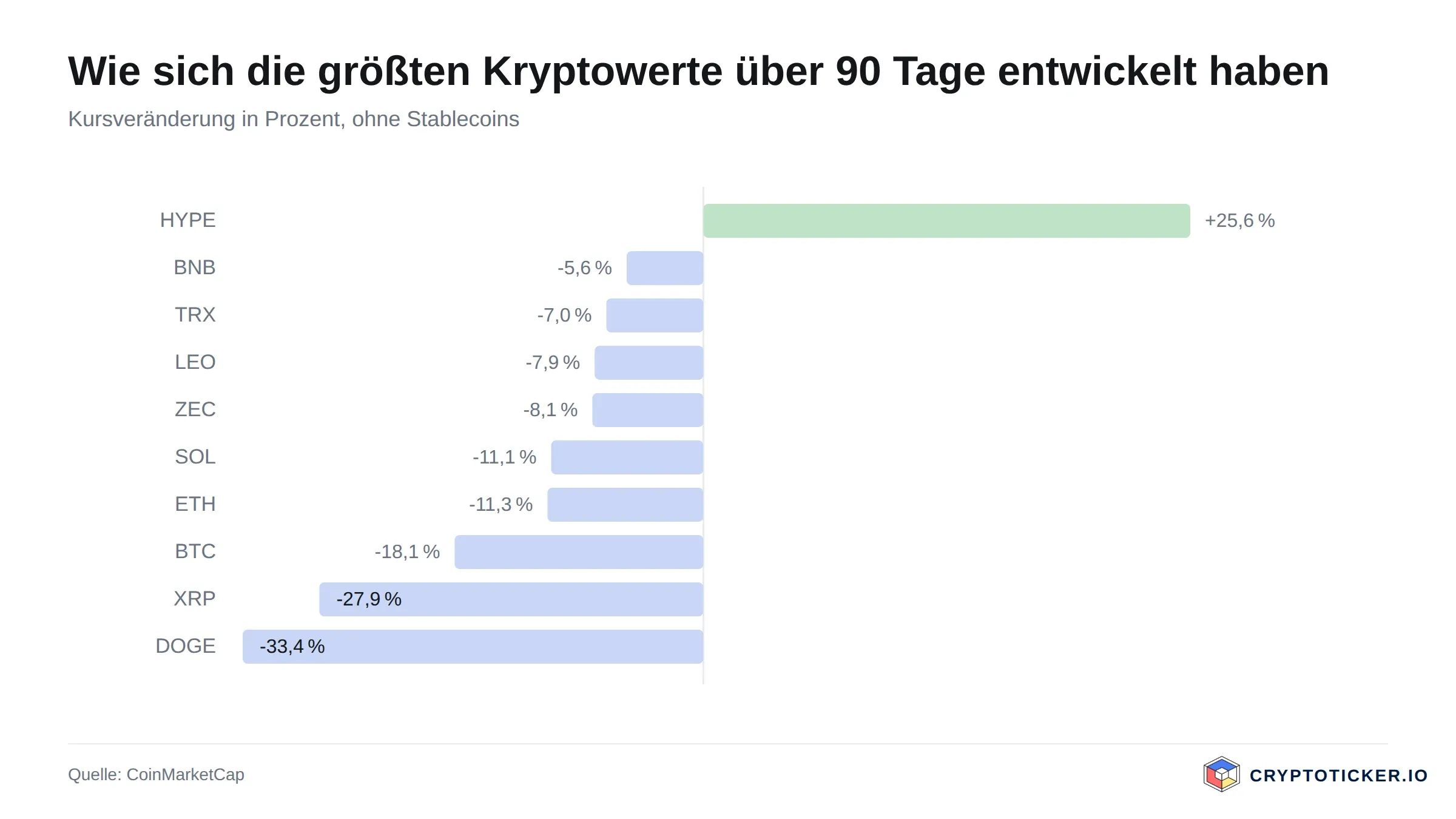
From this follows a rule that every market cycle confirms: lending yields rise when many participants want to work with leverage, and they fall when that appetite disappears. Persistently double-digit rates are therefore a warning sign rather than a badge of quality. The most useful question to put to any advertised yield is this: who pays this interest, and why are they doing it?
CeFi lending: a company holds your coins and lends them on
In centralised lending, usually called CeFi, you transfer your coins to a company that pools the holdings of many customers and lends them on to institutional trading partners. Your account shows a growing balance, and payouts happen at the touch of a button as long as there is enough liquidity.
The convenience has a price, and it is set out in the terms and conditions rather than on the product page. You usually do not know who the coins are lent to, or how far the provider transforms maturities, meaning how much it swaps customer money that can be called at any time for longer-dated loans.
How quickly that balance tips was demonstrated by the market in 2022, when several large centralised crypto lending providers halted withdrawals within a few weeks. Anyone invested at the time had done nothing wrong in their own wallet and still stood there without access. Before you hand over any balance, the provider therefore belongs on the test bench. How to go about that in practice is set out in our analysis of the BaFin warnings of 2026, with a guide to checking providers.
DeFi lending: the smart contract replaces the counterparty, not the risk
In decentralised lending no company stands between you and the borrower. You pay your coins into a liquidity pool managed by a smart contract. The program code determines who may borrow how much and when their collateral is realised; the interest rate usually follows the utilisation of the pool automatically. In exchange, the risk moves to two other places.
Errors in the program code
A smart contract does exactly what it was programmed to do, even where what was programmed is wrong. Review reports by external security firms, known as audits, reduce that risk without removing it: an audit is a snapshot of one state of the code, which is developed further afterwards.
Manipulated price oracles
Every lending protocol needs a price in order to decide when collateral is no longer sufficient. An oracle supplies that price. If it is manipulated, for instance through an artificially distorted quote on a thinly traded market, an attacker can borrow more than the collateral supports.
 Crypto lending providers compared
Overcollateralisation and the liquidation threshold: the mechanics behind every crypto loan
For your lent balance to have any chance of repayment, the borrower has to put something up. In the crypto market that happens through overcollateralisation: whoever wants to borrow value deposits more value than they receive. Common loan-to-value limits sit between 50 percent and 80 percent, depending on how volatile the coin is.
A worked example: a borrower deposits bitcoin worth 10,000 euros and may borrow against 60 percent of it, receiving 6,000 euros in stablecoins. If the bitcoin price falls by a third, the collateral is still worth around 6,700 euros, and the claim moves close to the limit. This is where the liquidation threshold takes hold: the protocol sells the collateral automatically before the claim becomes uncovered.
For you as the capital provider this automatic mechanism is the real protection, and it holds only as long as the collateral can actually be sold at the decisive moment. In a rapid market slump many positions are liquidated at once, the sell orders meet thin order books, and the price achieved falls below the one assumed. If a gap remains, it is called bad debt. In case of doubt it is borne by the capital providers, which means by you.
MiCA expressly excludes lending and borrowing of crypto-assets
The Markets in Crypto-Assets Regulation, MiCA for short, has applied in the European Union since 2024. Under it, providers need an authorisation, the custody of customer assets is regulated, and costs and risks have to be disclosed. Many investors conclude from this that everything is covered.
For lending that does not hold, and the Regulation says so itself. Recital 94 reads: “This Regulation should not regulate crypto-asset lending and borrowing, including of e-money tokens, and therefore should not prejudice applicable national law. The feasibility and necessity of regulating such activities should continue to be assessed.” Elsewhere the same text instructs the European Commission to assess the need for such regulation in the first place. You can read it in the official German wording of the MiCA Regulation.
A trading platform can therefore quite legitimately advertise a MiCA authorisation and offer, on the same interface, a lending product to which the protective provisions of that authorisation do not apply. The European securities regulator ESMA pointed providers to precisely this in a statement in July 2025: anyone offering regulated and unregulated services side by side must not give customers a false impression of the scope of protection. Your provider’s authorisation therefore says little about how well your lent balance is protected.
There is no deposit guarantee, and none for stablecoins either
Bank balances in the European Union are protected by the statutory deposit guarantee scheme up to 100,000 euros per customer and institution. That protection attaches to the concept of a deposit, and crypto-assets are not deposits. For lent coins there is accordingly no comparable statutory backstop, however much a provider’s interface may recall a current account.
The misconception is particularly persistent with stablecoins. A token pegged to the euro carries a stable price yet remains a crypto-asset. If you lend it, you part with it just as you would with a bitcoin, and in the provider’s insolvency you stand in line as an ordinary creditor. Voluntary insurance or protection funds offered by some providers are private-law promises with upper limits, and they carry exactly as far as the company behind them.
 Crypto tax tools compared
Lending income counts as other income under Section 22 no. 3 of the Income Tax Act
For tax purposes Germany treats lending income differently from interest on a savings account. The flat-rate withholding tax does not apply here; what applies is other income from services. The Federal Ministry of Finance set this down in its circular of March 6, 2025 on crypto-assets, which contains a section of its own on lending. You will find the full text at the Federal Ministry of Finance as a PDF.
Three consequences follow. First, your personal income tax rate applies instead of the flat 25 percent. Second, a separate exemption limit takes hold: under Section 22 no. 3 sentence 2 of the Income Tax Act such income stays tax-free where it amounts to less than 256 euros in the calendar year. Anyone crossing that mark pays tax on the whole amount and not merely on the excess, because an exemption limit works differently from an allowance. Third, the moment of receipt counts: coins received are valued at their market price at the moment they are credited and count as acquired at the same time, which starts a holding period of its own for any later sale.
It is this double role of every credit entry that defeats manual record-keeping: with daily payouts, several hundred inflows arise over a year, each with its own price and acquisition date. Which programs cover the German case is shown in the comparison of crypto tax tools and portfolio trackers. For readers in Austria a different system applies, which we have broken down separately in Bitcoin lending in Austria.
The ten-year period is still in the statute, and the ministry does not apply it
Few rules have attracted as many outdated guides as the extended holding period. Section 23(1) sentence 1 no. 2 sentence 4 of the Income Tax Act extends the speculation period for an asset from one year to ten where income was earned from its use in at least one calendar year. On the wording, lent coins meet that test.
A widespread claim is that this sentence has since been deleted. It has not; it stands unchanged in the statute in force. The question is resolved on a different level: in its circular of March 6, 2025 the Federal Ministry of Finance makes clear, under a subheading of its own, that it does not apply the extension to crypto-assets. For private investors the one-year period therefore remains, even where the coins were lent out in the meantime. The difference between a deleted provision and one that is not applied is no quibble: a ministerial circular binds the tax offices, but it does not bind the courts.
Worked example: what is left of a gross yield after tax
Here is the calculation that rarely appears in marketing material. Suppose you lend stablecoins worth 10,000 euros at an advertised rate of 5 percent a year. Gross, that gives 500 euros. The 256-euro exemption limit is exceeded, so the full amount is taxable. At a personal tax rate of 30 percent, around 350 euros remain, before the solidarity surcharge and church tax. From that, withdrawal and network fees come off, and with decentralised protocols the transaction costs of every single interaction come off as well.
The result is dominated by another figure altogether, the price. An annual return of 5 percent on a coin that loses 30 percent of its value over the same period produces no gain. For most private investors, lending therefore makes recognisable sense above all with stablecoins, because there the price risk stays small and the yield becomes visible at all.
Checking a crypto lending offer: what to take away
One tried-and-tested rule of thumb first: lend only the part of your holdings whose complete loss you could absorb.
- Keep the provider check apart from the yield comparison. Establish first who the counterparty is and what applies in insolvency, and only then look at the percentage. You will find the terms in the comparison of crypto lending platforms.
- Put lending and staking side by side. Both generate running income, yet the default risk sits in different places. Which platforms offer which conditions is shown in the overview of the best staking platforms.
- Secure the part you do not lend. Whatever stays in your own custody belongs on a device whose keys you control. The models are listed in the hardware wallet comparison.
(As of August 16, 2026. This article is not investment advice. Prices and fee structures change; check the terms with the provider before you buy.)
Transparency note: This article was produced with the assistance of artificial intelligence and reviewed by our editorial team before publication. All figures and claims were checked against the primary sources linked in the text. The feature image was generated with AI.
Related articles
- Bitcoin Lending in Austria: When Tax Falls Due
- Crypto Tax in Germany: What Applies in 2026 and What Is Set to Change in 2027
- Taxing Crypto Lending: Your Personal Rate Instead of Withholding Tax, and the Right Federal Fiscal Court Case Number
- MiCA Review: What the European Commission Could Change About the EU Crypto Rules
- Solana DEX Trades Overtake the NYSE: What to Check on Swaps, Tax and Oversight
Which topics should we dive deeper into?
Select what genuinely interests you. Your picks feed directly into our editorial planning.
Crypto news that's actually worth your time.
Weekly. 60 seconds. Carefully curated by our editors: no hype, no promo flood, no spam.

August 13, 2026 6:18 AM

Revolut Delists USDT: Forced Conversion on August 31, 2026 Counts as a Sale
Revolut is taking USDT off the table on August 31, 2026: purchases have already stopped, deposits are blocked, and anyone who fails to act before the deadline faces an automatic conversion that counts as a sale for tax purposes. This article explains the deadlines, the tax treatment under section 23 of the German Income Tax Act and what you can do now.
September 15, 2026 4:12 AM

Using Hyperliquid from Germany: What Applies to Your Funds Without a MiCA Licence
Hyperliquid is not entered in any EU register as an authorised crypto-asset service provider, and for perpetual futures a MiCA licence would be the wrong paperwork anyway. Here is what that means in concrete terms for your funds, your keys and your tax return.
September 9, 2026 1:15 AM

Germany's Crypto Tax: 160 Million Euros for a 555-Billion Budget
The German finance ministry's draft bill puts a figure on the crypto tax for the first time: 160 million euros from 2028. What that number means in the 2027 federal budget, how 11.4 billion became 160 million, and what investors can read from it.
September 25, 2026 4:20 AM

Crypto as a Down Payment for a German Mortgage: What Banks Require
Since April 2023 a house in Germany can no longer be paid for in Bitcoin; section 16a of the Money Laundering Act bans it outright. Your crypto holdings still work as a down payment, provided you take the route through the euro and prove the origin without gaps.
September 23, 2026 7:15 AM

SoFi Settles Card Payments in Stablecoin: What Cardholders Should Check
Since September 22, 2026, the US bank SoFi has run its entire card business through its own stablecoin, SoFiUSD, on the Mastercard network. What sets the model apart from a crypto credit card, and which rules would apply if a European provider followed suit.
August 19, 2026 4:15 PM

Tether Audit by KPMG: What the Unqualified Opinion Means for USDT in the EU
Tether reported the first full audit of its financial statements by KPMG on August 13, 2026, with an unqualified audit opinion for the 2025 financial year. That changes nothing about whether USDT can be traded at authorised providers in the EU, because Article 48 MiCA decides that question.
September 26, 2026 1:19 AM

Germany’s Crypto Holding Period Is Wobbling: What to Check Before December 31
A CDU member of the Bundestag makes it plain: the coalition agreement does not guarantee that the one-year holding period for crypto assets will survive. What that means for purchases made before the planned cutoff date of December 31, 2026.

October 1, 2026 7:16 AM

Bitway (BTW) hits a record $1.43: 27 percent in a week while the market stood still
Bitway marked an all-time high of $1.43 on Monday and trades at $1.32 after a weekly gain of around 27 percent, while the broader market stood still. What carried the jump, when the incentive campaign ends, and what applies to circulating supply, authorisation and tax in Germany.
September 22, 2026 10:25 PM

Binance Buys Into Circle: What the USDC Deal Means for Your Balance
Binance is taking a $100 million stake in Circle and extending the USDC agreement by five years. For investors in Germany, the sum matters less than the question of who earns money from stablecoins left sitting idle.
September 22, 2026 1:15 AM

Memecoin Rally: Why Memecoins Are Rising and What to Check Before You Buy
The memecoin sector stands 9.01 percent higher, the overall market only 2.90 percent. The arithmetic behind it shows that two tokens carry three quarters of the move and that the sector has no occasion of its own.

April 21, 2026 8:57 AM
Aave Liquidity Crisis: The 'Slow Burn' Trap Freezing Millions in USDC and USDT
Aave faces a liquidity trap as USDC/USDT utilization hits 100%. Here's how the 'Slow Burn' mechanism freezes lender withdrawals and benefits borrowers.
January 1, 2026 3:12 PM

Crypto Taxes 2026 in Germany: Automatic Reporting Under DAC8, What Applies Now
Since 1 January 2026 crypto providers in the EU must record their customers' transactions for the tax authorities. The first report for 2026 follows in 2027. What investors need to know.
October 1, 2026 7:36 PM

Crypto tax and withholding at source from 2028: what to check now
The German Federal Ministry of Finance’s draft bill goes to cabinet on October 14, 2026. The underexposed part of it is the deduction of tax from 2028: which providers are to withhold the tax on investment income, why self-custody and foreign platforms stay exempt from it, and what you should document by December 31.
September 8, 2026 10:21 PM

Crypto Holding Period and Grandfathering: Why December 31, 2026 Becomes the Cut-Off in Germany's Draft Bill
A ministerial draft bill from Germany's finance ministry names a cut-off date for the first time: crypto assets acquired after December 31, 2026 are to fall under the flat-rate withholding tax. What that means for legacy holdings, running savings plans and staking income, and why nothing has been decided yet.
September 5, 2026 10:24 PM

Fake German Finance Ministry Letters: Why Nobody May Demand 19 Percent VAT on Your Crypto Purchase
Since September 1, 2026, Germany's Federal Ministry of Finance has been warning about forged letters that demand 19 percent VAT on cryptocurrency purchases while citing real transactions. That tax does not exist, and this is how to spot the forgery.
August 27, 2026 7:21 AM

Crypto Gains 2026: Why the September 10 Advance Tax Payment Decides Your Interest Bill
The third income tax advance payment falls due on September 10, yet for most crypto investors none was ever set. We checked four provisions in full text and show when the interest period for 2026 starts and how you can shrink it yourself.
September 26, 2026 7:29 PM

Coins Stolen in an Exchange Hack: What the German Tax Office Accepts as a Loss
After the attack on Bitget on September 24, a question the reports leave out arises for those affected in Germany: can a stolen balance be written off against tax? The answer hangs on a single term in the Income Tax Act, and it is decided by your records.
September 4, 2026 1:34 PM

Bitcoin as Loan Collateral: When No Tax Applies in Austria
Pledging Bitcoin as collateral for a loan? As long as the coins are not realised, no sale arises in Austria in principle.
August 21, 2026 1:42 PM

Writing Off a Total Crypto Loss: When the Tax Office Recognises Worthless Coins
A token that has collapsed only reduces your tax once you actually dispose of it. What applies to delisting, exchange insolvency and worthless holdings under Section 23 of the German Income Tax Act, and how you offset losses.
September 18, 2026 10:13 AM

Bitcoin and the German Exit Tax: What Applies When You Move Abroad
Anyone emigrating with Bitcoin expects an exit tax on unrealised gains and finds nothing of the sort in the statute. Where the real risks sit is decided at four points: residence, the holding period, the legal form of your investment, and automatic reporting from 2026.
August 21, 2026 4:24 AM

Forced Sale on a Crypto Exchange: Which Moment Counts for the Holding Period and What You Must Document
At Luno, Kraken and Valour the deadlines are running out, after which the provider realises the remaining holding itself. For tax purposes that is a disposal, and what governs it is the exchange's timestamp.
August 11, 2026 9:13 PM

Germany's Crypto Holding Period Faces Abolition: What Petition 201716 and the Cabinet Decision Mean for Your Tax
Petition 201716 in the German Bundestag calls for the one-year holding period for crypto assets to be kept and has already passed the quorum of 30,000 signatures. This article sets out what the cabinet decision of July 6, 2026 provides for, how much of it is binding and which records you should be pulling together now.
September 16, 2026 7:12 PM

Borrowing Against Bitcoin Instead of Selling: When German Tax Still Applies
Posting Bitcoin as collateral for a loan is not a sale in Germany, because section 39 of the Fiscal Code keeps the coins attributed to you for tax purposes. Tax arises only when the collateral is liquidated, and then the one thing that decides the bill is how long you held the coins beforehand.
September 7, 2026 7:22 AM

German Crypto Holding Period Stays: The Income Tax Reform 2027 Leaves Section 23 Untouched
On September 2, 2026 the German federal cabinet adopted the draft of an Income Tax Reform Act 2027, and crypto assets do not appear in it. The one-year holding period under Section 23 of the Income Tax Act therefore continues to apply unchanged.
September 19, 2026 7:26 AM

Offsetting Crypto Losses Against Share Gains: What Is Really Allowed in Germany
Crypto losses and share gains sit in separate loss buckets in Germany, and there is no offsetting between them. Where the line runs, why crypto derivatives are the exception, and how you can still use losses through carryback and carryforward.
August 16, 2026 6:14 AM

Crypto Credit Card Tax in Germany: Why Every Payment Is a Disposal
Paying with a crypto credit card means disposing of your coins for tax purposes. What that means for the holding period, the exemption threshold and your record-keeping duties, and which card design keeps the effort small.

July 31, 2026 10:59 AM

German Crypto Tax Return 2025: What You Should Know Now the July 31 Deadline Has Passed
Recap as of September 27, 2026: the deadline for the 2025 German tax return ended on July 31, 2026 at midnight. This article describes the situation on the day of the deadline: what crypto investors had to report and what happens if the deadline is missed.
More from CryptoTicker