
Digital Euro and Stablecoins: Why the Bank of England Is Testing Both Forms of Money in a Single Payment
In the Bank of England's Digital Pound Lab, a consortium around NOBO Finance, Dun & Bradstreet and Polygon has rehearsed how an exporter receives an advance in a stablecoin while the importer settles the final payment in digital central bank money. Why the difference between private and public money also matters for your stablecoin balance in Germany.





Which topics should we dive deeper into?
Select what genuinely interests you. Your picks feed directly into our editorial planning.
Crypto news that's actually worth your time.
Weekly. 60 seconds. Carefully curated by our editors: no hype, no promo flood, no spam.
Inside the Bank of England's Digital Pound Lab, two kinds of digital money sit within the same payment: an exporter receives an advance in a stablecoin, the British importer settles the final instalment in digital central bank money, and both legs belong to one and the same trade deal.
For you as an investor in Germany, this is not a British footnote. The question being rehearsed there arises every time you park USDC on an exchange: who owns the promise behind your balance, and what happens to it when conditions tighten? This article separates the two forms of money, places the ECB timetable in context and sets out what follows for your wallet and your tax return.
What the Bank of England's Digital Pound Lab is and what was tested there
The Digital Pound Lab is a test environment run by the British central bank, set up with Accenture as implementation partner. Firms build use cases for a possible digital pound inside it and examine the building blocks such a system would need: aliases instead of account numbers, verifiable credentials, programmable conditions, common standards.
The central bank puts the qualification first. No real money flows in the lab, no real customers are involved, and no decision on issuing a digital pound has been taken to date. Anyone reading headlines about a central bank "launching" a digital pound is reading past the substance.
In the second phase, which according to the central bank ran until July, a consortium of NOBO Finance, business information provider Dun & Bradstreet and Polygon took part; that is how the Bank's own participant list records it. The results were described on August 12, 2026, after the phase had closed.
Stablecoin and digital central bank money: the difference lies with the issuer
Both forms of money reach your screen as a figure with a currency sign in front of it. Behind them sit two entirely different constructions.
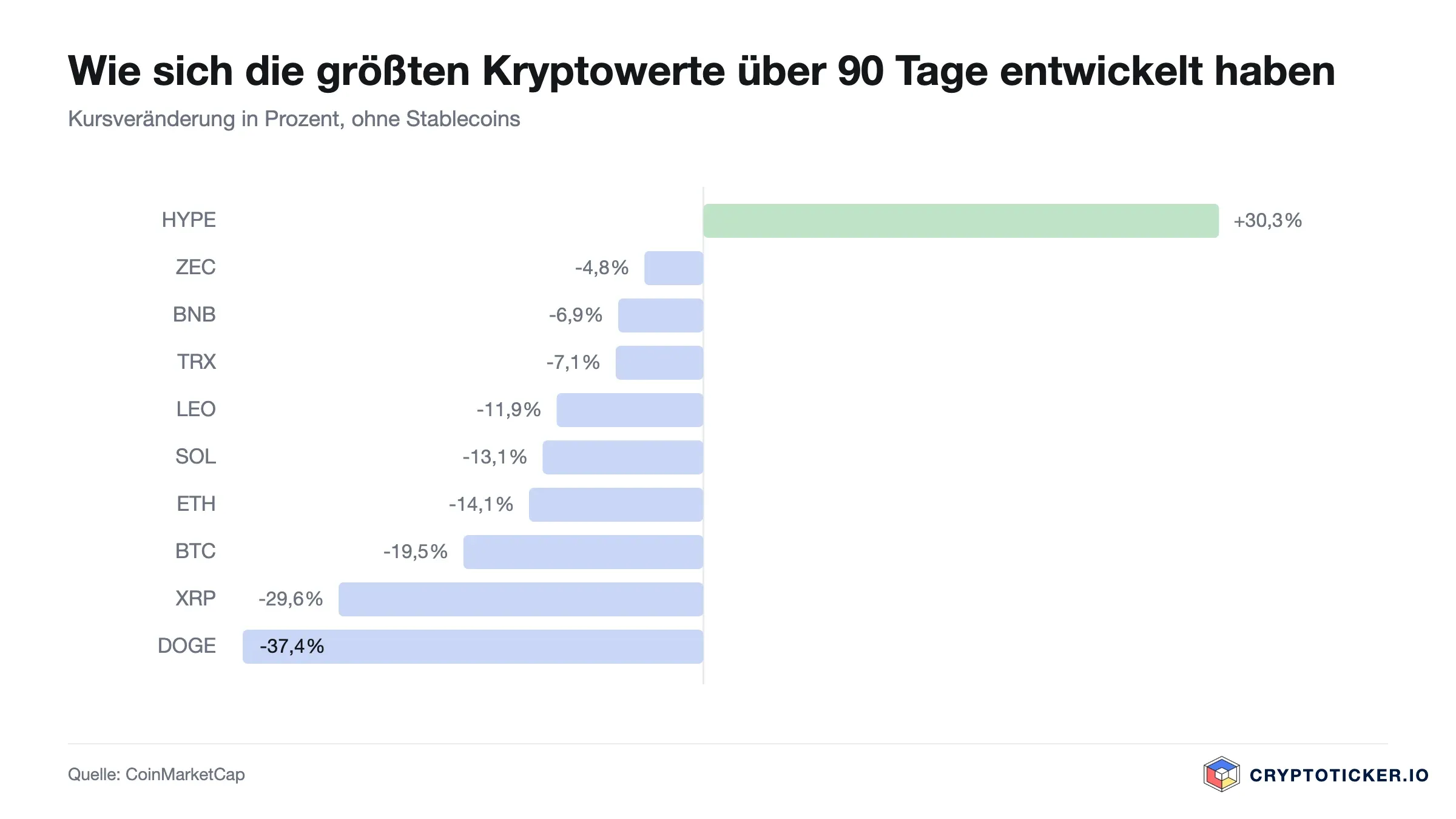
A stablecoin is private money. A company issues a token and promises to redeem it at a fixed rate at any time, backed by reserves that consist mostly of short-dated government bonds and bank deposits. The value of your balance therefore hangs on the quality of those reserves and on the issuer's ability to turn them into cash quickly enough when it matters.
Digital central bank money, CBDC in the jargon, is a direct claim on the central bank. There is no issuer here that could become insolvent. A digital euro would be the same money as a banknote, merely in electronic form. The underlying mechanics of the ECB's e-euro have not changed for years; only the timetable has moved, and it has moved several times.
Why issuer risk is the difference that matters most in practice
The distinction sounds academic until a stablecoin comes under pressure. At that point it decides whether you get your deposit back. With private money the question arises; with central bank money it does not, and that is precisely why supervisors build such dense rules around the reserves.
In practice, a stablecoin balance held on a trading platform carries two risks stacked on top of each other: that of the issuer and that of the platform. Anyone holding larger amounts should know who issues the token and which authority supervises the venue. Our overview of regulated crypto exchanges lists the supervisory details of the trading venues; the issuer of the token you have to check separately.
In Europe, lawmakers addressed this position through the regulation on markets in crypto assets. Stablecoins referencing a single official currency count as e-money tokens there and are subject to requirements on reserves, redemption and authorisation of the issuer. That turns private money into supervised private money. It does not turn it into central bank money.
The ECB timetable: pilot from 2027, possible first issuance in 2029
For the digital euro the schedule is more concrete than many readers assume. The ECB Governing Council decided on October 30, 2025 to move into the next project phase, and named the condition on which everything hangs. If EU lawmakers adopt the regulation during 2026, a pilot and first transactions could take place from mid-2027, and the Eurosystem is to be ready for a potential first issuance in 2029.
The ECB puts the pilot at twelve months from the second half of 2027; it is to be tested by authorised payment service providers, selected merchants and Eurosystem staff in everyday use. The final decision on whether a digital euro is issued at all will be taken by the Governing Council only after the legislation has been adopted. How politically charged the subject is emerges from our article on the digital euro set against American crypto policy from January 2025.
Holding limits: the brake being built into the digital euro
A digital euro without any limit would be dangerous for banks. If everyone could shift their current account into central bank money, banks would lose their deposits within hours in a crisis. The ECB therefore names holding limits explicitly as a safeguard against risks to financial stability.
A final figure has not been set. Anyone quoting one to you today is reporting a state of debate, not a decision. For your own planning the direction matters more than the amount in any case: the digital euro is conceived as a means of payment and will remain capped as a store of value. The ECB puts the cost at around 1.3 billion euros in development up to first issuance and some 320 million euros a year to operate from 2029.
The British counter-model: a 40 billion pound issuance cap instead of a per-holder limit
While the ECB envisages per-user holding limits for the digital euro, the Bank of England has taken the opposite route with private stablecoins. In its statement of policy of June 22, 2026 it dropped the holding limits per holder it had previously proposed and instead introduced a temporary issuance cap of 40 billion pounds per systemic stablecoin to begin with. The same objective is achieved that way, the central bank argues, but more cheaply and without constraining households and businesses.
At the same time the Bank loosened its investment requirements. The share an issuer may hold in interest-bearing short-dated British government bonds rises from 60 to 70 percent, with the remainder staying on deposit at the central bank so that redemptions can be served promptly. The Bank intends to finalise the code by the end of 2026, and regulated stablecoins should be able to operate in the United Kingdom from 2027. It names one limitation itself: its regime captures systemic payment uses, while the dominant use of stablecoins today, buying and selling crypto assets, expressly falls outside it.
 Regulated crypto exchanges compared
Trade finance as the test case: advance in stablecoin, final payment in digital pounds
Which takes us back into the lab, because that is where the two worlds meet. The first of the two workstreams concerns a reusable creditworthiness profile for small and medium-sized companies. Transaction data from consent-based wallets and the business information held by Dun & Bradstreet are combined into a pre-qualified credit result that belongs to the company and travels with it to the next financier, instead of being gathered afresh at every enquiry.
The second strand is the more interesting one, because it is where the two kinds of money stand side by side. What was tested was the advancing of an invoice, secured through an electronic bill of lading: the exporter receives the advance as a stablecoin payment, the British importer makes the final payment in digital pounds. The question the experiment poses is whether both legs mesh cleanly, without one form of money having to carry the process on its own.
The benefit behind it is unspectacular and for that reason worth taking seriously. In cross-border business done by small firms, days often pass between the shipment of goods and the receipt of payment, and working capital is tied up throughout.
Polygon's role: smart contracts, wallets and the Open Money Stack
Polygon Labs supplies the infrastructure for the stablecoin leg: wallets, settlement and smart contracts for consent, verification and the life cycle of the financing. The company bundles these components under the name Open Money Stack and positions it as an intermediate layer through which applications can switch between currency balances and stablecoins without building payment rails of their own.
Marc Boiron, head of Polygon Labs, has publicly sharpened the point of the experiment to the argument that the various forms of digital money, public and private, will have to work together if digital money is to move world trade. On the scale of its own network, Polygon Labs cites more than 2.6 trillion US dollars in settled stablecoin transactions; that is a company figure, not an audited statistic.
What the experiment means for you as a crypto investor in Germany
The first conclusion is reassuring. The digital euro will not replace the stablecoins in your wallet, nor is it constructed to compete with them. Central bank money covers the payment that has to be final, private money the cases where programmability, speed or reach are what count. The lab experiment puts that division of labour to the test rather than playing one side off against the other.
The second conclusion concerns your time horizon. Anyone waiting to settle their crypto business in digital euros at some point is waiting, on current standing, until at least 2029, and even that date is subject to a law that has yet to be passed. For as long as your euro equivalent is a private token, you carry the issuer risk, and custody decides whether platform risk comes on top.
 Crypto tax tools and portfolio trackers compared
For tax purposes, stablecoin balances and central bank money are two separate worlds
This is where the difference between the forms of money becomes immediately expensive or cheap for you. A digital euro would simply be a euro, and holding euros and spending euros triggers no crypto tax event.
Stablecoins, by contrast, count in Germany as other economic assets, and swapping a crypto asset into a stablecoin is, under administrative practice to date, a disposal that can trigger a taxable event. The fact that the price stays stable changes nothing, because the gain is not created by the stablecoin but by the value you put into it.
A caveat on the legal position belongs here. The taxation of private disposal transactions involving crypto assets is currently under political debate in Germany. Check the position as it stands when you file, and take tax advice if in doubt.
More hangs on redemption than tax alone. With a regulated e-money token you have a claim at face value, and how quickly it is served depends on the liquidity of the reserves. That is exactly why supervisors prescribe which share of the reserves may sit where.
Digital euro and stablecoins: what to take away
- Sort your euro balance by issuer. For every stablecoin you hold, check who issues it and which authority supervises the venue. Where the balance should sit afterwards is covered by our comparison of software wallets.
- Separate payment balances from investment holdings. What you need for spending can sit on a platform or a payment card; what you hold for longer belongs in custody you control yourself. For the spending part, our comparison of crypto credit cards is worth a look.
- Record every switch into a stablecoin. Reconstructing it afterwards costs more time than logging it as you go. A tool from our comparison of crypto tax tools and portfolio trackers takes that off your hands, as long as you run it from the start.
You can read both in the original: the Bank of England's phase 2 update and the ECB press release of October 30, 2025.
(As of August 14, 2026. This article is not investment advice. Prices and fee structures change; check the terms with the provider before you buy.)
Transparency note: This article was produced with the assistance of artificial intelligence and reviewed by our editorial team before publication. All figures and claims were checked against the primary sources linked in the text. The feature image was generated with AI.
Related articles
- Euro Stablecoin From 37 Banks Comes to Ethereum: What to Check on Your Euro Token Now
- SoFi Settles Card Payments in Stablecoin: What Cardholders Should Check
- MiCA Register of Stablecoin Issuers: 23 Authorised Firms, 43 White Papers and Two Dead Links
- Revolut Launches the EURR Euro Stablecoin: Why Germany Is Not in the First Wave
- Digital Euro Holding Limit: What the Planned Cap Means for Your Account and Your Crypto
Which topics should we dive deeper into?
Select what genuinely interests you. Your picks feed directly into our editorial planning.
Crypto news that's actually worth your time.
Weekly. 60 seconds. Carefully curated by our editors: no hype, no promo flood, no spam.

October 1, 2026 2:16 PM

Open USD is live but absent from the EU register: what matters now for investors in Europe
The dollar stablecoin Open USD launched on September 30, 2026, backed by Coinbase, Mastercard, Shopify, Stripe and Visa. On October 1, 2026 the token was not notified in the MiCA register, and that decides what you can do with it in Europe.
September 25, 2026 10:22 AM

Fed Rules for Stablecoins: What to Check on Backing and the Redemption Right
The Federal Reserve put forward two proposed rules on backing, capital and redemption of payment stablecoins on September 24, 2026. For your holdings in Germany, however, MiCA is what counts, and different checks follow from it.
September 22, 2026 10:15 PM

Stablecoin Reserves: Why the ECB Wants the Bank Deposit Rule Scrapped
The European System of Central Banks filed its response to the MiCA review on September 22 and calls in it for an end to the requirement to hold 30 to 60 percent of stablecoin reserves as a bank deposit. What lies behind it, and what you can check on your own token.

September 26, 2026 7:14 AM

Cardano Before the RealFi Launch on October 1: What ADA Holders Should Check on USDr, MiCA and Tax
On October 1, 2026 the stablecoin platform RealFi goes live on the Cardano mainnet, and ADA has gained 14.67 percent in a week. What is documented about the yield-bearing dollar token USDr, and what investors should settle beforehand.
August 19, 2026 4:15 PM

Tether Audit by KPMG: What the Unqualified Opinion Means for USDT in the EU
Tether reported the first full audit of its financial statements by KPMG on August 13, 2026, with an unqualified audit opinion for the 2025 financial year. That changes nothing about whether USDT can be traded at authorised providers in the EU, because Article 48 MiCA decides that question.

January 25, 2025 7:34 PM

ECB Prepares for Potential Digital Euro Launch Amid Trump’s Crypto Revolution
Unlike the US prohibiting CBDCs, the ECB is planning a digital Euro, a government-led CBDC to keep up with the crypto revolution shaping up in 2025 with Trump in office. What would be the impact of this launch?
February 27, 2025 8:01 PM
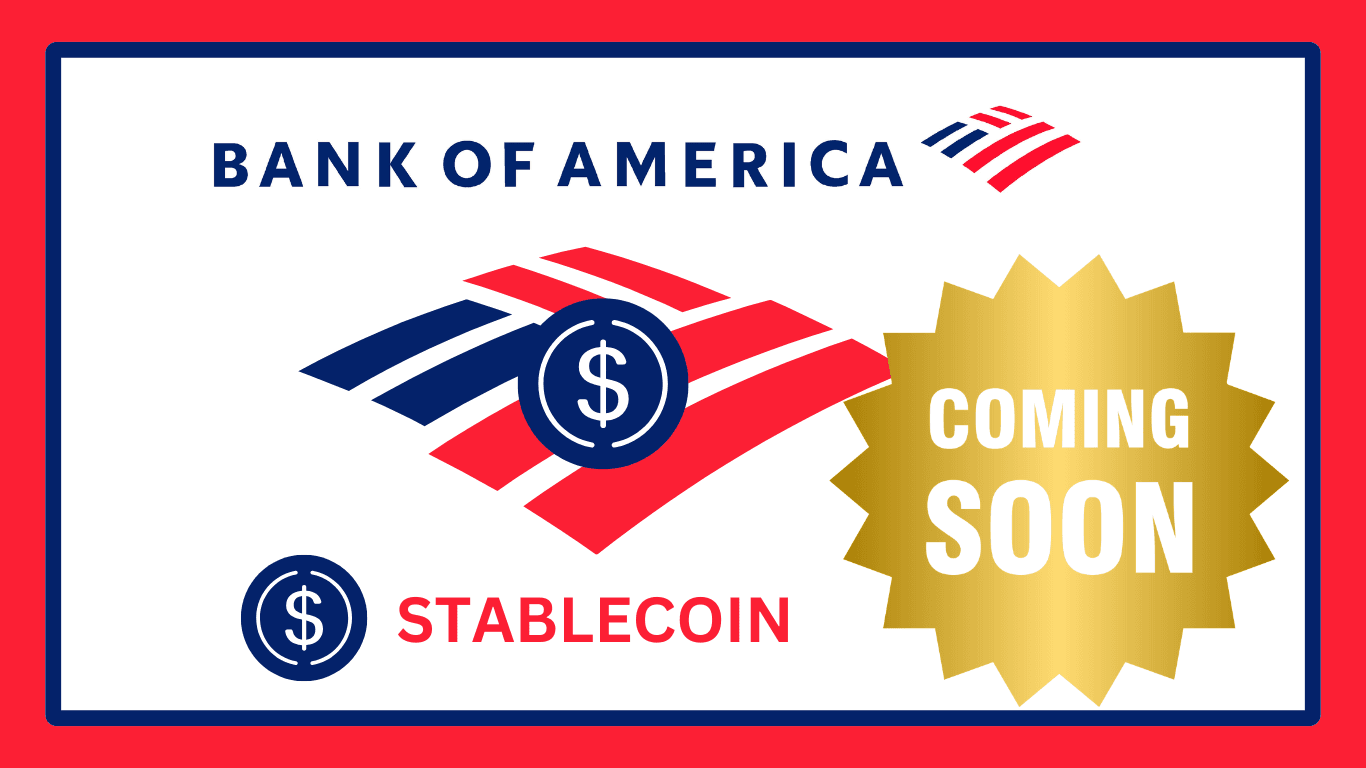
Crypto News: Bank of America to Launch USD-Pegged Crypto Stablecoin
BOFA is set to enter the crypto market with its USD-pegged stablecoin. It's another move to integrate digital assets into traditional banking that could reshape the financial sector.
October 3, 2026 10:20 PM

2027 start for the UK stablecoin regime: what the Bank of England mandate means
The Bank of England's new innovation objective is a signal for digital payments, not a stablecoin licence. What still decides the outcome are the FCA rules, supervision and the timetable running to 2027.
July 21, 2024 6:37 PM

MAJOR Ripple News: How Will These Developments Impact XRP Price?
New developments involving Ripple could have a huge impact on XRP price. What are they and how will XRP price react to this?
January 29, 2020 11:59 PM

Only Bitcoin And Digital Currencies Will Survive, Fund Manager
Multicoin Capital’s Managing Partner Tushar Jain tweeted on 27th Jan that FIAT currencies issued from economically challenged smaller countries will be on the verge of extinction soon and we might be left with a few Central Bank Digital Currencies (CBDC) […]

September 5, 2019 3:26 PM

Weekly Tidbits: Crypto News from the German-Speaking Sphere
German Cabinet and Bundesbank tries to resolve CBDC issues The Cabinet of Germany and Deutsche Bundesbank are working together on issues regarding central bank digital currencies (CBDCs). The Cabinet published an official response to a request from the Free Democratic […]
September 1, 2026 4:12 AM

USDT cashback and 7 percent on stablecoins: what the MiCA interest ban means for you
A new payment card advertises up to 10 percent cashback in USDT and up to 7 percent a year on the balance. Article 50 MiCAR explains why a provider licensed in the EU is not allowed to pay you exactly that.
September 17, 2026 10:11 AM

Digital Euro: the ECB Opens Its Pilot Project, Two Dates in October 2026
The ECB is looking for merchants for its digital euro pilot project and is inviting anyone interested to an information session on October 6, 2026, consumers included. Both dates appear only on the English version of the ECB page.
September 24, 2026 10:29 AM

Bank Closed Your Account Over Crypto: Your Rights and the Route to a Replacement Account
After a withdrawal from a crypto exchange, banks repeatedly end the banking relationship, usually without giving a reason. What the German Payment Accounts Act guarantees you anyway, which notice period applies, and in what order you approach the supervisor, arbitration and the courts.
July 11, 2026 12:43 PM

Circle Just Became a Bank: What the OCC Trust Bank Approval Means for USDC
The USDC issuer just cleared a milestone no stablecoin company has reached at this scale — and it changes how the biggest regulated stablecoin is backed.
February 22, 2025 10:59 AM

ECB Develops Settlement System for Distributed Ledger Technology Transactions
The European Central Bank enhances financial market efficiency by developing a settlement system for distributed ledger technology transactions using fiat currency.

September 25, 2019 2:39 PM

What is Proof of Burn?
While most blockchain arrangements either adopt a Proof of Work (PoW) or a Proof of Stake (PoS) consensus algorithm, the Proof of Burn (PoB) is being examined as a viable option to those. Proof of burn is one of the […]

July 28, 2026 5:16 PM
Russia Just Passed Its Own Crypto Clarity Act While the US Senate Keeps Stalling
Russia's crypto trading law is on its way to Putin's desk while the US CLARITY Act sits unvoted on a shelf. Here is what the split means for prices.
May 11, 2026 6:16 PM

Dubai Makes it a Reality to Pay Government Fees with Crypto
Dubai officially integrates cryptocurrency for government fee payments via Crypto.com, marking a major step for the UAE's cashless and digital economy strategy.
May 12, 2025 9:05 PM

US-EU Trade Tensions Rise as US-China Conflict Cools Down
Just as the long-standing US-China trade war appears to ease, new tensions are emerging between the United States and the European Union. With Trump calling Europe “nastier than China,” are we about to witness a new transatlantic trade conflict?
November 14, 2020 3:06 PM

Shaping the Blockchain & Crypto Ecosystem at Hong Kong Blockchain Week 2020 November 17-19, With Main Block O2O Virtual Summit on Nov 18th
As Bitcoin price is going up, digital currencies relive their best industry moments while getting closer to a customer than ever in 2020. Experts from business, technology, finance, education hubs will ensure deep thought leadership and share unique analysis of how the crypto currencies world evolved from Satoshi’s whitepaper into a globally important topic of central bank digital currencies.
October 31, 2020 9:40 AM

Deutsche Bundesbank, The German central bank is Partnering with OCEAN
The Central Bank of Germany Deutsche Bundesbank has decided to partner with the OCEAN Protocol to develop a decentralized data autonomy platform. OCEAN Protocol and the Deutsche Bank According to a public notice issued in the Supplement to the Official Journal of the European […]
April 24, 2019 9:50 AM

The IMF accidentally makes a case for Crypto
Is it possible to think that the money in your bank account is different from the cash you hold? Well, one of the fundamental ideas of modern banking is that the balance an individual holds in a bank is the […]
October 13, 2018 9:58 PM

HKMA To Launch Trade Platform via Blockchain
HKMA, Hong Kong’s de facto central bank Hong Kong Monetary Authority is launching a blockchain-based trade finance platform
September 22, 2026 7:13 AM
ECB Platform Pontes Goes Live: What to Check on Tokenized Securities Now
The Eurosystem launched its Pontes platform on September 21, 2026, allowing trades in tokenized securities to be settled in central bank money for the first time. Nothing changes in your portfolio today, but the distinction between a crypto-asset and a crypto security will decide tax and liability in future.
August 30, 2026 10:38 PM

Crypto Cards: Where Your Card Balance Really Sits and What the August 28 Solana Exploit Reveals About It
An attack on a card balance contract on Solana took the loaded balance from 1,685 users while their wallets stayed untouched. The case shows why it matters whether your crypto card holds funds as e-money at a licensed institution or in a smart contract.

More from CryptoTicker