
Musk's Terafab Chip Plant in Texas: What the Construction Start Means for Crypto Investors
SpaceX and Tesla have confirmed the first phase of their Terafab chip plant in Grimes County, yet the cost figures attached to it vary considerably. What is documented about the project, and where it genuinely touches mining hardware, miner stocks and AI tokens.




Which topics should we dive deeper into?
Select what genuinely interests you. Your picks feed directly into our editorial planning.
Crypto news that's actually worth your time.
Weekly. 60 seconds. Carefully curated by our editors: no hype, no promo flood, no spam.
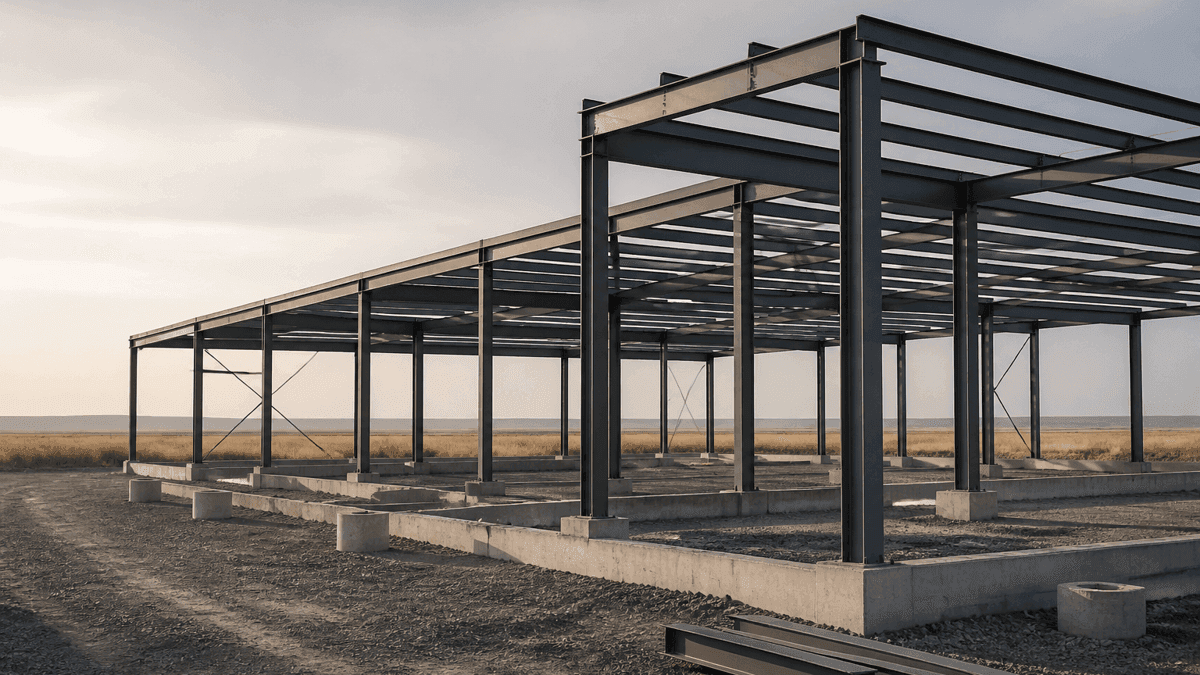
Elon Musk is putting up a semiconductor plant in Texas that, on the published plans, would be larger than anything the chip industry has ever announced for a single site. The project is called Terafab, it is going up in Grimes County north-west of Houston, and since August 6, 2026 it has an official first phase with a number attached to it: $16.8 billion.
To a crypto investor that reads at first like news from someone else's industry. The impression is misleading. If you buy mining hardware, hold shares in listed miners or keep AI tokens in your portfolio, you depend on the same scarce resource as Terafab does: manufacturing capacity on the most advanced process nodes. This article separates what is documented from what is still open, and shows where the project reaches into your portfolio.
Terafab: what SpaceX and Tesla are actually building in Grimes County
SpaceX and Tesla presented the first phase formally on August 6, 2026. The Grimes County site sits around 90 miles north-west of Houston and belongs to SpaceX; Governor Greg Abbott confirmed the investment the same day. At least 3,000 people are meant to work there, 60 to 80 percent of them from Grimes County and neighbouring Brazos County.
The scale is the real talking point. Tom's Hardware puts the manufacturing space of the finished campus at more than 100 million square feet, or roughly 9.3 million square metres. For comparison, Samsung's entire Pyeongtaek campus comes to around 31.1 million square feet. The wording the companies chose matters here: they speak of manufacturing space rather than cleanroom space, and those two figures lie far apart.
The plant is meant to produce AI inference processors for Tesla's Optimus robot and the Cybercab robotaxi, along with high-performance chips for the orbital data centres SpaceX has planned. Terafab is laid out as a captive plant for the Musk companies' own needs, not as a foundry for third parties. Its precursor is a smaller research fab on the north campus of Giga Texas.
The crypto connection: why wafer capacity at the leading node touches your holdings
Semiconductor capacity on the most advanced process nodes is a finite resource that gets reallocated every year. That is also where the chips sit that physically carry the crypto market: the ASIC compute engines used to mine Bitcoin come off the same contract fabs as graphics and AI accelerators. When another deep-pocketed buyer joins that queue, lead times and prices shift for everyone else in it.
Two concrete points of contact follow from this, and one trap. The procurement side is concrete, because ASICs that cost more or arrive later weigh on mining profitability and, over the medium term, on the hash rate. The equity side is concrete, because many listed miners are converting sites to AI hosting and their business model now hangs on the availability of accelerators. The trap sits with the tokens: AI tokens react to headlines about AI infrastructure even though no payment flow runs between a Texas factory and a protocol token.
That mixture of real supply chain and pure narrative is what makes the subject treacherous. Something similar played out around the financial plans for Musk's platform X, where a widely expected crypto feature ended up as a conventional banking product. Our analysis of the banking launch at X without crypto sets that out.
From 20 to 55 to 16.8 billion: why the figures for phase one diverge
The cost figures for Terafab have moved several times in a matter of months, and in different directions. Techtimes traces the sequence: around $20 billion at the announcement in March 2026, then $25 billion, then $55 billion in a filing from May, and finally $16.8 billion as the first phase in August. The magazine puts the gap between the May and the August figure at roughly $38 billion.
For a serious reading of them, what matters is that these numbers can draw different boundaries. A capital markets prospectus, a state press release and a construction announcement do not necessarily describe the same scope, and which boundary sits behind each sum is not disclosed publicly. The internal split between Tesla and SpaceX is unknown as well.
More informative than any single sum are the risk warnings SpaceX itself wrote into its S-1 prospectus of May 2026, according to Techtimes. Terafab is described there as a general framework for future development, with no financial terms, no arrangement on intellectual property and no binding commitments. The filing reportedly states in as many words that neither Tesla nor Intel is obliged to remain part of the project, and that there is no assurance the goals will be reached within the expected timeframe. Language of that kind is standard in prospectuses, but it does set the frame in which you should read every Terafab headline.
 Crypto exchanges compared
Intel 14A: Terafab rests on a manufacturing process that still has to deliver
On the figures Tom's Hardware assembles, the first phase of Terafab is meant to run on Intel's 14A manufacturing process. That is a remarkable commitment, because Intel has trailed TSMC in the foundry business for years, and 14A is the process with which the company intends to close that gap.
The other side of it stands in the prospectus: there is reportedly no obligation on Intel to stay in the project. Between the announcement and running volume production, then, sit several technical and contractual switches that could still fall either way.
What a process node actually tells you
The label 14A is a name for a process generation with certain transistor densities rather than a physical measurement. For the crypto world, one property counts above all: the more advanced the node, the more compute per watt. That ratio decides whether a mining rig still earns a contribution margin after two years.
One terawatt of compute per year: what that target says about the chip market
SpaceX and Tesla justify a plant of their own by pointing to their own demand. On their projection, the group's combined requirement will exceed one terawatt of compute per year and thus run well beyond today's global supply. When that point will arrive, the companies have left open.
Two things can be derived from this. First, the figure is a company demand forecast and not an audited market number; it justifies the investment rather than evidencing it. Second, it describes a squeeze that exists without Terafab as well: SpaceX, Tesla and xAI already claim a substantial share of available foundry capacity. And at the leading node, that is where the makers of mining hardware buy too.
Vertical integration: logic, memory, packaging and test under one roof
The technically most interesting part of the plan is its layout. Chip production is normally spread across continents: logic chips come out of one plant, memory out of another running different process technology, with packaging and test at specialist service providers. Terafab is meant to bring all of those steps together on a single campus.
The calculation behind it is speed. Running logic, memory, packaging and test side by side shortens the production cycle and allows yield improvements to be tested through faster. The price for it is a concentration risk at one location, plus a capital requirement that on Tom's Hardware's assessment will run well beyond the stated $16.8 billion for the full build-out.
Bitcoin ASICs and the race for capacity at the leading manufacturing node
For the Bitcoin market the chain is short. The makers of mining ASICs design their chips themselves and have them produced at contract fabs, usually on advanced nodes, because that is where energy efficiency per terahash comes from. Measured against AI accelerators, the order volumes of these vendors are small, and small customers get worse terms and later delivery dates in a tight market.
The effect shows up in the network with a lag. Late deliveries slow the build-out of hash rate, which in the short term even works in favour of existing miners, because difficulty climbs more slowly. More expensive hardware, on the other hand, worsens the payback on new rigs. If you are weighing up mining or valuing miner shares, delivery time and price per terahash are the metrics through which a factory project in Texas eventually becomes visible. Where you trade the underlying coins and at what fees is worth settling beforehand through a comparison of crypto exchanges.
 Hardware wallets compared
AI tokens such as Bittensor, Render and Fetch: keeping narrative and payment flows apart
Every time a large piece of news about AI infrastructure appears, the prices of AI tokens pick up. Protocols such as Bittensor, Render or Fetch organise decentralised compute and rendering capacity and issue tokens for it. Between a factory that makes inference chips for Musk's robots and satellites and the demand for such networks, however, there is no economic connection. The price reaction feeds on the narrative.
That distinction is the core of any valuation. With every AI token, ask for verifiable quantities: how much compute is billed through the network, who pays for it, does that demand grow independently of headlines, and how many tokens enter circulation through issuance over the same period? While those questions stay open, you are trading a story. How the segment can be looked at in a structured way is something our editorial team wrote up in May 2026 in an overview on building an AI token portfolio.
Miners converting to AI data centres, and what that means for hash rate and mining stocks
The most solid crypto link sits with the listed miners. Several of them have begun to switch parts of their sites from Bitcoin mining to hosting for AI and high-performance computing. The reason is commercially obvious: the real raw material of these companies is a permitted grid connection and cheap power, and for the same megawatt hour AI customers on long-term contracts pay more than the Bitcoin market does with its halving cycles.
For you as an investor, that changes the nature of these shares. A miner drawing a growing share of its revenue from data centre contracts is less and less a leveraged mirror of the Bitcoin price and more and more an infrastructure operator with construction, schedule and counterparty risk. If you hold such stocks as a Bitcoin substitute, read the revenue split in the quarterly report before you rely on a presumed correlation.
What matters for investors: time horizon, concentration risk and the tax question
In the semiconductor industry, several years pass between a construction announcement and the first chips sold from a large plant. Civil works are due to begin within months, according to Techtimes; volume production is not mentioned. Anyone taking a position today because a factory has been announced is buying an expectation with a very long lead time.
On top of that comes a concentration risk that is easily overlooked in Musk-related themes. If you hold Tesla shares, a bundle of AI tokens and stakes in miners converting to AI hosting, you are sitting on the same bet in three positions. And tax applies when you sell. In Germany, gains on crypto assets held privately fall under the rules for private disposal transactions, where the holding period and exemption thresholds decide whether tax is due. If you rebalance actively, you are better off documenting as you go than reconstructing it from exchange exports in the spring.
What to take away from this
- Separate the supply chain from the story. Terafab touches your holdings through chip capacity and hardware prices, not through a payment flow to a token. Secure the holdings you intend to keep for the long run along the lines set out in our hardware wallet comparison.
- Evidence the metrics before you buy. With AI tokens, billed compute and the issuance schedule are what count; with miners, it is the revenue split between mining and hosting. The tools for that are in our overview of analytics platforms.
- Keep the tax file running alongside your trading. Rebalancing across several exchanges without ongoing records means losing track of holding periods. A tax tool or portfolio tracker takes that off your hands.
(As of August 10, 2026. This article is not investment advice. Prices and fee structures change; check the terms with the provider before you buy.)
Transparency note: This article was produced with the assistance of artificial intelligence and reviewed by our editorial team before publication. All figures and claims were checked against the primary sources linked in the text. The feature image was generated with AI.
Related articles
Which topics should we dive deeper into?
Select what genuinely interests you. Your picks feed directly into our editorial planning.
Crypto news that's actually worth your time.
Weekly. 60 seconds. Carefully curated by our editors: no hype, no promo flood, no spam.

July 9, 2023 9:23 AM

Top 3 Generative AI Cryptos by Market Cap in July 2023
The adoption of artificial intelligence across various industries is on the rise. Here is the list of the top 3 Generative AI cryptos by market cap.

February 8, 2023 7:51 AM

Maximize Your Portfolio with AI: The Hottest AI Crypto Tokens and Projects to Invest in 2023
Discover the top AI crypto tokens to watch in 2023 in this article and AI Crypto Tokens and Projects Investment 2023 opportunities.

February 23, 2026 6:00 AM
Is Iran Still the Cheapest Place to Mine Bitcoin in 2026?
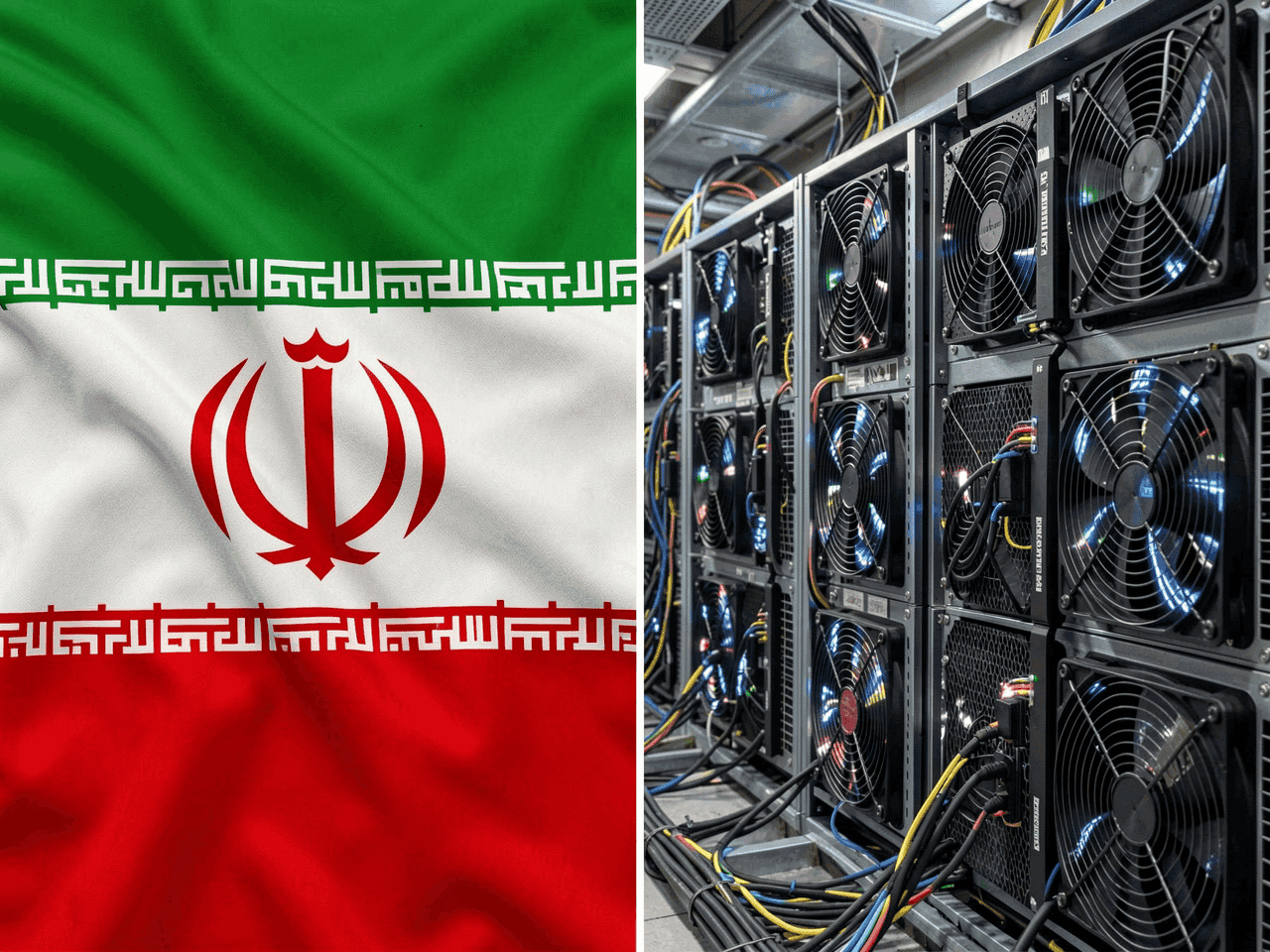
Mining 1 Bitcoin in Iran costs just $1,320 due to subsidized power. Explore how miners achieve a 50x ROI despite government crackdowns and sanctions.
February 17, 2024 7:50 AM
Top 5 Best AI Tokens to Buy Before the Bull Run
If you're thinking about sprucing up your investment game, here are the top 5 AI tokens you'll definitely want to keep tabs on
May 7, 2025 5:00 AM
Elon Musk, Larry Fink, and Mark Zuckerberg to Attend Saudi Forum: Last Chance for Crypto Investors?
MAGA in the Desert, the informal label for the Saudi-U.S. Investment Forum, sees top U.S. CEOs like Elon Musk, Larry Fink, and Mark Zuckerberg heading to Riyadh. This is igniting crypto investor interest as $600B in deals are on the table.
April 16, 2025 8:36 PM
AI Tokens Might Be in Danger Because of China, Here's Why
AI crypto tokens are facing renewed pressure after Nvidia warned of a massive financial hit due to new U.S. export restrictions on chip sales to China.

September 8, 2026 1:25 PM

Bitcoin Mining in Austria: How Mining Rewards Are Taxed
Bitcoin mining in Austria: when mining rewards are taxed at 27.5 percent, and when a commercial activity brings the progressive income tax rate into play.
August 10, 2026 5:15 PM

Bitcoin Lending in Austria: When Tax Falls Due
Lending Bitcoin and earning interest: when lending income is taxed at 27.5 percent in Austria and which exchange rate counts.
November 5, 2025 1:16 PM

$1 Trillion Wiped: Risk-Off Storm Engulfs Stocks & Crypto
Global markets plunge as tech stocks and crypto crash, wiping over $1 trillion in value amid AI bubble fears and investor risk-off panic.
May 11, 2025 3:06 PM
Top 5 AI Agents Coins to Buy in May 2025
With AI tokens averaging a 20% price surge in the past week, AI Agent Tokens have become the hottest narrative in the market. Here are the top 5 coins to watch this May.
June 30, 2025 10:44 PM

Bitcoin Price USD in June 2025: Musk’s Debt Bill Attack and the Sparkassen Crypto Plan
Snapshot from 30 June 2025: Musk attacked Trump’s $5T debt bill and Germany’s Sparkassen announced crypto trading. What Bitcoin did next, updated September 2026.
August 20, 2026 4:24 PM

Bitcoin Across Multiple Wallets: How Austria Works Out the Acquisition Cost
Bitcoin spread across several wallets? How Austria works out the acquisition cost and the rolling average price for tax purposes.
June 29, 2026 10:01 AM

AI Bubble Crash Warning: Could It Send Bitcoin to $20K?
The AI rotation already dragged crypto down — but analysts warn the real AI bubble crash is still ahead. Here's the bear case for Bitcoin at $20K, ETH at $800.

November 17, 2023 10:53 AM
Tether Plans to Invest $500M in Bitcoin Mining
Explore Tether's $500M venture into Bitcoin mining. Uncover the strategy led by CEO Paolo Ardoino and its impact on the crypto landscape.
May 24, 2025 12:00 PM

Top AI Crypto Coins to Buy Now That Could 5x in 2025
The AI crypto sector is heating up fast. From infrastructure leaders like Bittensor to surging tokens like Virtuals and Injective, here are the top AI crypto coins to buy now that could 5x in 2025.
July 11, 2026 6:49 PM
Crypto Price Today: Bitcoin Holds $64K as Robinhood Lets AI Bots Trade Crypto
The market is green again as BTC clings to a key level — but the bigger shift is that AI bots may soon be placing your trades for you. Here's today's snapshot.
June 2, 2026 6:13 PM

Bitcoin Crash to $67,400 as Google and Berkshire Team Up for Massive $80B AI Fund
Bitcoin fell 5.6% to $67,400 as a massive $80B AI capital raise backed by Berkshire Hathaway triggered an institutional capital rotation out of crypto.
May 29, 2026 10:08 AM
3 AI Tokens to Consider for Your Crypto Portfolio in 2026
Some AI tokens are leading the list of performing altcoins in 2026. Which ones to consider buying in 2026?
December 1, 2024 8:00 AM

Top 10 AI Tokens That Could Make You Rich in December 2024
AI tokens are reshaping blockchain technology with autonomous agents. Here’s how it works and the top 10 AI tokens leading the market.
September 16, 2023 8:24 PM
Can you STILL Mine Bitcoin Today? Here’s the Answer!
Many wonder if Bitcoin mining remains doable for the average Joe. Can you still mine Bitcoin? Is Bitcoin mining profitable today?
February 27, 2022 12:41 PM
Is Bitcoin Mining Illegal? Here’s Everything you Need to Know in 2022
Is Bitcoin mining illegal? In this article, we're going to see where Bitcoin is illegal, where it is legal, and how bans affect Bitcoin prices.
September 21, 2026 7:12 PM

Bittensor Price Up 14 Percent: A Rally Without News
TAO climbs to $287 with no single piece of news behind it. Why that is itself information, how the network works and which number sets Bittensor apart from the other AI tokens.
August 16, 2026 9:05 AM
Crypto Weekly Recap: Bitcoin Slips Below $63,000 as CPI Relief Never Arrives
Bitcoin sits near $62,990 and down 2.7% on the week, ETF flows turned negative and XRP broke $1. Your Sunday crypto recap.
August 2, 2026 5:00 PM
Leopold Aschenbrenner: How a $45 Billion AI Fund Collapsed in Days, and What It Means for Crypto
A 25-year-old ex-OpenAI researcher lost most of a $45bn fund in a week on 4x leverage. The mechanics, the FTX thread, and why Bitcoin shrugged.
April 17, 2026 10:14 PM

FIBE Berlin 2026 Review: Bitcoin, AI Trading & Tokenization at Europe's Biggest FinTech Conference
FIBE Berlin 2026 brought together the future of finance — from AI-powered crypto portfolios to Bitcoin self-custody and tokenized real-world assets.
February 20, 2026 2:36 PM

Crypto News Today: MicroStrategy Buys the Dip as Bitcoin Mining Hits Record Highs
Bitcoin remains the primary focus of institutional interest today, with MicroStrategy adding 2,486 BTC to its reserves, while the network's mining difficulty sees a historic 15% increase.
June 30, 2025 3:31 PM

Top 5 Biggest AI Agent Tokens in July 2025 – The Future of Autonomous Crypto is Here
AI Agents are redefining how we interact with the blockchain – and these 5 AI Agent tokens are leading the charge. From Fetch.ai to Freysa, discover the most promising tokens in July 2025 and how to invest in them.
More from CryptoTicker