
$130 Million Gone Because the Randomness Was Predictable: Which Hardware Wallet You Can Still Buy
The Coldcard flaw proved the most respected wallet is not the safest. Which vendor has which track record – and why now is the wrong moment to pause your savings plan.



Which topics should we dive deeper into?
Select what genuinely interests you. Your picks feed directly into our editorial planning.
Crypto news that's actually worth your time.
Weekly. 60 seconds. Carefully curated by our editors: no hype, no promo flood, no spam.
Anyone following the relevant forums this week will find a type of post that has been rare for years: people opening their address in a block explorer and discovering the balance is gone. No phishing email, no lost backup, no identifiable mistake of their own.
The cause is a device that spent years being regarded as the safest thing you could buy for bitcoin: the Coldcard, made by Canadian company Coinkite. Since 31 July 2026, more than $116 million has left over 5,200 addresses. Some assessments now put the figure at around $130 million.
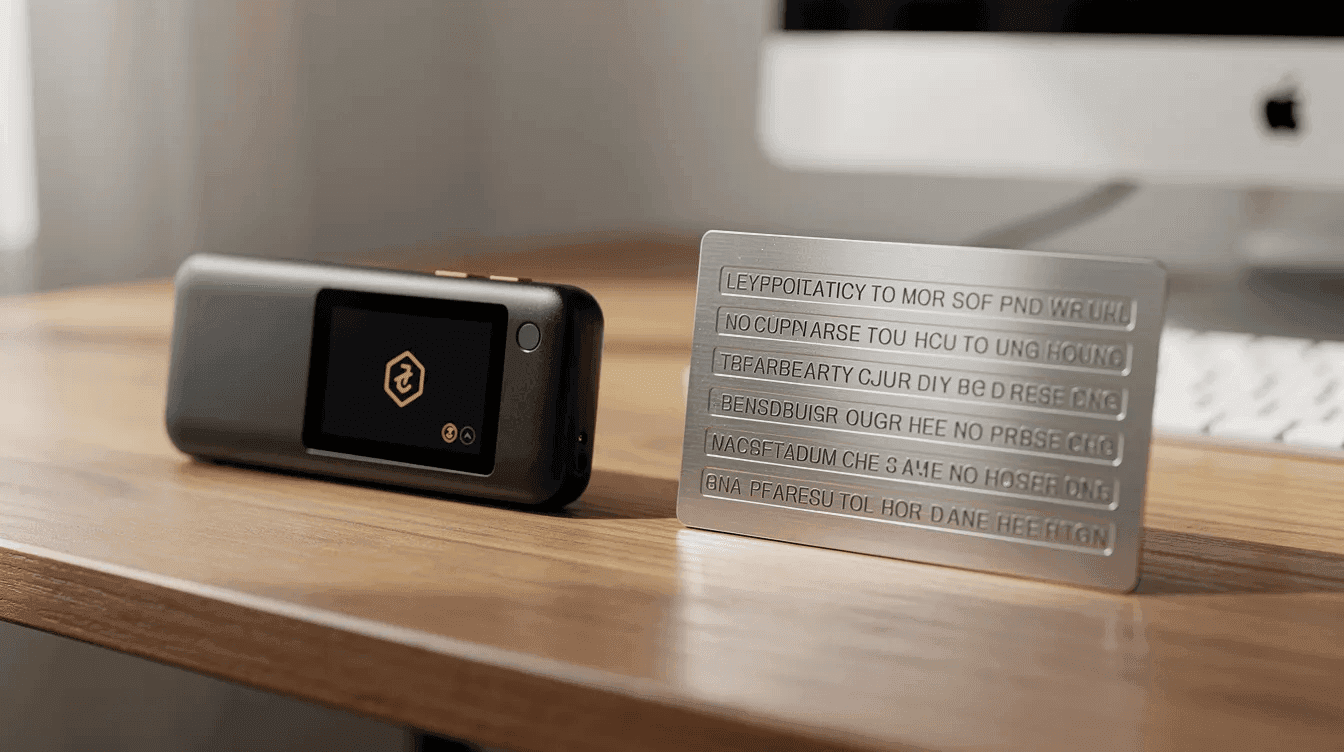
What makes it worse is who it hit. Not the careless, but the careful: offline storage, cold wallets, seed stamped into steel, never photographed.
This article covers three things. What happened, which manufacturer you can still buy in good conscience, and why switching off your savings plan in a week like this tends to be expensive.
What happened at Coldcard
The Coldcard has been the enthusiast's wallet for years: bitcoin only, no concessions in the interface, a very committed community. In firmware version 4.0.0, shipped since March 2021, the device bypassed its own randomness chip when generating a seed phrase. A software substitute took over whose output can be predicted. For five years, nobody noticed.
Anyone who generated a seed on the device in that period therefore holds a computable sequence rather than a random one. Whoever knows the flaw can recalculate the keys. The rest is a question of compute.
On 31 July, around 594 BTC left roughly 500 wallets within 25 minutes. By 2 August the figure stood at 1,367 BTC; a fourth sweep on 3 August took a further 449 BTC. The Mk2, Mk3, Mk4, Mk5 and Q models may all be affected, depending on which firmware was running when the seed was created.
The distinction matters: what was compromised is not the device but the randomness it used to create the key. A firmware update does not fix existing seeds. Anyone affected has to generate a new seed and move every holding.
Timeline and technical detail are here: 594 BTC gone in 25 minutes — the Coldcard flaw explained and the fourth sweep.
Track record beats spec sheet
Hardware wallets all advertise the same terms. Secure element, open source, air gap, PIN, passphrase — that sits on practically every spec sheet and compares about as usefully as horsepower figures on cars.
What is not on the sheet: how a manufacturer has behaved in recent years when something went wrong. After this week, we consider that the more important criterion. Here are the three vendors we are asked about most often.
Coinkite (Coldcard)
An excellent technical reputation, consistently bitcoin-focused, one of the most loyal user bases in the market. And now a key-generation flaw that went undetected for five years. That is the most serious category, because the damage cannot be repaired after the fact. Coinkite has published corrected firmware and is telling users to move funds to newly generated wallets. Anyone looking to buy a device right now should wait for the independent review.
Ledger
The French market leader has the longest incident list in the sector. What tends to get lost in the argument is that none of those incidents affected the hardware itself.
- July 2020: a breach of the online shop exposed more than a million customer records. They remain the basis for phishing letters and counterfeit replacement devices to this day.
- May 2023: the announcement of Ledger Recover, the option to split a seed into encrypted shards, contradicted the promise many customers thought they had bought.
- December 2023: malicious code reached the Connect Kit, and with it a range of dApps, through a former employee's phished npm account. Around $484,000 was drained; the victims were dApp users, not wallet holders.
- January 2026: customer data again, this time via shop partner Global-e.
Ledger documents the incidents in its own security incident report. The risk for users here is not the firmware but the letterbox: the 2020 delivery addresses have circulated for years, and the scams built on them keep improving.
Tangem
The counter-design, and currently the most interesting approach. Tangem uses cards instead of a device with a screen, a cable and a battery. The key is generated inside a secure element certified to Common Criteria EAL6+ and does not leave the card. There is no USB port and no on-device firmware update, which noticeably reduces the attack surface. Backup runs through a set of two or three paired cards rather than a slip of paper in a folder.
The record reads as unremarkable: independent reviews by Kudelski Security (2018), Riscure (2023) and Cure53 (2026), none of which found a vulnerability. Across more than a million cards shipped, no systematic incident has become known. The certificates and audit reports are published openly by the manufacturer. None of that is a guarantee, but it is a verifiable history — and that is what counts after a week like this.
Disclosure: CryptoTicker runs partner programmes with some of the providers named here. The assessment above follows the publicly documented incident record, not the commercial relationship. Where our view differs from it, we say so — as with Coldcard and Ledger.
Prices, supported coins and ratings in detail are in our hardware wallet comparison.
Three rules for choosing
1. Buy on history, not on features
Before ordering, it is worth searching the manufacturer's name alongside "incident", "breach" or "vulnerability". Zero results is not a good sign but usually just an indication of poor documentation. What matters is the response: how quickly the disclosure came, whether it was complete, whether an independent audit followed. Manufacturers who dissect their own failures in public are generally the safer bet.
2. Do not leave entropy to a single device
The Coldcard case was a randomness problem. Two established methods address it. Either you generate the seed from dice rolls, which several devices support, or you build a multisig using devices from two different manufacturers. In a 2-of-3 setup spanning two brands, a vendor-wide firmware defect no longer means total loss.
3. Check in regularly
Cold storage tempts you not to look for years. A quarterly appointment is enough: check balances through a block explorer — the public address is sufficient, and the seed goes nowhere — skim the vendor's firmware changelog, verify where the backup is kept. That costs fifteen minutes, four times a year.
Why the savings plan should keep running
Bitcoin trades around $64,100 on 5 August 2026. The news flow is unpleasant: the wallet disaster, two perp DEXs drained in July, and the first US spot ETF closing its doors. Many investors respond by suspending their savings plan until things calm down.
That is understandable and usually a mistake. A savings plan is not a market instrument but an instrument against your own mood. Its value is created in the months when you want to switch it off. Anyone who paused in 2022 missed the cheapest stretch of the cycle and restarted in summer 2024 at markedly higher prices.
Our pick: Coinbase — but not via the savings-plan button
For European investors, Coinbase is currently the obvious choice. Since June 2026 its European business has run under a MiCA licence based in Luxembourg, consolidating the previous national authorisations, including the German one. Since the last transition period in the EU expired on 1 July 2026 (in Germany it already ended on 31 December 2025), that authorisation determines who is allowed to stay in the European market. Add clean SEPA rails, local-language support and a tax export the common tools can handle.
Correction (September 30, 2026): An earlier version gave July 1, 2026 as the end of the transition period without the German rule. Under Article 143(3) MiCA (Regulation (EU) 2023/1114), the transitional regime applied EU-wide until July 1, 2026 at the latest, and member states could shorten it. Germany did: under section 50(2) no. 3 of the German Crypto Markets Supervision Act (KMAG), the continued authorisation expired on December 31, 2025 at the latest.
Less well known is that the convenient recurring buy in the app is the most expensive way to buy there.
| Route | Effective cost per purchase | Effort |
|---|---|---|
| Recurring buy in the Coinbase app | around 2.5 percent (fee plus spread) | set up once, runs automatically |
| Card payment | a further 3.49 percent | minimal, but you get nothing for it |
| Limit order via Coinbase Advanced | from 0.6 percent (maker) | about two minutes a month |
On €200 a month that adds up to roughly €60 a year, for an identical result in the portfolio. If you want both, set up a standing SEPA transfer into your Coinbase account and place one limit order a month in Coinbase Advanced, then withdraw to your own wallet. The automation then sits in the standing order rather than in the buy button.
Providers side by side — fees, minimum instalment, execution frequency, withdrawal costs — are in our guide to buying bitcoin. For which exchanges still operate under regulation in Europe after MiCA, see regulated crypto exchanges compared.

What to take away
The Coldcard incident is not an argument against self-custody. It shows that choosing the manufacturer is the real decision, and that the choice should rest on documented history rather than on standing within the scene.
Three steps worth taking this week:
- Establish your exposure. If you use a Coldcard and generated the seed on the device after March 2021, create a new wallet today — on corrected firmware or on another manufacturer's device — and move everything. Waiting behind a test transaction achieves nothing here: the flaw is public and so are the affected addresses.
- Review your custody setup. Not on the feature list or the price, but on incident history and response behaviour. The hardware wallet comparison does the research for you.
- Keep the savings plan running and, while you are at it, move it from the app to a monthly limit order. Five minutes of work, roughly €60 saved a year.
Beyond this week, one conclusion holds for wallets as much as for exchanges: in practice, security is less often a technical question than a question of selection. Choose providers on verifiable history rather than on promises and you have avoided the larger part of the risk.
(As of 5 August 2026. This article is not investment advice. Prices and fee models change; check current terms with the provider before every purchase.)
Frequently asked questions about hardware wallets after the Coldcard flaw
Transparency note: This article was produced with the assistance of artificial intelligence and reviewed by our editorial team before publication. All figures and claims were checked against the primary sources linked in the text.
Related articles
- 594 BTC Gone in 25 Minutes: The Coldcard Flaw That Made Seed Phrases Guessable
- Coldcard Losses Near $114 Million as a Fourth Sweep Hits: Why Is Bitcoin Rising Anyway?
- Trezor Data Breach: First 13,689 Customers, Then Roughly 67,000 More Exposed
- Buying More Bitcoin at $77,000: Savings Plan or Lump Sum
- Stolen Keys Beat Code Flaws: Why the Private Key Is the Way In for 2026 Crypto Hacks
Which topics should we dive deeper into?
Select what genuinely interests you. Your picks feed directly into our editorial planning.
Crypto news that's actually worth your time.
Weekly. 60 seconds. Carefully curated by our editors: no hype, no promo flood, no spam.

April 27, 2026 10:30 AM
Win $5,000 in BTC: Tangem Launches Exclusive 2026 Prize Draw
Tangem announces a massive prize draw with $5,000 in BTC and iPhone 17s up for grabs. Secure your crypto and enter today using our exclusive link.

September 23, 2026 4:12 AM
How to Set Up a Crypto Wallet: Securing Your Coins in Seven Steps
Your own crypto wallet is set up in twenty minutes, yet a single step decides everything that follows. This guide takes you through wallet type, recovery words and the test amount, and sets out what BaFin and the tax office expect.

December 26, 2025 1:50 PM
Breaking: Trust Wallet Chrome Extension Hack Drains $7M, Full Reimbursements Promised
A supply-chain attack hit Trust Wallet’s Chrome extension, draining $7M from users. Binance’s CZ says all victims will be reimbursed.
September 1, 2026 12:19 PM

Von der Leyen Wants Your Bank Deposits: Here Is How to Keep Control of Them
Brussels wants Europe's 10 trillion euros in deposits funding its companies. What it means for savers, and why Bitcoin savings plans matter.
September 10, 2026 9:13 AM
Trezor Hack Scare: That STM32 Entropy Email Is a Phishing Attack
Trezor users received a fake STM32 entropy warning sent from a real Trezor address. Here is what happened and what to do if you clicked.
September 4, 2026 10:15 PM
Trezor Data Breach: Am I Affected and What Should I Do Now?
Trezor widened the ShipMonk data breach on September 4, 2026: around 67,000 further people affected, just over 80,000 in total, from orders placed between November 2019 and August 2021. How to check in two minutes whether you are among them, and what an exposed home address means for self-custody.
October 2, 2026 7:16 AM

$1.26 Billion in Three Months: Crypto Hacks Hit Their 2026 High
The security firm CertiK counts around $1.26 billion in damage from 247 incidents for the third quarter of 2026. September was the worst month of the year with 99 cases, and this is the background and what it means for your custody.
September 30, 2026 7:16 AM
Tangem Wallet: The Card Without a Seed Phrase vs the Classic Hardware Wallet
The Tangem Wallet secures crypto with two or three identical cards instead of 24 words. What the sets cost, what the EAL6+ chip delivers and why losing every card is final.

June 6, 2026 3:56 PM
DCA Crypto: How to Survive Crypto Crashes with Dollar Cost Averaging and Invest for the Long Term
Bitcoin from $120,000 to $60,000? With the DCA strategy, you invest step by step and use crypto crashes as an opportunity instead of selling in a panic.

December 22, 2020 3:49 PM

Crypto Wallet Provider Ledger Hacked: Data Leak Results in Phishing Scams
Ledger, a cryptocurrency wallet provider has encountered a data breach. The official Twitter account of the hardware wallet tweeted that they have been alerted to the dump of a client database.
October 2, 2026 10:36 AM
Hot Wallet or Cold Wallet: the Private Key Decides How Safe Your Coins Are
Hot wallet or cold wallet: the difference rests solely on whether the private key is online. What separates the two forms, where the limits of hardware lie and why moving to your own device triggers no tax.
September 18, 2026 10:14 PM

Bitcoin Back Above $80,000: Buy More, Hold or Take Profits? What to Check Now
Bitcoin is back above $80,000, for the first time since September 7. Whether you buy more, hold or take profits depends less on the daily price than on three things you can check yourself: your holding period, the way you buy, and where your coins are kept.
September 19, 2026 10:35 AM
The Cost Average Effect with Bitcoin: What Twelve Instalments Really Deliver
Twelve monthly instalments of 100 euros produced an average price of 66,472 euros and ran 33.6 percentage points ahead of the lump sum purchase on the same starting day. The calculation also shows when the savings plan is the worse route.
September 17, 2026 4:14 PM
D'CENT App Wallet: How to Tell If Your Recovery Phrase Has to Move Now
Manufacturer IoTrust reports suspicious asset transfers in the D'CENT app wallet and asks users to move their holdings. One question decides the matter: has your recovery phrase ever been entered into the app?
September 29, 2026 10:14 AM
387.5 million dollars at Bitget: the attack ran through a bought-in security product, what to watch now
Bitget has disclosed how the attackers reached its withdrawal systems on September 24: through a previously unknown flaw in a security product it had bought in. The second stage of the withdrawal schedule opens today at 08:00 UTC, and for the balance you keep on any exchange the case changes the arithmetic.
October 2, 2026 4:32 AM
NEAR Intents halts withdrawals after a $3.8 million exploit: here are the reasons
NEAR Intents confirms an exploit of more than $3.8 million and holds deposits and withdrawals on eleven networks. Reimbursement is promised, a date for it is not.
September 25, 2026 4:11 AM
Bitget Hack of $351 Million: What to Check at Your Crypto Exchange Now
Bitget reports unauthorised outflows of around $351.6 million and has suspended withdrawals. For existing customers in Europe, that closes the one route MiCA had left them.
August 11, 2026 1:32 PM
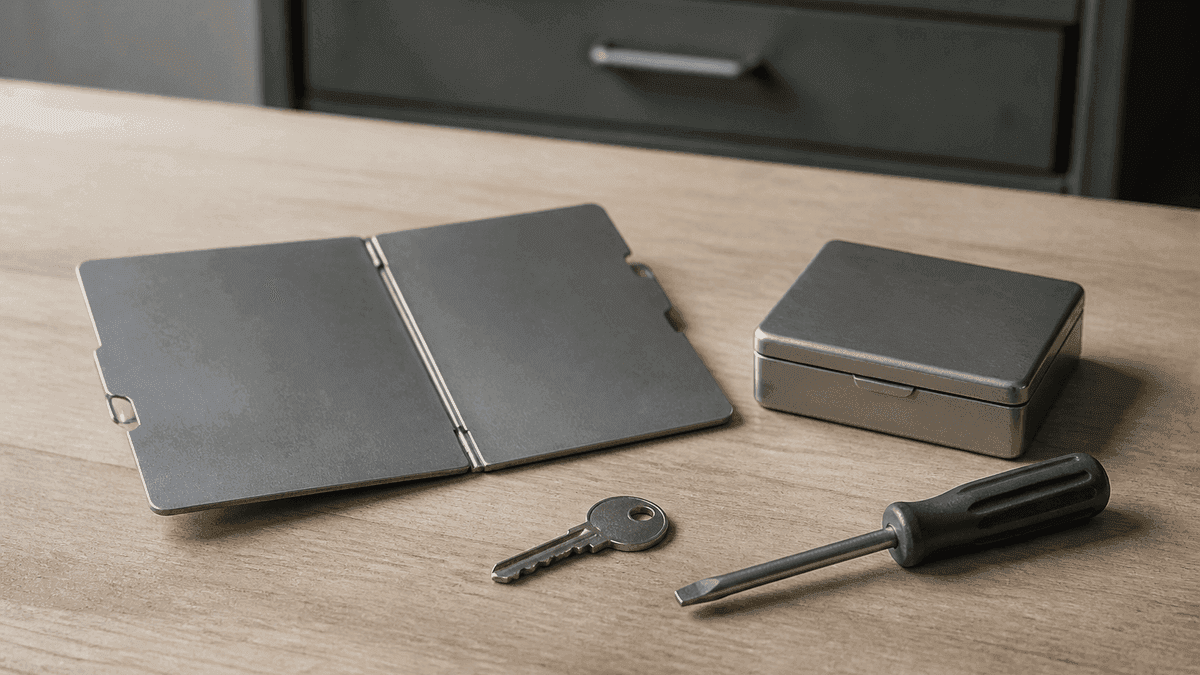
How to Store a Seed Phrase Safely: What Steel, a Passphrase and Multisig Do for Your Wallet Backup
The Coldcard case pushed the manufacturer question to the front, while barely touching on where the backup is kept. This guide places paper, steel, the passphrase and splitting methods against the BIP-39 and SLIP-0039 standards.
December 28, 2018 3:02 PM

How To Use a Trezor Wallet?
Trezor is a hardware wallet which gives exceptional security for managing Bitcoin and other cryptocurrencies private keys.It incorporates and deposits personal keys securely and enables users to carry trade without an Internet link. Trezor grants its users with numerous benefits, […]
October 3, 2026 4:40 PM

Investing in Bitcoin With a Savings Plan or a Lump Sum: What the December 31 Tax Cut-Off Changes
Anyone putting money into Bitcoin now chooses between a lump sum, a monthly instalment and an ETN in a securities account. The German finance ministry’s draft bill would keep the one-year holding period only for holdings bought by December 31, 2026.
August 20, 2026 4:24 PM
Bitcoin Across Multiple Wallets: How Austria Works Out the Acquisition Cost
Bitcoin spread across several wallets? How Austria works out the acquisition cost and the rolling average price for tax purposes.
August 18, 2026 4:45 PM

Crypto Savings Plans Compared: What Bison, justTRADE and Kraken State on Fees, Minimum Instalment and Interval
Crypto savings plans advertise free execution, yet the price almost always sits in the spread. On August 14, 2026 we retrieved nine provider pages and evaluated which terms actually stand there.
March 31, 2026 5:13 PM

Quantum Threat to Bitcoin? Google Research Sparks Urgent Crypto Security Debate
Google’s quantum breakthrough raises fears for Bitcoin security. Can crypto survive quantum attacks—or is an upgrade urgent?
September 24, 2026 10:19 PM
Bitcoin for Retirement: What Applies from 2027 and What You Decide Now
Bitcoin is not permitted in any state-subsidised retirement product, including the new retirement savings account from 2027. Anyone who still wants to use crypto assets for their own pension goes through private assets, and there a cutoff date at the end of 2026 is shifting the tax rules right now.
August 21, 2026 4:27 PM

Wallet App Without BaFin Authorisation: When Holding Crypto-Assets Requires a Licence
On 19 August 2026 BaFin published two consumer notices on wallet offerings. Who controls the means of access decides whether an authorisation is needed.
September 3, 2026 10:21 AM
Bitcoin Lost in a Wallet Hack: What Tax Applies in Austria?
Bitcoin lost to hackers? In Austria, the theft of privately held coins generally does not create a capital loss you can use for tax. Only a later payout can change that.
September 16, 2026 7:39 PM
Deutsche Bank to Custody Bitcoin and Ether: Why Retail Clients Are Missing and What to Check in Your Own Custody
Deutsche Bank will custody Bitcoin, Ether and three stablecoins, but addresses corporates and institutions only. What the launch under supervisory reservation means, and the four questions you should put to any custody arrangement.
More from CryptoTicker