
Comparison Between Private Public Hybrid and Federated Blockchains: Full Guide
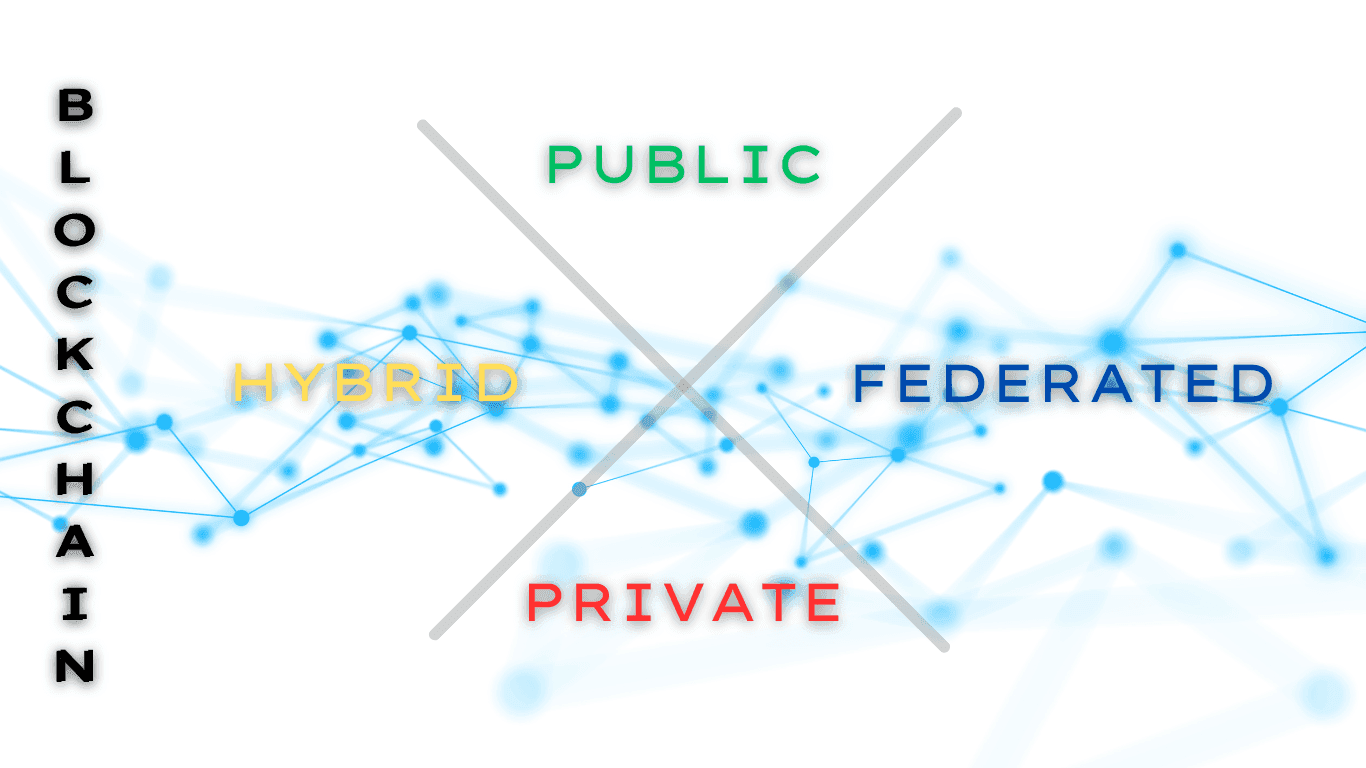
What is the best type of blockchain? To answer that, here is the difference between all 4 types of blockchains: private, public, hybrid, and federated.



Which topics should we dive deeper into?
Select what genuinely interests you. Your picks feed directly into our editorial planning.
Crypto news that's actually worth your time.
Weekly. 60 seconds. Carefully curated by our editors: no hype, no promo flood, no spam.
Blockchain technology has transformed the management and recording of data, providing decentralized solutions across various industries. While there are different types of blockchains, each serves distinct purposes and functionalities. This guide will explore the differences between public, private, hybrid, and federated blockchains, helping you determine which type best suits your requirements.
1- What is a Blockchain?
A blockchain is a digital ledger that securely records transactions and data in a transparent and decentralized manner. Originating in the 1980s, it gained widespread attention with the launch of Bitcoin by the pseudonymous creator, Satoshi Nakamoto. The technology enhances traditional ledger systems, allowing for secure and efficient data handling without intermediaries.
2- Types of Blockchains
There are 4 main types of blockchains, and they can be categorized based on their accessibility, control, and functionalities:
- Public
- Private
- Hybrid
- Federated
3- Key Features, Advantages, and Challenges by Blockchain Type
- Public Blockchains:
Public blockchains are open-source, decentralized ledgers where anyone can participate in transactions. They offer transparency and security through decentralized nodes and are often used for cryptocurrencies like Bitcoin and Ethereum.- Key Features: Decentralized nodes, open-source code, immutable transactions.
- Advantages: Global accessibility, resistance to censorship, data integrity.
- Challenges: Scalability issues, high energy consumption, and complexity for non-technical users.
- Example of Token Used:
Bitcoin (BTC): The first and most well-known cryptocurrency, operating on a fully decentralized public blockchain.
- Private Blockchains:
Private blockchains are controlled by a single entity, allowing for restricted access and faster transaction speeds. They are beneficial for internal management within organizations.- Key Features: Restricted access, better scalability, and faster transactions.
- Advantages: Efficiency for internal management, customization for specific industries, lower energy consumption.
- Challenges: Centralization risks, regulatory uncertainty, interoperability issues.
- Example of Token Used:
Chainlink (LINK): Often used in private blockchain solutions, Chainlink provides decentralized oracles to smart contracts across various blockchains.
- Hybrid Blockchains:
Hybrid blockchains blend features of both public and private blockchains, enabling selective access to data. This flexibility allows organizations to maintain confidentiality for certain data while benefiting from the transparency of public blockchains.- Key Features: Controlled access, a mix of decentralization and centralization, flexibility for various use cases.
- Advantages: Enhanced privacy with public verification, scalable due to fewer public nodes.
- Challenges: Complex management of balancing public and private aspects, less transparency than fully public blockchains.
- Example of Token Used:
VeChain (VET): A hybrid blockchain that allows businesses to use private chains for sensitive data while benefiting from public blockchain features for transparency.
- Federated Blockchains:
Also known as consortium blockchains, federated blockchains share control among a group of organizations instead of a single entity. Only selected participants can validate transactions, enhancing efficiency and security.- Key Features: Permissioned network, collaborative control among multiple entities.
- Advantages: Greater scalability, increased privacy, and control over access.
- Challenges: Centralization risks, and trust issues among participants.
- Example of Token Used:
Ripple (XRP): Ripple uses a federated consensus algorithm and is often utilized by financial institutions for cross-border payments, serving as a bridge currency.
4- Comparison Between Private Public Hybrid and Federated Blockchains
| Category | Public Blockchains | Private Blockchains | Hybrid Blockchains | Federated Blockchains |
|---|---|---|---|---|
| Definition | Open-source, decentralized ledger | Controlled by a single entity | Combines features of public and private | Control shared among multiple organizations |
| Key Features | - Decentralized nodes - Open-source code - Immutable transactions | - Restricted access - Better scalability - Faster transactions | - Controlled access to data - Decentralized and centralized parts - Flexible for various use cases | - Permissioned network - Collaborative control - Efficient and secure |
| Advantages | - Global accessibility - Resistant to censorship | - Efficient for internal management - Customizable for specific industries | - Enhanced privacy with public verification - Scalable with fewer public nodes | - Greater scalability - Increased privacy |
| Challenges | - Scalability issues - High energy consumption | - Centralization risks - Regulatory uncertainty | - Complex management of public/private balance - Less transparency than fully public | - Centralization risks - Trust must be maintained among entities |
| Use Cases | - Decentralized applications (DApps) - Cryptocurrencies (Bitcoin, Ethereum) | - Enterprise resource planning (ERP) - Sensitive data storage | - Supply chain management - Healthcare, finance | - Banking, insurance, government services - Inter-organizational collaborations |
| Token | Bitcoin (BTC) | Chainlink (LINK) | VeChain (VET) | Ripple (XRP) |
Each blockchain type—public, private, hybrid, and federated—has its unique strengths and weaknesses. Public blockchains excel in decentralization and transparency, while private blockchains offer control and customization. Hybrid blockchains balance privacy and transparency, and federated blockchains provide collaborative control. Your choice among them will depend on your specific needs, whether you require global accessibility or secure internal management.
Related articles
- Difference Between Hybrid and Federated Blockchains
- TOP 5 Blockchains To Invest In For JULY 2024
- Is Ripple (XRP) ETF Approval Next, Following Bitcoin (BTC) & Ethereum (ETH) ETFs Approval?
- BlackRock Ignites 1000x Profit: Top 7 RWA Blockchains Before Bitcoin Halving
- Ripple or Shiba Inu: Which Is the Better Cryptocurrency Investment?
Which topics should we dive deeper into?
Select what genuinely interests you. Your picks feed directly into our editorial planning.
Crypto news that's actually worth your time.
Weekly. 60 seconds. Carefully curated by our editors: no hype, no promo flood, no spam.

November 27, 2022 9:22 PM

Top 3 Ethereum Use Cases that will NEVER let Ethereum Die!
Ethereum is the biggest smart-contract blockchain hosting many ecosystems. Here are 3 reasons why Ethereum will not die and reach 0$.
August 3, 2022 9:22 AM

What are the BEST Ethereum Wallets in 2022?
What are the best Ethereum wallets in 2022? In this article, we talk about the best Ethereum wallets for 2022 and help you pick the best.
June 15, 2024 2:10 PM

TOP 5 Blockchains For JUNE 2024
Despite having several key metrics commonly used to assess blockchains, here are the top 5 blockchains for June 2024, based on their largest TVL.

August 19, 2021 10:08 AM

All you need to know about Theta Blockchain, the Streaming Change
online consumption of video content is increasing, both live and pre-recorded, through platforms such as YouTube, Vimeo, Netflix, among others. Enter the newest decentralized project in this space: Theta Blockchain.

August 8, 2018 1:25 PM

West Virginia To Introduce Blockchain Powered Voting Option
West Virginia to introduce secure blockchain powered voting options for military service members who can't vote in person.
December 3, 2020 6:21 PM

Future Blockchain Summit returns to reunite global Blockchain ecosystem as part of only major in-person tech event of 2020
Future Blockchain Summit set to be part of world’s only global live, in-person tech event of 2020.
November 12, 2023 10:36 PM

What is Celestia Crypto (TIA)? A New Era in Blockchain Technology Ahead…
Celestia introduces a modular approach to blockchain. What is Celestia crypto and what is TIA token? Let's answer all those questions.
July 7, 2023 6:52 AM
What is LUKSO and How to add LUKSO to Metamask?
LUKSO is a trailblazing EVM blockchain. his guide will simplify your life by demonstrating how to add LUKSO to MetaMask wallet.
August 6, 2022 9:03 AM

Hedera Hashgraph – Will the Hedera Patents Lead to Corporate Blockchain Adoption and 10x soon?
Hedera Hashgraph was developed to prepare protocols with decentralized governance by employing the hashgraph consensus mechanism.

May 15, 2022 6:50 PM

Top 5 Decentralized Oracle Projects In Crypto
Decentralized oracles are still highly talked about in the crypto sphere. Let's take a look at the top 5 oracle crypto projects.

May 2, 2022 12:27 PM

What is WAX Blockchain? Here Are The Top 5 Games to Play on WAX!
In this article, we will be discussing about the WAX blockchain. We will also be looking into the top 5 NFT games on the blockchain.
March 18, 2021 7:25 PM

Is TERRA LUNA worth it? All you Need to Know about LUNA Crypto
Stablecoins were born to eliminate the volatility feature in cryptos while delving into decentralized blockchains. What is Terra Luna crypto?
February 20, 2021 11:14 PM
Binance Smart Chain Topped Up Ethereum’s Transaction – But Did It?
Binance Chief Changpeng Zhao surprised the crypto world on Feb 10, when he announced that the Binance Smart Chain has flipped the Ethereum daily transactions count or transactions volume. It was met with both enthusiasm and astonishment from the community. Then recently, it was claimed again that the BSC now does 3 times the transactions carried out on the Ethereum blockchain. Though, this isn’t apparent on charts detailing the value moving across networks. According to Money Movers website, the Binance’s blockchain doesn’t register in the top 5 blockchains by settled value.
March 29, 2019 6:59 AM

C³ Crypto Conference 2019 Highlights
The C3 Crypto Conference 2019, the prominent crypto conference of Germany, took place on March 27th & 28th 2019 in Berlin. This year’s conference represented the highlight of the Berlin Blockchain Week 2019. Organized in Maritim hotel, the event brought […]
December 14, 2018 9:52 PM

Crypto News Of The Week In 5 Minutes
Blockchain and crypto world is full of innovations, assumptions and sometimes wildly wrong predictions. If you’ve missed the top stories of this week, this post provides a comprehensive look at the top crypto news that made headlines. A lot has […]
October 30, 2018 9:57 AM

Blockchain Brunch: The Place to Meet Berlin’s Blockchain Ecosystem of Entrepreneurs
Blockchain Brunch provides a space for open-minded innovators to discuss the limitations and potential of technology and business within the industry.

October 13, 2018 11:14 PM

Blockchain: Towards a Greener Future
With the global drive for a greener future, questions have been asked of the environmental implications of blockchain technologies.

October 12, 2018 12:48 AM

Paranoid Internet to Organize Germany’s Largest Crypto Conference, C3
With the intention of bringing together leading crypto experts, investors, blockchain start-ups, lawyers, developers and everyone who is interested in cryptocurrencies and blockchain technology, Paranoid Internet GmbH has announced that it be organizing the C3 Crypto Conference, the biggest crypto […]

June 16, 2026 4:38 PM

Top 3 Crypto Aggregators To Pick in 2026
To maximize yield and simplify the trading experience, Crypto aggregrators are an unparalleled choice in DeFi. Here are the top 3 choices.
March 27, 2026 8:27 PM

Looking For Retroactive Airdrops? You Might Want To Use These Protocols!
Uniswap introduced the world to the retroactive airdrops concept for users who have interacted with the protocol. Who else might drop a token?
June 24, 2024 1:29 PM
NEAR Protocol Price SURGE On AI Hype, Is 10$ NEXT?
NEAR Protocol (NEAR) rides the AI hype, showing significant price increases. What factors are driving this trend and what could the future price targets be?
March 29, 2024 6:11 PM

AI Coins Before the 2024 Bitcoin Halving: How Verasity, Fetch.ai, SingularityNET and ICP Fared
In March 2024 these four AI coins were tipped as halving winners. By September 2026 all four had lost 80 to over 90 percent, while Bitcoin rose.
March 29, 2024 6:42 AM

Filecoin (FIL) Price Prediction: Is It Going to Stay Steady or Drop?
The analysis of FIL price indicates an impending consolidation. Let's take a look at this Filecoin price prediction article in more detail

March 27, 2024 2:21 PM
Runesterminal: Pioneering the Runes Protocol for Web3 Innovation on Bitcoin
Discover how Runesterminal is leading Bitcoin's Web3 evolution with the Runes Protocol, offering a streamlined approach to data embedding and blockchain efficiency.
March 7, 2024 8:09 AM

BIG FET Price Prediction: Fetch.ai Price Eyeing $5 Before Bitcoin Halving? Here’s Why..
Could Fetch.ai possibly hit $5 before the Bitcoin halving? Let's delve into this FET price prediction piece and explore it further.

More from CryptoTicker