
Cardano Constitutional Committee: What ADA Holders Should Know Now the September 6 Deadline Has Passed
Recap as of September 27, 2026: four of the seven seats on Cardano's constitutional committee were expiring, and their renewal hung on a vote that had not yet cleared on chain at the end of August. This article describes what ran out by September 6, the state of play before the deadline and what ADA holders could do with their voting power.





Which topics should we dive deeper into?
Select what genuinely interests you. Your picks feed directly into our editorial planning.
Crypto news that's actually worth your time.
Weekly. 60 seconds. Carefully curated by our editors: no hype, no promo flood, no spam.
The deadline that Cardano's self-governance is hanging on right now does not fall on September 1. It falls on September 6, 2026, at around 21:45 UTC. By then a governance action has to be ratified on chain that fills four of the seven seats on the constitutional committee. If that does not happen, the committee shrinks to three members and drops below the minimum size the protocol requires. From that moment on it can no longer confirm any governance action. This piece sets out what is actually happening, where the vote stands, and what you as an ADA holder can genuinely do in the days that remain.
Cardano Constitutional Committee: What Really Expires on September 6, 2026
Every governance action on Cardano has a fixed lifespan. The protocol parameter govActionLifetime is set to six epochs: if an action is not ratified within that window, it lapses with nothing to replace it, and the 100,000 ADA deposit returns to the submitting address.
The action at issue here is of the type NewCommittee. It was submitted in epoch 646 and carries epoch 653 as its expiry mark. An on-chain query of our own through the public Koios interface on August 27, 2026 at 00:38 UTC shows it still open: neither ratified_epoch nor enacted_epoch nor expired_epoch carries a value.
The exact window can be calculated from the chain tip. Epoch 651 began on August 22, 2026 at 21:44:51 UTC, and an epoch on Cardano lasts exactly five days. That places epoch 653 between September 1, 2026, 21:44:51 UTC, and September 6, 2026, 21:44:51 UTC. The deadline is therefore a piece of chain mechanics that runs down on its own. No editorial calendar governs it, and nobody can move it.
Four of the Seven Seats Expire: What the Constitutional Committee on Cardano Actually Does
The constitutional committee is a body of elected members whose only task in a governance action is to check whether a proposal is compatible with the Cardano constitution. It does not comment on the merits of a proposal; its sole yardstick is constitutionality.
On-chain governance means that the rules of self-governance sit in the protocol itself and every decision is recorded as a transaction on the blockchain. On Cardano that has applied to all governance actions since the move into the Conway era. There is no parallel body that could decide around the chain.
The committee is therefore the third chamber alongside the delegated representatives and the stake pool operators. Most governance actions need the approval of two or three of these groups, and the committee is involved in almost all of them.
The current line-up can be read straight off the chain. It lists eight entries, one of them marked resigned, meaning that member stepped down voluntarily. Of the seven remaining active members, four carry expiration epoch 653 and three carry expiration epoch 726. That is the figure at issue: four of the seven seats expire in the same epoch in which the renewal action lapses.
Why the Reports Say September 1 and What the Chain Says
Practically every German-language report on this subject names September 1 as the cut-off. That is understandable but imprecise: September 1 is the start of epoch 653, not its end. Anyone going by that date gives away five days.
The difference is not academic. Five days is a full epoch on Cardano, and the movement in the vote count over the past week shows that double-digit percentage points can accumulate in that span. Give up on September 1 and you give up an epoch too early.
One qualification belongs here, and I am not smoothing it over: what I measured was the expiration field of the governance action together with the epoch boundaries taken from the chain tip. Whether the ledger discards an action at the beginning or at the end of its expiration epoch is a question of ledger semantics that I have not worked through myself. The window between September 1 and September 6 is certain; the later date is the conservative reading.

Governance Standstill Explained: What Happens if the Committee Falls Below Five Members
The protocol parameter committeeMinSize is set to five. That figure has the standing of a hard ledger rule, not of a recommendation.
CIP-1694, the underlying standard, spells out the consequence unambiguously: if the number of non-expired committee members falls below the minimum size, the constitutional committee can no longer ratify governance actions. Only those actions that manage without committee votes can still proceed.
Governance standstill therefore does not mean the blockchain halts. Blocks continue to be produced, transactions confirmed, staking rewards paid out. What comes to a stop is the administration of the network: parameter changes, treasury withdrawals and the initiation of a hard fork all require the committee's approval.
Two types of action manage without it, and both are aimed at the committee itself: the no-confidence motion and the action that installs a new body. That is the built-in emergency brake. The way out of a standstill therefore runs through the very same vote that is currently not getting through, only under time pressure and by way of a fresh submission with a fresh deposit.
 Self-custody your ADA: hardware wallets compared
The On-Chain Vote Count: 51.68 Percent Among DReps, 18.16 Percent Among Stake Pool Operators
The figures below come from a query of our own on the Koios interface on August 27, 2026 at 00:38 UTC, epoch 651. They shift with every vote cast; anyone who wants to look them up runs the same query again.
| Group | Approval | Threshold required | Votes cast |
|---|---|---|---|
| Delegated representatives (DReps) | 51.68 percent | 67 percent | 115 in favour, 3 against, 11 abstentions |
| Stake pool operators (SPOs) | 18.16 percent | 51 percent | 79 pools in favour, 1 pool against |
The direction is right, the pace is an open question. The trade publication CryptoSlate still reported 32.46 percent approval among DReps for August 17. An on-chain measurement by this desk on August 24 produced 39.52 percent. On August 27 the chain shows 51.68 percent. That amounts to roughly 19 percentage points in ten days.
Whether that will be enough cannot responsibly be forecast, and both readings are defensible. The optimistic calculation sees an accelerating pace and around fifteen points still missing with ten days to go. The sceptical one looks at the stake pool operators: more than thirty points are missing there, and that group has moved considerably more slowly so far.
The 67 and 51 Percent Thresholds: How a Governance Action Is Ratified on Cardano
Both thresholds sit on the chain as protocol parameters and can be read off it. For a committee change under normal conditions, dvt_committee_normal stands at 0.67 and pvt_committee_normal at 0.51.
Stake pool operators are the operators of the nodes that produce blocks on Cardano. In governance they form a chamber of their own with a threshold of their own; their voting weight follows from how much stake is delegated to them.
Both thresholds have to be cleared at the same time. An action that would sail through among the delegated representatives while staying below 51 percent among the stake pool operators is not ratified. That second threshold is the larger one at present.
The count works in voting power, not in heads. A DRep with a great deal of ADA delegated to them weighs more heavily than one with little delegation. That is how 115 votes in favour against 3 votes opposed can still add up to no more than 51.68 percent.
What Delegating to Always Abstain Does to Your Voting Power
Always abstain is a predefined delegation option. Give your voting power to it and you remain registered for staking rewards, but under CIP-1694 your ADA expressly do not count towards active voting power.
The ADA token carries two functions at once: it is the means of payment on the network and at the same time the weight by which governance is counted. Anyone who holds the cryptocurrency automatically holds voting power, whether they use it or not.
And this is where the real obstacle to this vote lies. Around 9.75 billion ADA of voting power sits on always abstain among the DReps. At the stake pools, a further 10.51 billion ADA from 563 pools sit passively on the same option.
These amounts are not missing from the count; they have been taken out of it. The percentages above refer to active voting power, which is to say to whatever is left. Move your delegation from always abstain to an active DRep and you enlarge the denominator, which shifts those percentages.
The second option belongs in the picture as well: delegating to always no confidence does count towards active voting power, but it automatically casts a no to everything except a no-confidence motion. That is a deliberate vote against rather than an abstention.

What You as an ADA Holder Can Do Right Now
The honest answer first: if your coins are sitting on an exchange, you have no vote. Voting power attaches to the stake address in your own wallet, not to an account balance with a provider. Anyone who wants a say needs a wallet in self-custody.
Step 1: Check where your voting power is delegated
The common Cardano wallets have a governance section of their own. It shows whether your voting power points to a named DRep, to always abstain or to always no confidence. The community's official governance explorer carries the same information along with each DRep's voting record.
Step 2: Check whether your DRep is still active at all
The parameter drepActivity is set to twenty epochs, roughly a hundred days. A DRep who has not voted for that long counts as inactive, and the voting power delegated to them no longer counts towards active voting power. That is the most common quiet reason for a delegation running into the void.
Step 3: Change your delegation if that is what you want
Re-delegating costs network fees in the cent range and changes nothing about your staking: vote delegation and stake delegation are two separate processes. Your rewards carry on unchanged while you move your voting power. If you want to know how rewards are put together in the first place, the basics are in the comparison of staking platforms.
Becoming a DRep yourself is possible too, but it costs a deposit of 500 ADA. For most holders, delegating to an active representative is the more practical route.
 Regulated crypto exchanges compared
Dijkstra Upgrade and Hard Fork: What a Standstill Means for Cardano's Next Upgrade
Cardano currently runs on protocol version 11, which can be read off in the epoch parameters. That version comes out of the van Rossem hard fork and is the basis the next set of rules builds on. The next major upgrade goes by the name Dijkstra and is meant to lift the network to protocol version 12 in a first phase, together with the Ouroboros Linear Leios scaling method. The development teams involved name the fourth quarter of 2026 as their target and point out expressly that this is a target corridor and not a fixed date.
The connection to the constitutional committee is direct: a hard fork on Cardano is initiated through a governance action of the type HardForkInitiation, and that action needs committee votes. A body below the minimum size cannot confirm it. The same applies to the parameter change through which the Dijkstra parameters are to be written into the constitution.
A governance standstill from September onwards would therefore reach beyond procedure and hit the network's upgrade schedule as well. How long it would last depends solely on how quickly a new renewal action is submitted and ratified.
Putting the Governance Risk in Context: What This Means for Staking and Custody of Your ADA
For the everyday life of an ADA holder, a standstill changes little at first. Staking carries on, rewards continue to be paid out, transactions are confirmed. What does change is the network's ability to react to problems: fee parameters, block sizes and treasury withdrawals are then fixed in place.
For assessing this cryptocurrency as an investment, this is one governance risk among several, and a different one from the risk of a technical fault. If your question is about the current valuation, the arguments are laid out in our stocktake, Is Cardano a Good Buy at Current Prices?
What this piece deliberately does not contain is any statement about how the market will react to one outcome or the other. The chain data says something about procedure and deadlines. About prices it says nothing.
Cardano Constitutional Committee: What to Take Away
- Remember September 6, not September 1. The renewal action can still be ratified up to the end of epoch 653. Anyone holding ADA in self-custody should look into the governance section of their wallet during this period; the hardware for it is covered in the hardware wallet comparison.
- Check where your voting power sits. If it rests on
always abstainor with a representative who has been inactive for more than twenty epochs, it does not count. Re-delegating costs a matter of cents and leaves your staking rewards untouched, as the comparison of staking platforms shows. - Keep procedural risk separate from the price question. A governance standstill blocks upgrades and treasury withdrawals, not block production. If you are drawing conclusions from it for your own choice of provider, work with the comparison of regulated crypto exchanges.
The rules at issue here are publicly available to read: the Cardano constitution in its German version and the governance standard CIP-1694, the source of the rule on the committee's minimum size.
(As of August 27, 2026. This article is not investment advice. Prices and fee structures change; check the terms with the provider before you buy.)
Transparency note: This article was produced with the assistance of artificial intelligence and reviewed by our editorial team before publication. All figures and claims were checked against the primary sources linked in the text. The feature image was generated with AI.
Related articles
- Cardano Price Analysis: Potential 10% Surge and Massive Whale Inflows
- Cardano Jumps 11 Percent: What ADA Holders Should Check Before the Treasury Vote on October 11
- Bitcoin Price Prediction: How Will September Unfold For BTC Price?
- Cardano Network Split After Software Bug – FBI Gets Involved
- Cardano Price Prediction: ADA Finally Wakes Up After Bitcoin ATH
Which topics should we dive deeper into?
Select what genuinely interests you. Your picks feed directly into our editorial planning.
Crypto news that's actually worth your time.
Weekly. 60 seconds. Carefully curated by our editors: no hype, no promo flood, no spam.

April 9, 2025 4:00 AM
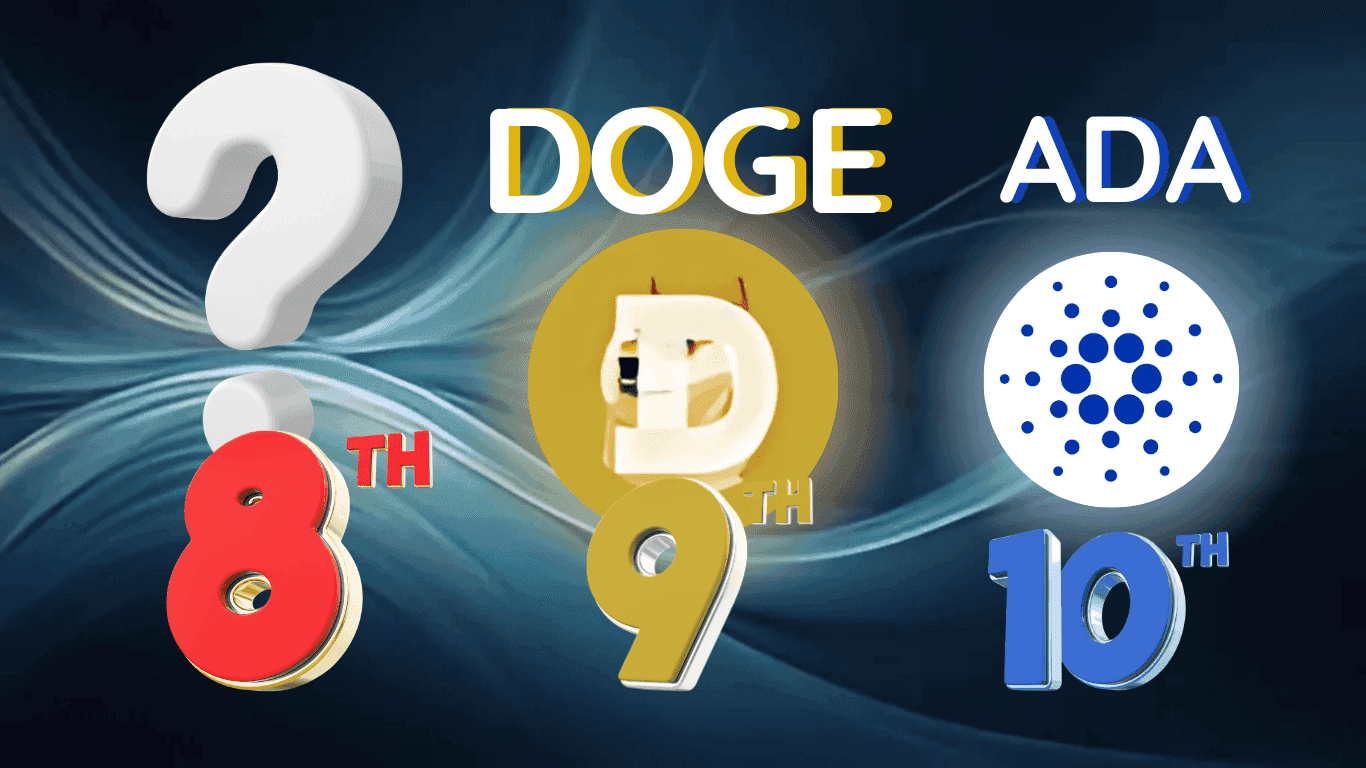
What Happened to Dogecoin and Cardano Today?
After the recent crypto market crash, uncertainty looms over the top 10 cryptos. With Dogecoin (DOGE) and Cardano (ADA) already flipped in rankings, could Solana (SOL) be next?

September 13, 2026 4:30 PM

Zcash Orchard Pool: How to Check Whether Your ZEC Balance Still Needs Migrating
Since the Ironwood upgrade of July 28, 2026, Zcash's old Orchard pool has been sealed, and every shielded balance has to cross into the new pool individually through a turnstile. At the end of August, 470,000 ZEC were still in the old pool. Here is how to check in a few minutes whether your wallet is one of them.

September 2, 2026 10:17 AM

Converting MKR to SKY: Why the Upgrade Penalty Jumps to Five Percent in the Coming Days
The conversion contract currently withholds four percent: one MKR becomes 23,040 SKY instead of 24,000. We read the full history of the penalty off the blockchain ourselves and show why the next step is due within days.
August 31, 2026 4:22 AM

Withdrawing VANRY from KuCoin: why the withdrawal deadline comes four days too late
KuCoin explicitly will not handle the VANRY swap to Base and still allows withdrawals until September 14, 2026. The project's swap window, however, closes on September 10 at 13:00 UTC.

September 5, 2024 11:00 PM
How to Buy cardano (ADA) on Bitget: A Step-by-Step Guide
Want to buy Cardano (ADA) and still confused about which platform to use? Look no further! Check Bitget, and this full guide, step by step...
May 18, 2024 3:46 PM
After More Than a 10% SURGE, Will Ethena (ENA) PRICE Go Up To REACH $10?
After being among the top-performing Altcoins this week, will Ethena (ENA) continue to surge and potentially reach $10 with all news released by Ethena Labs or will it fall back to a new support level?
October 3, 2026 1:30 PM

NEAR Ahead of the Vote on Cutting Issuance to 1.6 Percent: Why the Price Is Falling Now
A proposal in the NEAR governance forum would cut the maximum annual issuance from 2.5 to 1.6 percent over 24 months, pressing the staking yield down from 5.4 to around 3.5 percent. The price loses 5.65 percent on October 3, for a different reason.
September 30, 2026 7:16 PM
Mint Chain closes its withdrawal portal on October 20: October 10 is the last safe day to submit
Mint Chain has accepted nothing but withdrawals since April 2026, and the operator says the portal closes on October 20, 2026. Because settlement runs in weekly batches and takes up to ten days, October 10 is the last day on which a request safely arrives.
September 23, 2026 4:19 PM

Zcash Sprout Pool: Why You Must Move Old ZEC Before November 5
The NU7 network upgrade is set to remove v4 transactions, and with them the only way to spend ZEC from the old Sprout pool. Affected are those holding a wallet file from 2016 or 2017 with addresses beginning with zc.
September 9, 2026 7:21 PM

Redeeming Midnight NIGHT: Four Tranches, a Randomised Start Day and the 4 December 2026 Deadline
Anyone who claimed NIGHT in the Glacier Drop receives the tokens in four tranches over 360 days, and has to collect each one from the portal themselves. The thawing ends on 4 December 2026, after which a 90-day grace period remains.
September 4, 2026 7:20 PM

SAND Compensation After the Bridge Exploit: How to Get Your Frozen Tokens Back
The Sandbox intends to compensate every holder whose bridged SAND on Base and BNB Smart Chain was frozen, one for one in SAND on Ethereum. Anyone whose balance sits at an exchange need do nothing; anyone self-custodying does.
September 2, 2026 10:30 AM

Tokenized Stocks: Who Owns the Share When the Register Sits on a Blockchain
The US Securities and Exchange Commission wants to allow the official share register to be kept on a blockchain. What the proposal of September 1, 2026 means for tokenized stocks and for your ownership.
September 1, 2026 7:11 PM

ICX to SODA Migration: 1.109 Billion ICX Still Sit on the ICON Chain, and Neither Chain Shows a Swap Count
Four weeks before the first cut-off date, cryptoticker.io read both blockchains itself: 1,108,792,074.22 ICX on ICON, 1,499,555,266.83 SODA on Sonic. The swap shows up in neither total supply, and there is no public progress indicator.
August 24, 2026 4:32 AM

LayerZero Drops 15 Chains From August 28: What Stargate Users Should Know Now the Deadline Has Passed
Recap as of September 27, 2026: LayerZero had announced it would end DVN and Executor services for 15 blockchains on August 28, 2026, among them Arbitrum Nova, Cronos zkEVM and Degen. This article describes the situation before the deadline and the routes for moving Stargate-bridged balances to a supported chain.
August 22, 2026 1:42 PM
TON Bridge Shutdown on September 1: What Wrapped TON and j-Token Holders Should Know Now the Deadline Has Passed
Recap as of September 27, 2026: the cross-chain bridge bridge-v3.ton.org was announced to shut down permanently on September 1, 2026. This article describes the situation before the deadline for holders of Wrapped TON on Ethereum or BNB Smart Chain and of j-tokens such as jUSDT on the TON network.
August 22, 2026 1:17 PM

BNB Pasteur Hardfork of August 25, 2026: What Holders, Traders and Delegators Should Know Afterwards
Recap as of September 27, 2026: BNB Smart Chain had scheduled the Pasteur hardfork for August 25, 2026. This article describes the situation before that date: what holders, delegators and senders of BEP20 transfers should do, what happened automatically and how to recognise the actual activation time.
August 22, 2026 10:39 AM

Maya Protocol Exploit: MAYAChain Is Halted, What to Check Now on Cross-Chain Swaps
On August 18, 2026 an attacker drew roughly $1.65 million out of MAYAChain's liquidity pools through six chained faults, and the team then halted the chain globally. Anyone who swapped or provided liquidity there can check in a few minutes whether their own money is stuck in the halted system.
May 23, 2026 10:06 PM

ZachXBT Identity Revealed: Analyzing the Viral Allegations Against the Crypto Detective
On-chain sleuth ZachXBT faces intense scrutiny following a viral X thread tracking his identity and alleging conflicts of interest, selective exposure, and legal violations.
May 4, 2026 6:15 PM

DTCC Tokenized Securities: Is Wall Street About to Bring Stocks On-Chain?
DTCC plans tokenized securities trades in July 2026, signaling Wall Street’s next major step toward blockchain-based financial markets.

March 2, 2026 11:30 AM

How to Generate a Steady Income During Crypto Market Volatility
Crypto market crashing hard? Learn how to use stablecoins to generate a reliable income while protecting your capital from market swings.
February 22, 2026 8:38 AM

Vitalik Buterin ETH Sale: On-Chain Data Debunks $8.2M "Dump" Rumors
Vitalik Buterin sold 428.57 ETH on Feb 22, 2026, totaling $15.51M since Feb 2. Reports of a single $8.2M transaction on Sunday are unconfirmed by on-chain data.

September 24, 2025 11:00 PM
Bitget Becomes First Exchange to Offer All Cryptos on Four Major Chains in One Account
Bitget announced a feature that allows users to seamlessly trade, stake, and manage millions of on-chain tokens directly from a single Bitget spot account.
August 26, 2024 7:44 PM

DOGS Token Major 120% Surge Within Hours Of Its Listing: BUY NOW?
The DOGS token experienced a dramatic surge of over 120% on Binance following its listing. How did the Telegram Open Network (TON) drive this surge?
July 12, 2024 7:00 AM

Animoca Token Is LIVE: How To Buy MOCA On Bitget?
Here is how the new MOCA token, launched by Animoca Brands and Moca Network is set to revolutionize the Web3 landscape with its unique utilities.
June 28, 2024 5:22 PM

TON Coin Price Prediction: A New SURGE or DIP Ahead?
Toncoin's on-chain data shows significant activity from large investors, hinting at a potential price rally. But how high can TON go, and at what level will it fall back?
June 25, 2024 12:18 PM

After Bitcoin Crash, Will Altcoins Gains Reach 500%?
In the latest Bitcoin News today, and mainly after the Bitcoin Crash, crypto analysts predict a major shift towards altcoins with market corrections near the end and BTC dominance drop. Will the altcoins gain reach 500%?
More from CryptoTicker