
Avalanche Price Above $11: What the Tokenized Bond Fund on AVAX Changes for You
AVAX has climbed a good 50 percent within a week to $11.20, driven by a tokenized bond fund from an $807 billion manager and the Helicon upgrade on September 22. We show which numbers are verified, why you cannot subscribe to the fund as a retail investor, and what to check before the date.




Which topics should we dive deeper into?
Select what genuinely interests you. Your picks feed directly into our editorial planning.
Crypto news that's actually worth your time.
Weekly. 60 seconds. Carefully curated by our editors: no hype, no promo flood, no spam.
The Avalanche price is rising because three things came together this week: an asset manager with $807 billion under management has brought its first tokenized fund to Avalanche, a regulated payments provider has added AVAX to its line-up, and on September 22 a network upgrade takes effect that cuts the staking lock-up from 14 days to 48 hours. What of all this is actually accessible to you as an investor in Germany is a different question from the one about the price. This article separates the two.
The AVAX price on September 20: the verified numbers
On September 20, 2026, AVAX trades at $11.20. Over the preceding 24 hours the daily high was $11.40 and the daily low $9.46. All figures come from CoinGecko.
The daily gain deserves a closer look, because two endpoints of the same data source return slightly different values: the overview query gives 16.2 percent, the detail query for the same minute 15.5 percent. We are not smoothing that over; we state the range. Over seven days the gain stands at 51.1 percent, over 30 days at 48.6 percent. Over one year, a loss of 66.3 percent remains in place.
Market capitalisation stands at $4.97 billion, which corresponds to rank 24. Trading turnover over the past 24 hours comes to $1.60 billion, and the circulating supply to 442.9 million AVAX. The all-time high of $144.96 dates from November 21, 2021 and is a long way off.
A word on where this price level sits, and here we measured ourselves rather than adopt an agency figure: several international reports over the weekend spoke of a nine-month high. cryptoticker.io compiled that analysis itself on September 20, 2026. Basis: CoinGecko daily prices for the past 365 days, comparing each daily close with today's daily high of $11.40. Result: the most recent daily close at or above that level dates from January 29, 2026, at $12.13. That is just under eight months, not nine. The highest daily close of the preceding 180 days was $10.23 on May 11, 2026. Intraday peaks below daily resolution are not captured; for the question of how far back the price reaches, they make no difference.
Tokenized bond fund HYB: what has launched on Avalanche
The trigger carrying the most weight is a fund. New York Life Investment Management, the asset management arm of one of the oldest US life insurers, has brought its first tokenized fund to Avalanche. The vehicle is called the NYLIM Anemoy U.S. High Yield Corporate Bond Segregated Portfolio and carries the ticker HYB. Technically it is implemented through the tokenization protocol Centrifuge.
Tokenization describes the process by which a share in an asset managed off the blockchain is represented as a transferable token on a blockchain. The fund itself continues to hold conventional corporate bonds; what sits on the chain is the unit, not the bond.
In substance, HYB tracks an actively managed strategy on US high-yield bonds, meaning corporate bonds below investment grade. High-yield bonds are bonds from issuers with weaker credit quality, which pay a higher coupon in return and carry a higher default risk. Subscriptions and redemptions of units are settled in the stablecoin USDC.
The partnership between Centrifuge and New York Life Investment Management was announced back in late June 2026. What is new this weekend is not the partnership but the network: the fund is now available on Avalanche. For the chain, that is a reference client on a scale that is rare in real-world assets.
In parallel, the regulated payments and custody provider Paxos added AVAX in mid-September, along with the version of the stablecoin USDC issued on Avalanche. Paxos says it works with more than 650 institutions and payment providers. On its own that does not explain a price jump, but it widens the circle of firms permitted to touch AVAX at all.

Who may subscribe to HYB, and why you probably do not qualify
This is where the news parts company with the investment opportunity, and it is the most important point in this article. According to the parties involved, HYB is structured under Reg S. Regulation S is an exemption under US securities law for offerings aimed exclusively at investors outside the United States. US investors are therefore excluded, and the audience is professional investors rather than the broad retail market.
For you as a retail investor in Germany, that means in practice: on the basis of what is publicly documented, the direct route into this fund is not open to you. An offering aimed at professional investors presupposes a corresponding classification under securities trading rules, which an ordinary brokerage account does not carry. Anyone who nonetheless finds a field on some platform in which such a unit can apparently be subscribed should look very closely at who is actually making the offer.
What you would have to clarify yourself if you are a professional investor: the minimum subscription amount, the running costs of the vehicle, and whether there is a distribution channel that expressly includes Germany. On none of those three points did we have reliable public information, and at this point we would rather record a gap than an estimate.
That leaves the question of what remains of the news for you. The honest answer: the token of the network on which all this is happening, and the infrastructure around it. That is exactly why the AVAX price is reacting, and not some fund unit that almost nobody here can buy.
 Where you can buy AVAX in Germany
Helicon on September 22: lock-up falls from 336 to 48 hours
The second driver is a date still ahead. The network upgrade named Helicon is due to go live on September 22, 2026 at 15:00 UTC; operators need client version AvalancheGo 1.15.0 for it. We described the mechanism in detail last week when the date became known, in our piece on what AVAX delegators should now check at their validator.
The central change: the minimum period for which a validator is bound on the main network falls from 336 hours to 48 hours. 336 hours is exactly two weeks. The upper limit remains one year. A validator is a node that puts up its own capital to confirm blocks and receives rewards for doing so.
At the same time, the required uptime rises from 80 to 90 percent. That tightening does not apply retroactively: periods that began before activation stay on the old 80 percent, even if they run past September 22. Anyone who misses the threshold forfeits the reward for the affected period in full.
There is also a new automatic renewal. Operators can set what share of a cycle's reward flows straight into the next one. That replaces the previous choice between a long commitment and repeated manual restarts.
What changes for AVAX delegators, and what explicitly does not
This is where it becomes concrete for smaller investors, because most of them do not run a node of their own but delegate instead. Delegation means assigning your coins to someone else's validator and sharing in its reward without operating any technology yourself.
The automatic renewal applies only to the validator's own stake. Delegations do not renew automatically. Every delegation has to sit entirely within one validation cycle, because there is no guarantee that the validator will carry on beyond the end of it. If the operator you are assigned to stops after 48 hours, your delegation ends there too.
That is the flip side of the new flexibility: shorter cycles mean more points in time at which a validator can step away. Anyone who previously had two weeks of quiet will in future have to check more often whether the chosen node is still running and whether uptime is above 90 percent.
Remuneration is being adjusted as well. The reward curve is being changed in stages over 90 days, and the minimum consumption rate falls from 10 to 7.5 percent. For the shortest commitment period, the model calculations available suggest roughly 1.3 percentage points less annualised reward; annual issuance of new AVAX is expected to fall by around 0.5 to 1 percent as a result. Shorter commitment, in other words, is not free: it costs yield. If you are weighing staking providers against each other, you will find the terms in our comparison of regulated crypto exchanges operating in Germany under MiCA authorisation.

Buying AVAX in Germany: which route MiCA leaves open
Since the European regulation on markets in crypto-assets took full effect, providers addressing customers in the EU need authorisation as a crypto-asset service provider. For you that is the first thing to check: does the exchange where you want to buy AVAX operate with such an authorisation in an EU member state, and is it active in Germany?
The second check concerns custody. If you buy AVAX on an exchange and leave it there, you hold a claim against that firm. If you move it to your own wallet, you hold the coin itself, but you carry full responsibility for the key. Anyone who wants to delegate needs a wallet that supports staking on the main network.
The third point is readily overlooked: on price moves of this size, trading venues work with noticeably wider spreads between bid and ask. A one percent markup on the market price is less noticeable on an asset that has risen by half within a week, and it still costs money.
Staking rewards and the holding period: what the tax office expects
For taxpayers with unlimited liability in Germany, crypto-assets held as private assets remain subject to the regime for private disposal transactions under Section 23 of the Income Tax Act. If more than a year lies between acquisition and sale, the gain stays tax-free. In its circular of March 6, 2025, the Federal Ministry of Finance expressly confirmed that this period also stays at one year where the coins were used for staking or lending in the meantime. The extension to ten years discussed in the past is therefore off the table.
For sales within the year, an exemption limit of 1,000 euros per calendar year applies to the total of all private disposal transactions. Exemption limit means: once the total reaches 1,000 euros, the entire gain is taxable, not just a part of it.
Correction (30 September 2026): An earlier version said the entire gain only becomes taxable once it exceeds 1,000 euros. Under section 23(3) sentence 5 of the German Income Tax Act, total gains from private disposals remain tax-free only if they amount to less than 1,000 euros in the calendar year; from 1,000 euros the entire gain is taxable. Other income under section 22 no. 3, such as staking rewards, remains tax-free only if it amounts to less than 256 euros in the calendar year.
Staking rewards themselves have to be kept separate. As a rule they count as other income and have to be valued at the moment they accrue, with a separate exemption limit of 256 euros per calendar year. Anyone receiving rewards more frequently through shorter cycles accumulates correspondingly more individual inflows, each of which has to be documented with a date and a price. That is the real extra workload Helicon brings for German investors.
 Staking providers compared on terms
Avalanche price levels above and below: how to read the situation
Chart levels are not a forecast but observation points. Our own measurements above yield three that are derived from prices actually traded.
To the upside, the next demonstrable hurdle is the area around $12.13, the daily close of January 29, 2026. Above that there is no resistance from the recent price history for a long stretch, because the price has not seen that area since the end of January.
To the downside, the daily low of $9.46 marks the span of this move. Below it sits $10.23 from May 11, 2026, a level that acted as a lid for months; a fall back below it would put the breakout into perspective. That the low of the past 24 hours lies beneath that level shows how quickly the move played out.
The case against the Avalanche rally: the counter-arguments
A gain of a good 50 percent in seven days is rarely carried by fundamentals alone. Four points belong in an honest counter-calculation.
First, part of the trigger was already known. The partnership behind HYB was announced in late June, the Helicon date in mid-September. Prices that run ahead of announced dates tend to turn on the date itself.
Second, the fund is initially of no measurable size for actual trading volume on the chain. A reference client is a signal to other asset managers, not revenue.
Third, the move is running ahead of the broader market: Bitcoin and Ether barely moved on the same day. A single asset that rises without the market has less support when sentiment turns.
Fourth, the one-year loss of 66.3 percent is still there. The rally has retraced part of the path the price travelled downwards over the past year, and no more than that.
For tokenized assets in general there is a further reservation that applies regardless of the price: with many of these tokens the issuer retains technical powers of intervention and can freeze or claw back units. Anyone holding such tokens should read the issuer's terms with that in mind before building a position.
Making sense of the Avalanche rally: what to take away
- Separate the news from the investment opportunity. The tokenized bond fund is set up for professional investors outside the US; as a retail investor in Germany you will not reach it on the basis of what is publicly documented. What is open to you is the coin itself, through an authorised trading venue. Our comparison of the best crypto exchanges shows which firms come into question.
- Check your validator before September 22. If you delegate, look at whether your node meets the new 90 percent uptime threshold and whether your delegation fits into the current cycle. It will not renew automatically. You will find the terms and minimum amounts of the various providers in our overview of staking platforms.
- Document every inflow with a date and a price from now on. Shorter cycles generate more individual rewards, and each of them has to be valued at the moment it accrues. The exemption limit is 256 euros a year, and 1,000 euros for sales within the one-year period. Tools that record this automatically are listed in our overview of crypto tax software.
(As of September 20, 2026. This article is not investment advice. Prices and fee structures change; check the terms with the provider before you buy.)
Sources: CoinGecko, September 20, 2026; information from Centrifuge on the tokenization of the high-yield bond strategy; Avalanche documentation on staking on the main network; circular of the German Federal Ministry of Finance of March 6, 2025 on individual questions of the income tax treatment of crypto-assets.
Transparency note: This article was produced with the assistance of artificial intelligence and reviewed by our editorial team before publication. All figures and claims were checked against the primary sources linked in the text. The feature image was generated with AI.
Related articles
- Avalanche adds $266 million in new RWA in 30 days, price at $11.11: What to watch now
- Avalanche Price Jumps 18 Percent: Why AVAX Is Leading the Crypto Market
- Goldman Sachs Brings a $105 Billion Fund to an Avalanche Chain: What Investors Need to Know
- Why is AVAX Price UP while the Market is DOWN?
- Avalanche Helicon of September 22: What AVAX Delegators Should Know About Their Validator After the Upgrade
Which topics should we dive deeper into?
Select what genuinely interests you. Your picks feed directly into our editorial planning.
Crypto news that's actually worth your time.
Weekly. 60 seconds. Carefully curated by our editors: no hype, no promo flood, no spam.

September 18, 2026 9:10 PM

Solana at a Seven-Month High: Why SOL Is Rising Twice as Fast as Bitcoin and What Stakers Should Check
Solana jumps more than 11 percent within 24 hours to $112, the highest level in seven months. Why SOL is leading the market, what the shorter slot time changes for stakers, and what you should check before buying or selling.

February 16, 2026 11:00 AM
Solana Price Prediction: Can SOL Reclaim $100 before March 2026?
Solana tests key support near $80. Discover if the Firedancer upgrade and $1.66B RWA growth can trigger a SOL price recovery in 2026.

June 14, 2025 3:30 PM
Ethereum to $10,000 in 2025? Why Institutions Are Betting Big on ETH
Ethereum is being loaded up by smart money—and not just for spot ETFs. With BlackRock and others buying $240M in ETH, the $10K target for 2025 might not be so far-fetched. Here’s why.
May 15, 2026 9:47 AM

Top 10 Altcoins to Buy in May 2026 as Bitcoin Recovers
Here are the top 10 altcoins to buy in May 2026 as Bitcoin rebounds near $80K and market momentum shifts.

June 19, 2025 3:56 PM

Will AVAX Price Crash to $5?
Avalanche (AVAX) is slipping dangerously close to critical support. With bears in control and RSI near oversold, is a massive crash to $5 on the cards?
March 14, 2025 9:43 AM
AVAX Price Prediction: Is a Reversal Coming?
Is AVAX gearing up for a comeback or facing more downside? After a prolonged decline, Avalanche (AVAX) hovers near key support levels.
March 17, 2025 6:00 AM
MANTRA OM Price Prediction for March 2025: Will OM Price Reach $50?
MANTRA OM price surges despite the downtrends, making OM token rank as the top-performing crypto of 2025. But what about the MANTRA OM price prediction for March 2025? Will this momentum continue for OM price to reach $50?
April 6, 2025 11:51 AM

Top 5 RWA Tokens to Buy in April 2025 Before They Skyrocket
After a sharp correction, RWA tokens are finally hitting critical support zones—making April 2025 a potential turning point. What are RWA tokens, why they matter, and which top 5 RWA tokens investors are eyeing right now.
September 28, 2026 4:23 PM

Hedera Price Jumps 27 Percent: HBAR Outperforms the Market After the IBM Listing
HBAR has gained 27.3 percent within 24 hours while Bitcoin lost 1.8 percent. The trigger is the admission of Hedera's identity platform IDTrust to the IBM Cloud Catalog.
March 26, 2025 4:00 AM
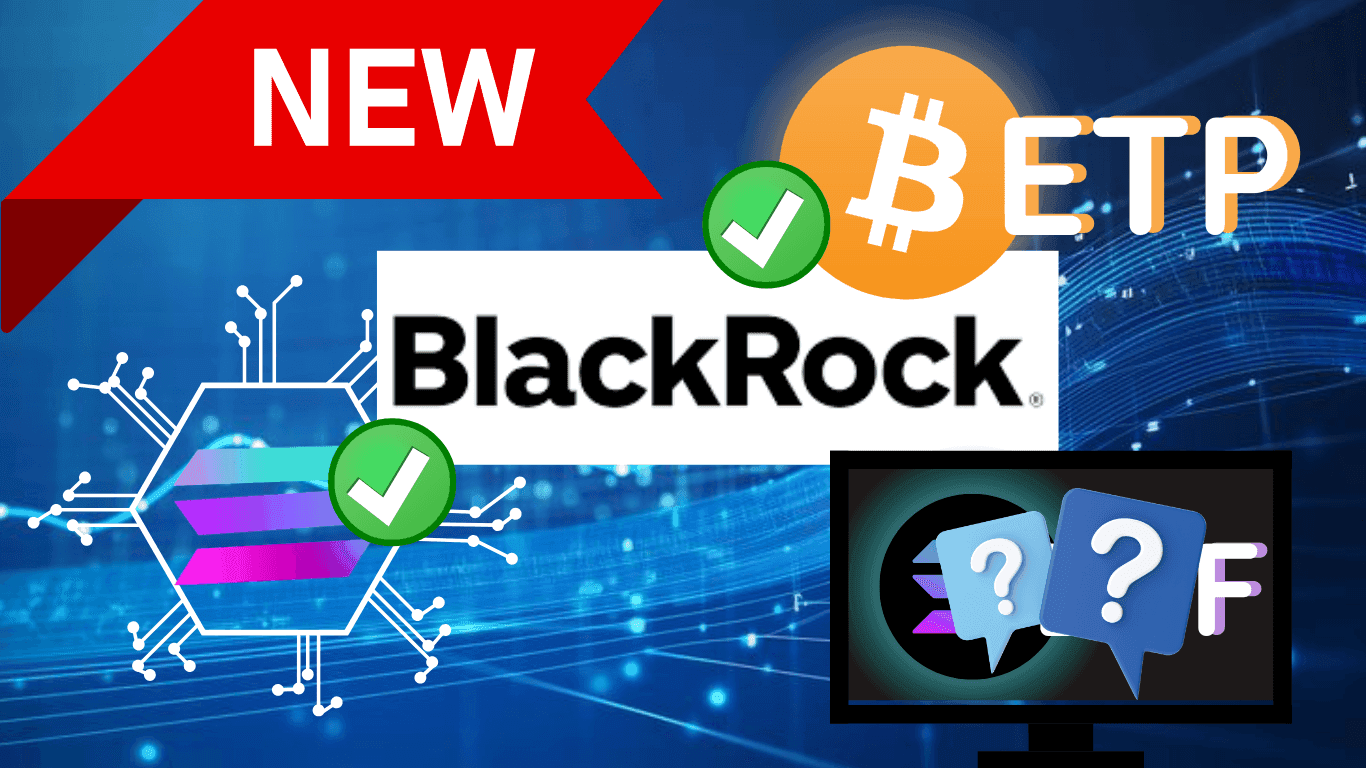
BlackRock NEWS: BUIDL Fund Live on Solana and Bitcoin ETP Launch in Europe
BlackRock's dual crypto push—expanding its BUIDL fund to Solana and launching a Bitcoin ETP in Europe—has ignited market interest. Solana price surged to its best performance this week; so what's next?
October 1, 2026 4:28 PM

Solana loses $11.1 million from the US ETFs: here are the reasons
The US spot ETFs on Solana lost a net $11.1 million on September 30, ending a record week of $188 million. The price stands at $117.66, and the switch to Alpenglow runs over epoch boundaries in October rather than a date.
September 29, 2026 4:14 AM
Stellar rises more than 8 percent as the network clears 41 transactions per second: what you can do now
XLM climbs 8.1 percent in 24 hours to $0.2329. We measured 999 ledgers and 2,000 transactions on the Stellar network: 41 transactions per second, a 22.4 percent failure rate and a fee that most often matches the minimum rate exactly.

September 27, 2026 4:23 AM

Polkadot Price Recovers 43 Percent: What Is Behind the DOT Rally
DOT stands 43.2 percent higher than 30 days ago, and unlike many price jumps there is a documented trigger for it: Referendum 1944 on the network's own dotUSD stablecoin. What the proposal would do, why 98 percent approval means less than it sounds, and how you buy DOT in Germany.
September 21, 2026 10:19 PM

Solana at a Three-Month High: What Is Holding the SOL Price Up as ETF Inflows Dry Up
Solana trades above every hourly price of the past 90 days and leads the five largest coins over one month. ETF inflows have shrunk to a fraction since the end of August. What is moving the price instead, where the levels sit, and what to check before you buy or stake.
September 21, 2026 4:19 PM

Arbitrum Up 150 Percent In A Month: Is Robinhood Carrying The Price?
ARB is the strongest performer of the past four weeks. Behind the advance sit Robinhood's own chain and trading in tokenised assets. Two dates decide whether the rally holds.
September 19, 2026 4:20 PM

Is Ondo a Good Buy at the Current Price?
Ondo trades above both moving averages and far below its twelve-month high. We examine the chart position, trading volume and supply mechanics, and set out what argues for and against buying the ONDO token.
September 18, 2026 9:15 PM

Ethereum Breaks Through the $2,600 Mark: What Is Behind the Short Squeeze and What to Check Now
Ethereum rises almost 7 percent to $2,616 and clears the mark it failed at only days ago. Short positions worth $85 million were forcibly closed in the process. What that reveals about the rally and what you should check now.
August 11, 2026 5:35 PM

Is Ethereum a Good Buy at Current Prices?
Ethereum has fallen further than Bitcoin and recovered better of late. What chart structure, the fee mechanism and trading volume say about buying at current prices.
June 18, 2026 10:57 PM
Is Solana (SOL) a Good Buy at Current Prices?
Solana has traded above its 200-day average since August, the 50-day average joined it on 21 September, and volume is now keeping pace. What chart structure, issuance and tokenisation say about buying at current prices.
May 13, 2026 8:48 AM
JPMorgan Expands Tokenization Push with New Ethereum Money-Market Fund
JPMorgan Chase files to launch its second tokenized money-market fund on Ethereum, targeting stablecoin reserves and institutional liquidity.
January 17, 2023 5:49 AM
Can Avalanche Price hit $100 in 2023?
What is the AVAX price prediction in the first quarter of 2023? Can Avalanche price hit $100 in 2023? Let's take a look at it
October 1, 2026 4:30 AM

228 Million CRO Up for Burning: the Cronos Vote Ends on Saturday
Until early Saturday, CRO stakers are voting on two proposals: a burn of 228 million CRO and a commitment to put all revenue from two products into buybacks. The quorum is reached and there are no votes against. What the figures mean relative to supply, and what investors in Germany should check.
September 29, 2026 4:26 AM
Chainlink reserve tops 6 million LINK as the price climbs above $15
The Chainlink Reserve holds 6,047,498 LINK, with 373,791 tokens added in September alone. The price stands at $15.56, 10.6 percent higher than the day before.
September 25, 2026 4:23 PM
Chainlink Jumps 12 Percent to $13.93: What to Check on Buying Route, Holding Period and Staking
Chainlink trades at $13.93 on September 25, 12.21 percent above the previous day; the trigger is the launch of the Paxos token PAXGy, which uses Chainlink's cross-chain rail CCIP as its only route between networks. This piece places the drivers and shows what to check on buying route, holding period, staking, custody and leverage.
September 25, 2026 1:12 PM

XRP Jumps to $1.56: What Holders Should Check on Buying Route, Holding Period and Leverage
XRP trades at $1.56 on September 25, 2026, up 6.85 percent on the day and 16.64 percent on the week. What the on-chain data and the US ETF inflows actually show, and what investors in Germany should check now on buying route, holding period, leverage and custody.
September 25, 2026 1:20 AM

Chainlink in the Infosys Banking Standard: What to Check on Buying, Staking and Holding Period
Chainlink climbs to $12.96, 5.72 percent above yesterday. The trigger is an Infosys agreement covering 1.7 billion bank accounts, and it comes with a gap you should know about.
September 20, 2026 7:10 PM

BNB Is Back Above $100 Billion: What Is Really Behind Binance Chain's Lead
BNB is back above $100 billion, and the reason doing the rounds is always the same figure: $3.6 billion of growth in real-world assets, more than on any other chain. The number is right. It just measures something other than what the headlines suggest.
More from CryptoTicker