
CME Lists Bitcoin Cash and Uniswap Futures From October 19: What Retail Investors Must Check With Their Broker
CME Group brings futures on Bitcoin Cash and Uniswap to market on October 19, and BCH jumps 24 percent on the news. For retail investors in Germany, however, a BaFin order decides whether they may trade the contracts at all.





Which topics should we dive deeper into?
Select what genuinely interests you. Your picks feed directly into our editorial planning.
Crypto news that's actually worth your time.
Weekly. 60 seconds. Carefully curated by our editors: no hype, no promo flood, no spam.
CME Group announced on September 22, 2026 that it will list futures on Bitcoin Cash and Uniswap from October 19. If you are a retail investor in Germany, the decisive detail is not the start date but a BaFin order from 2022: futures may be sold to retail clients in Germany only under narrow conditions. Anyone who wants to trade the new contracts therefore has to check with their own broker first whether the obligation to post additional margin is contractually excluded, or whether a written hedging declaration is required.
The market priced the news in immediately. According to CoinGecko, on September 22, 2026, Bitcoin Cash stood at $327.15, up 23.75 percent on the previous day and the strongest reading among the 25 largest crypto assets. Uniswap traded at $9.29, a gain of 4.51 percent. Over seven days, Bitcoin Cash is up 41.30 percent and Uniswap 38.02 percent.
CME Group lists Bitcoin Cash and Uniswap futures: contract sizes and launch date
A future is an exchange-traded contract in which two parties commit to buying or selling a set quantity of an underlying asset at a fixed price on a fixed date. CME Group runs the world's largest derivatives exchange and has listed crypto futures since December 2017.
According to the company's statement, the expansion covers four contracts. The standard Bitcoin Cash contract represents 250 BCH, the micro contract 25 BCH. For Uniswap the figures are 10,000 UNI in the standard contract and 1,000 UNI in the micro contract. The launch is scheduled for October 19, 2026 and remains subject to regulatory review. Trading takes place on the exchange's round-the-clock platform.
Giovanni Vicioso, Global Head of Cryptocurrency Products at CME Group and responsible for the segment, justifies the move in the statement by pointing to the maturity of the market: participants need a broader set of regulated tools to manage price risk in digital assets. That assessment is a corporate statement, not an independent read on the market.
With the two new assets, the line-up of crypto futures listed at CME grows to eleven underlyings. Contracts on Bitcoin, Ether, XRP, Solana, Cardano, Chainlink, Stellar, Avalanche and Sui are already tradable. In the first half of 2026, an average of 279,800 contracts changed hands daily in the crypto segment according to the exchange, equivalent to a notional value of $8.3 billion; open interest averaged 264,600 contracts, or $15.4 billion notional. The five assets added in 2026 together account for more than $1 billion in notional volume since the start of the year.
Why Bitcoin Cash gains 24 percent and Uniswap only 4.5 percent
The difference in the price reaction comes down to the size of the two markets. Bitcoin Cash ranks 21st by market capitalisation and is the smaller of the two, but it has always reacted sharply to institutional news, because the asset is treated as a highly liquid Bitcoin offshoot by traders who wait for exactly this kind of trigger.
Industry service CoinCodex puts the rise in Bitcoin Cash trading volume around the announcement at 153.8 percent, to roughly $801 million within a day. The peak price it cites, $321.74, sits slightly below the $327.15 cited above; both figures come from different moments of the same trading day.
A second factor is the broader market backdrop. On September 22, Bitcoin opened at $86,597.82 according to Yahoo Finance data, 6.7 percent above the previous day, with Ether at $2,775.96. In that kind of environment, single news items are amplified, because hedges against rising prices have to be closed out. Part of the move in Bitcoin Cash is therefore down to this market mechanism rather than the announcement alone.
For Uniswap, the news lands on a move that has already run. The governance token of the largest decentralised exchange gained 38 percent over the preceding seven days and reclaimed the nine-dollar mark in the process. An additional push of 4.5 percent looks smaller against that backdrop, but it is spread across a considerably larger capitalisation.
Future, perpetual and CFD: how the three leveraged routes are built
It is worth looking at the three product types that allow leveraged bets on crypto prices. They differ less in their economic outcome than in maturity, supervision and settlement.
A classic future has a fixed expiry date and is settled centrally on a supervised derivatives exchange through a clearing house that steps in as counterparty for both sides. A perpetual future, as offered by crypto exchanges and decentralised venues, has no expiry; it is held close to the spot price through a funding rate paid at regular intervals. A contract for difference, or CFD, is by contrast an over-the-counter agreement between you and your broker, with the broker taking the other side itself.
The regulatory treatment follows that split. All three forms count as derivatives under German securities trading law, but they are subject to different BaFin product interventions. Anyone who understands the difference also understands why a CME contract is harder for a German retail investor to access than a perpetual on a crypto exchange. Which platforms come into question for perpetuals at all, and how to assess their fee models, is set out in our overview of perp DEX platforms.
BaFin general order on futures: why you cannot simply buy the CME contract
On September 30, 2022, BaFin issued a general order on product intervention for futures, based on Article 42 of EU Regulation 600/2014 (MiFIR). It took effect on January 1, 2023 and remains in force unchanged. The core of it: investment firms are in principle prohibited from marketing, distributing and selling futures to retail clients.
The supervisor justified this with the obligation to post additional margin. If a position moves against the investor far enough for the posted margin to be used up, a future can create a claim that goes beyond the capital committed. BaFin saw significant investor protection concerns in that, particularly in periods of sharp swings. Crypto assets are not a special case in this respect; they are the area in which the problem becomes visible fastest.
The ban is not absolute. The order names exceptions, and it is precisely at those exceptions that it is decided whether you get a Bitcoin Cash contract into your account from October 19.
 Perp DEX at a glance: leverage, funding and fees
Additional margin or hedging declaration: the two routes for retail clients
The first route, and the one that matters most in practice: the investment firm contractually excludes the obligation to post additional margin. Your loss is then limited to what you have posted as margin. In technical language this commitment is called negative balance protection, the contractual safeguard against a negative account balance. If your broker offers the contracts on that basis, you are allowed to trade them as a retail client.
The second route is aimed at investors with a concrete hedging need. Here the retail client confirms in writing before each individual transaction that the contract is being acquired exclusively for hedging purposes. If you want to protect an existing Bitcoin Cash position against a price decline, you fall under it; if you want to speculate on rising prices, you do not. The declaration is not a formality but a precondition, and the investor is bound by its truthfulness.
As a third case, the order names the acquisition of futures to close existing positions opened before the order took effect. That plays no role for the new contracts.
In practice this leads to a simple order of checks before October 19. Ask your broker whether it offers the CME crypto futures at all, whether the obligation to post additional margin is excluded, and what margin it requires. The answers differ widely, because the houses have tailored their offering for German retail clients in different ways. An assessment of the providers active here and their terms can be found in our broker overview.
250 BCH per contract: why the micro future is the realistic size
Contract size decides whether a product is suitable for a private account at all. A standard Bitcoin Cash contract represents 250 BCH. At the price of $327.15 on September 22, that corresponds to a notional value of roughly $81,800 per contract. The micro contract covering 25 BCH comes to about $8,180.
For Uniswap the difference is similar: 10,000 UNI in the standard contract works out at roughly $92,900 notional at a price of $9.29, with the micro contract of 1,000 UNI at about $9,290. These figures are snapshots of September 22 and shift with every move in the price.
What you have to post is not the notional value but the collateral, known as margin in derivatives trading. For crypto futures it typically sits in the double-digit percentage range of the notional value, depending on exchange and broker, and is set by the derivatives exchange in line with volatility. The specific rates for the new contracts are still outstanding at the time of writing; they are usually published only shortly before trading starts.
Margin and liquidation: what actually ends a leveraged position
Liquidation is the forced closure of a position by the trading venue once the posted margin falls below a defined threshold. It is the mechanism on which most leveraged positions end, and it does not ask whether the investor's view of the market was right over a horizon of weeks.
With an asset that gains 24 percent in a day, the counter-move is just as possible. Bitcoin Cash has shown double-digit daily moves in both directions several times this year. A position with five times leverage is arithmetically wiped out by a 20 percent decline, before the question of additional margin even comes up.
Why liquidations rarely happen one at a time
There is a further point that is often underestimated in crypto trading: liquidations cluster. When many similarly positioned trades are closed out at the same time, the resulting sales create further pressure that reaches the next group. That is precisely why price swings on such days are larger than the news that triggered them.

Tax on derivatives: the 20,000-euro cap is gone since the 2024 Annual Tax Act
For investors who trade derivatives, the tax situation has improved noticeably over the past two years. Until then, Section 20 (6) sentences 5 and 6 of the German Income Tax Act created a separate loss-offsetting pool: losses from derivatives could only be set against gains from derivatives, and only up to 20,000 euros a year.
The Annual Tax Act 2024 of December 2, 2024, promulgated in the Federal Law Gazette on December 5, 2024, deleted those two sentences without replacement. The background was constitutional concerns raised by the Federal Fiscal Court in its decision of June 7, 2024 (case number VIII B 113/23) in proceedings on the suspension of enforcement. Under Section 52 (28) of the Income Tax Act, the deletion applies retroactively to 2024 and to all open cases.
For you this means: losses from a crypto future can be set against all investment income, including interest or dividends, and the annual cap is gone. Implementation by custodian institutions in the withholding of capital gains tax became mandatory on January 1, 2026. Whether your institution reflects this properly is visible in your tax certificate; for older loss carry-forwards it is worth looking at the income statement. For ongoing documentation of your positions, a portfolio tracker helps, of the kind we compare in our overview of crypto tax tools.
Future or coin in the wallet: two separate tax worlds
The distinction from a directly held coin matters. A future is an investment product and falls under the flat-rate withholding tax. A Bitcoin Cash held in your own wallet is by contrast another asset within the meaning of Section 23 of the Income Tax Act, for which the one-year holding period applies. These two worlds cannot be offset against each other for tax purposes. Which legal consequence applies in an individual case belongs in the hands of a tax adviser.
 Crypto brokers compared: terms and access
Spot instead of leverage: holding period, custody and the route through a licensed exchange
For most retail investors, buying directly remains the obvious route, especially with an asset whose news flow turns within hours. Since the end of 2024, the EU Markets in Crypto-Assets Regulation, MiCA for short, has been in force; it requires trading venues to hold a licence and governs obligations on custody, own funds and client information. We have set out which obligations those are in detail, and by when they apply, in our overview of the MiCA licensing requirements.
Three checks before the buy order
With a spot purchase, you check three things before the order goes out: whether the trading venue runs its own order book for euro trading or routes through an intermediate currency, how deep that order book is at your order size, and how custody is arranged. A list of the venues licensed here can be found in our exchange overview.
The tax difference is substantial. If you hold Bitcoin Cash in your own possession for more than a year, a disposal gain is tax-free under current law. That option does not exist with a future, because it counts as an investment subject to the flat-rate withholding tax and ends at its expiry date in any case.
Levels above and below: how to measure the next move in BCH and UNI
October 19 is a scheduled event date, and such dates are regularly anticipated in crypto markets. Experience with earlier CME listings shows two patterns that can rule each other out: part of the move runs ahead of the launch, and the launch day itself can come with profit-taking. Which pattern applies cannot be predicted, and any figure attached to it would be invented.
Three measures are observable, though. First, open interest in CME's existing crypto contracts, which the exchange publishes daily and which shows whether institutional money is actually flowing into the segment. Second, trading volume in Bitcoin Cash, which with the reported jump of 153.8 percent currently sits far above its normal level and whose return to that level would mark the end of the impulse. Third, whether the regulatory review the listing is subject to is completed on schedule.
On the price side, the round numbers are the reference points where orders gather: for Bitcoin Cash the area around $300 on the downside, which served as the starting point before the news, and for Uniswap the nine-dollar mark reclaimed over the past week. If the price falls back below those starting points, the market has digested the news.
What is still open on October 19
Three points are not settled at the time of writing and cannot be anticipated seriously. The exchange has not yet published margin requirements for the new contracts. Whether and which brokers active in Germany will offer the contracts to retail clients with the obligation to post additional margin excluded is equally open. And the regulatory review the announcement is subject to has not been completed.
Anyone who wants to act now therefore works with what is documented: the announcement itself, the contract sizes and the law as it stands for retail clients in Germany.
Checking CME futures on Bitcoin Cash: what to take away
- Sort out your access before trading starts. Ask your broker whether it carries the new CME contracts for retail clients and whether the obligation to post additional margin is contractually excluded. Without that exclusion, all that remains is the route via the written hedging declaration, and that presupposes an existing position you are hedging. Which houses come into question for leveraged trading at all is shown in the broker overview.
- Convert the contract size into euros before you look at the margin. 250 BCH in the standard contract are worth roughly $81,800 notional at the current price; the micro contract over 25 BCH is the only realistic size for a private account. If the leverage is too much for you, buying directly through a licensed crypto exchange with the one-year holding period remains an option.
- Check your loss carry-forwards from derivatives. Since the deletion by the Annual Tax Act 2024 they can be set against all investment income, and banks have had to reflect this in withholding since January 1, 2026. A look at your tax certificate is worth it; the ongoing documentation is handled by a tax and portfolio tool.
Sources: The announcement in full is in the CME Group press release of September 22, 2026. The conditions for selling futures to retail clients in Germany are set out in the BaFin general order of September 30, 2022.
(As of September 22, 2026. This article is not investment advice. Prices and fee structures change; check the terms with the provider before you buy.)
Transparency note: This article was produced with the assistance of artificial intelligence and reviewed by our editorial team before publication. All figures and claims were checked against the primary sources linked in the text. The feature image was generated with AI.
Related articles
- Bitcoin Cash jumps 29 percent in a day: we recalculated 49 jumps like it
- Bitcoin Cash Falls 5.5 Percent After a 50 Percent Week: Check Your Buy Route, Leverage and Holding Period
- BaFin Crypto Knowledge Survey: Four Assumptions Owners Believe Are True
- Bitcoin ATM in Germany: Fees, BaFin Authorisation and Tax
- Crypto CFD or Buying Real Coins? How Leverage, Margin Calls and Tax Differ
Which topics should we dive deeper into?
Select what genuinely interests you. Your picks feed directly into our editorial planning.
Crypto news that's actually worth your time.
Weekly. 60 seconds. Carefully curated by our editors: no hype, no promo flood, no spam.

August 10, 2026 9:15 PM
Selling Bitcoin at an ATM: Tax Rules in Austria
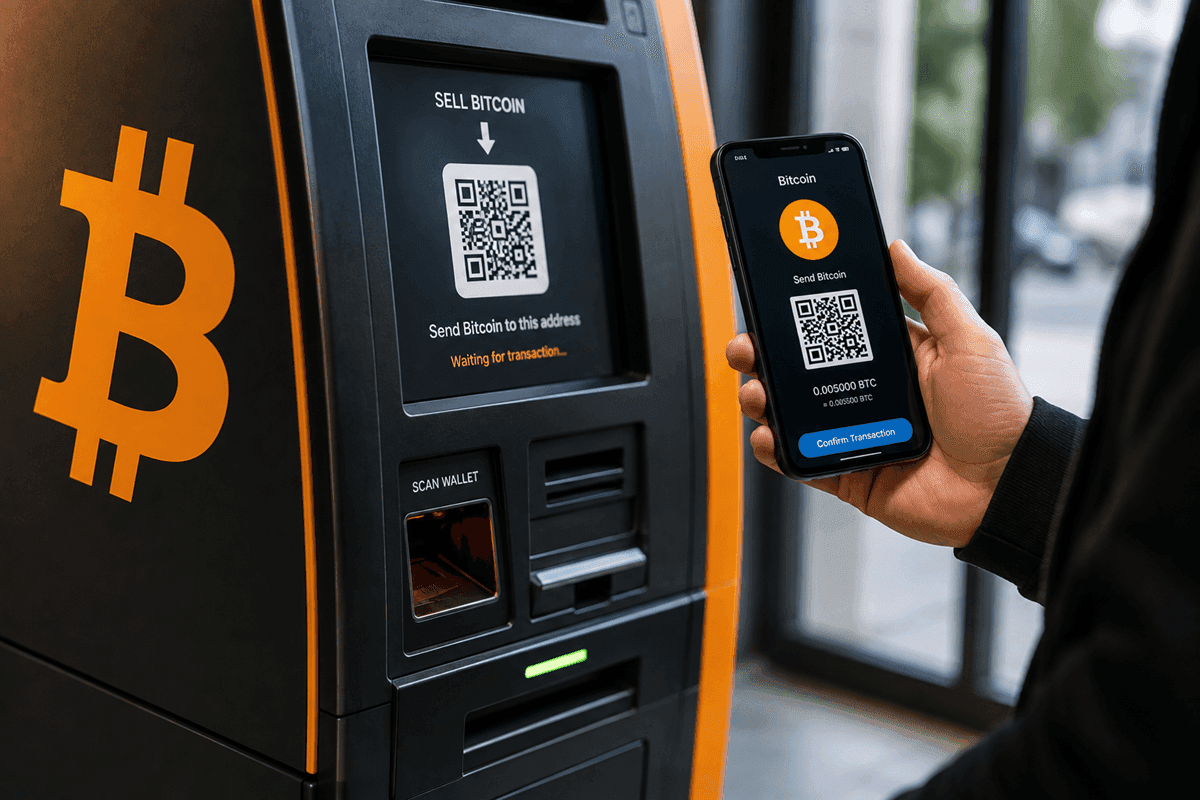
Selling bitcoin for cash at an ATM: when the 27.5 percent rate applies in Austria and which records you need to keep.
August 28, 2026 10:15 AM

Selling Bitcoin Privately: What Tax Applies in Austria
Selling bitcoin directly to another person? In Austria, private sales can still trigger 27.5 percent tax on the realised gain.

June 24, 2024 10:37 AM

Bitcoin Price Prediction: Can BTC Price Fall Below 50K?
The profitability of Bitcoin futures cash-and-carry trades has plummeted amid a significant crypto market selloff. What are the reasons behind the decline and what can traders expect next?

September 19, 2026 4:19 AM

Bitcoin Cash Jumps by Double Digits: What the Grayscale ETF Filing Really Means for You in Germany
Bitcoin Cash gained double digits on September 18 because Grayscale wants to convert its BCH trust into an exchange-traded product. The filing itself, however, states that the basis for it has not been approved at all.

December 17, 2017 7:54 PM

How CME’s Bitcoin Futures Will Affect Bitcoin Prices
On the 17th of December 2017, the Chicago Mercantile Exchange & Chicago Board of Trade (CME Group) will be launching their very own Bitcoin Futures contract as they seek to capitalize on the recent surge of the digital currency. CME’s […]
August 20, 2024 3:00 PM

New US Senate Proposal Submitted For Crypto Tax Exemption
The US Senate has recently submitted a new proposal to exempt crypto transactions from federal taxes. Here are more details of this submission, and a list of exempted countries it could be joining...
August 18, 2026 7:13 AM

Bitcoin Tax Reporting in Austria 2026: What Applies
Bitcoin tax reporting in Austria: which data investors can request from crypto exchanges in 2026, and when the report matters for the tax return.
August 10, 2026 5:15 PM

Bitcoin Lending in Austria: When Tax Falls Due
Lending Bitcoin and earning interest: when lending income is taxed at 27.5 percent in Austria and which exchange rate counts.
September 30, 2026 10:13 PM
Robinhood Announces Perp Futures With 10x Leverage for US Customers: “Markets don’t work without traders”
Robinhood plans to offer eligible US customers perpetual futures on eight cryptocurrencies, with up to 10x leverage on Bitcoin and Ethereum. Nothing is tradable yet, and a different leverage cap applies in Europe.
April 11, 2026 11:59 AM
Crypto Market Rallies: Bitcoin Hits $73,000 as Institutional Inflows Surge
Bitcoin hits $73,000 amid $350M ETF inflows and new CME altcoin futures, signaling a massive institutional shift in the crypto market this April.
August 16, 2026 9:11 PM
Swapping Bitcoin for Stablecoins: Does Austria Charge Tax?
Anyone swapping bitcoin for USDT or another stablecoin usually pays no tax in Austria yet. When the swap does become taxable after all.
December 22, 2017 10:07 PM
Bitcoin: Correction or Crash?
Over the last few days, the price of Bitcoin has been going downhill ever since the bearish valuations at the launch of CME’s Bitcoin futures last Sunday. Taking a $3,000 plunge due to the introduction of Bitcoin Cash to Coinbase, […]
September 11, 2026 10:18 AM

Bitcoin Tax Audit: What Proof Austria Requires
Which bitcoin records can the Austrian tax office examine? Purchase dates, wallet transfers, acquisition costs and sale proceeds are what count.
August 21, 2026 1:33 PM

Bitcoin With No Cost Basis: How Austria Taxes the Sale
Bitcoin purchase price no longer provable? How Austria works out the capital gains tax, when a flat-rate cost basis applies and what investors can do.
August 14, 2026 6:18 PM
Bitcoin From a Foreign Exchange to Austria: Which Tax Data You Need
Transferring Bitcoin from a foreign exchange to an Austrian platform: which tax data can be missing for the withholding tax. And what investors need to watch out for.
September 10, 2026 7:14 AM

Bitcoin Loan Liquidated: Tax Consequences in Austria
If a lender liquidates Bitcoin pledged as loan collateral, a taxable capital gain can arise in Austria. That holds even when the investor never chose to sell.
September 1, 2026 1:25 PM

Bitcoin Tax Report Wrong: What Austrian Investors Can Do
Errors in a Bitcoin tax report are not unusual. This is the data Austrian investors should check, and how a wrong capital gains tax deduction is put right.
August 27, 2026 10:16 AM

Bitcoin Tax Return in Austria: When You Must File
Even with a crypto exchange, a tax return can still be necessary in Austria. Foreign platforms, missing capital gains tax withholding and cross-provider losses are the typical triggers.
August 12, 2026 9:12 AM

Bitcoin Losses and Dividends in Austria: How the Tax Offset Works
Can a Bitcoin loss be offset against dividends? This is how loss offsetting works in Austria. It also shows when a tax return is needed for it.
September 30, 2026 4:45 PM
CFTC Registers Coinbase Clearing for Fully Collateralised Derivatives: What Matters for Investors in Europe
The US regulator CFTC registered Coinbase Clearing as a clearing house on September 28, but only for fully collateralised contracts without leverage. For investors in Europe another decision counts for more: ESMA's CFD classification of perpetual futures.
August 11, 2026 5:24 PM

Perp DEX Explained: How Funding Rate, Liquidation and Taxes Work on Perpetual Futures
Perpetual contracts run without an expiry date, and in exchange you pay funding for as long as you hold them. This article explains the mechanics behind perp DEX, the liquidation thresholds and the regulatory and tax framework in Germany.
September 4, 2026 1:34 PM

Bitcoin as Loan Collateral: When No Tax Applies in Austria
Pledging Bitcoin as collateral for a loan? As long as the coins are not realised, no sale arises in Austria in principle.
September 14, 2026 1:27 PM

Bitcoin Lost to a Scam: What Counts as a Tax Loss in Austria
Lost bitcoin to a scam? Why Austria generally does not recognise the damage as a tax loss for privately held assets, and when compensation payments start to matter.
August 26, 2026 10:25 PM
Selling Bitcoin at a Loss: Loss Offsetting in Austria
Sold Bitcoin at a loss? Austria allows the loss to be offset against certain investment income. When loss offsetting is possible and which limits apply.
August 20, 2026 4:24 PM

Bitcoin Across Multiple Wallets: How Austria Works Out the Acquisition Cost
Bitcoin spread across several wallets? How Austria works out the acquisition cost and the rolling average price for tax purposes.


More from CryptoTicker