
HTX on the EU Sanctions List: Transaction Ban Applies from August 23, 2026
The EU has added HTX to Annex XLV of the Russia sanctions regulation; from August 23, 2026, transactions with the platform are prohibited. Anyone still holding a balance there can withdraw freely until then, and afterwards only with authorisation from the Deutsche Bundesbank.





Which topics should we dive deeper into?
Select what genuinely interests you. Your picks feed directly into our editorial planning.
Crypto news that's actually worth your time.
Weekly. 60 seconds. Carefully curated by our editors: no hype, no promo flood, no spam.
On August 23, 2026, an entry in the Official Journal of the European Union turns into a hard boundary. From that day, persons and companies subject to the EU sanctions against Russia may no longer carry out transactions with the trading platform HTX. Anyone still holding a balance there has eight days. After that, the route runs through an application to the Deutsche Bundesbank, and it is narrower than the word exemption suggests.
Ten further platforms are affected alongside HTX, all with the same effective date. The deadline lands on a situation many users already know: HTX has been excluding customers from the European Union from all services since the summer anyway. What is new is the legal consequence on the user side. Until now the platform did not want the business; from August 23, the regulation prohibits the user from doing it.
HTX on the EU sanctions list: what Regulation (EU) 2026/1848 orders
The legal basis is Council Regulation (EU) 2026/1848 of July 23, 2026. The act amends Regulation (EU) No 833/2014, the central body of rules governing EU economic sanctions against Russia; the foreign-policy basis is Decision (CFSP) 2026/1849, adopted in parallel.
The decisive part sits in Annex VIII, which supplements Annex XLV of Regulation 833/2014. The official heading of that annex section reads, word for word: list of credit and financial institutions and entities established outside the Union providing crypto-asset services or payment services that significantly frustrate the purpose of the prohibitions under this Regulation and Regulation (EU) No 269/2014. Since July 23 it has carried the entry HTX (HUOBI GLOBAL SA) with an effective date of August 23, 2026.
The classification matters. This is a transaction ban under Regulation 833/2014, whereas the freezing of funds is governed by Regulation (EU) No 269/2014. No balance is confiscated. What is prohibited is the act, meaning any transaction with the listed entity.
According to a CryptoSlate report of August 10, 2026, the company has not commented publicly on the EU listing. On a British designation of the same company, HTX said on May 27, 2026 that Huobi Global S.A. was to be distinguished from the trading platform. Whether that is also meant to apply to the European listing does not emerge from the statement.
Annex XLV Part A: eleven crypto and payment platforms effective August 23, 2026
HTX is the best-known name on the list, but far from the only one. We counted the entries in Annex VIII: 17 are newly added to Part A of Annex XLV, eleven of them effective August 23, 2026, and six effective August 13, 2026.
Taking effect on August 23, 2026 are Rapira, Aifory Pro (Sooty Ltd.), ABCeX (Nueva Cryptologia S.A.S DE C.V.), WhiteBird, NoOnecrypto INC., Tradex (Brightum LLC), Monease Ltd, BitPapa, Exnode and Exnode Pay (Arvix), HTX (HUOBI GLOBAL SA) and EXMO Ltd.
The six entries that have been in force since August 13
Chinggis Khaan Bank, Sberbank India, India VTB, A7 Nigeria, A7 Africa and PilotFinance Ltd took effect on August 13, 2026. Anyone who settled payments through them is already facing a fait accompli. The difference counts, because the exit clause is tied to the respective effective date.
Scope of the transaction ban: who Regulation 833/2014 covers in Germany
The territorial scope of Regulation 833/2014 is set out in its Article 13. It covers acts within the territory of the Union as well as nationals of member states and companies incorporated under the law of a member state, including outside the EU. At the same time, the recitals make clear that the restrictions do not apply extraterritorially to third countries. For you as a private individual resident in Germany, that means you fall under them regardless of where the server sits.
One question the text of the regulation does not answer: whether, for a specific account, the listed company is the counterparty or the custodian. The regulation names the entity in the combined form without breaking down the group structure. Similar questions of delineation recently occupied German users during the Kraken delisting with forced liquidation, there with a different trigger.

HTX has been blocking EU users since July: what the user agreement says
The transition period of the EU's MiCA regulation expired on July 1, 2026. Since then, a provider without authorisation as a crypto-asset service provider may no longer offer services to customers in the Union. HTX has written this into its own terms: section 1.2 of the HTX Platform User Agreement, lists all member states of the European Union among the Restricted Jurisdictions, in the category that excludes them from every service rather than from derivatives trading alone.
For those affected, the combination is uncomfortable. New business is ruled out in any case; what remains are legacy holdings in accounts that formally still exist, and those are precisely what now falls under the deadline. If you are weighing where to move, our overview of the best regulated crypto exchanges lists the providers holding European authorisation.
 Regulated crypto exchanges compared
Article 5ad paragraph 4: the exit clause for natural persons
The amending regulation inserts a new paragraph 4 into Article 5ad of Regulation 833/2014. It is the only route by which money can still leave a listed platform after the cut-off date.
Under it, the competent authorities of a member state may authorise transactions that are strictly necessary in order to withdraw funds or close accounts. The beneficiaries are nationals of a member state, of an EEA country or of Switzerland, as well as natural persons holding a temporary or permanent residence permit there. The provision applies to entities added to Annex XLV on or after July 24, 2026, and therefore expressly covers HTX.
The regulation attaches three conditions to the authorisation. The transaction must be necessary for the person to terminate their business, contracts or other arrangements with the listed entity. The application must be submitted no later than three months after the stated effective date, which for HTX means by November 23, 2026. And the funds must be transferred to a financial or credit institution incorporated under the law of a member state, or failing that to a third-country institution under its control.
What the authorisation expressly does not cover
An authorisation granted is valid for a maximum of three months under the text of the regulation. The clause speaks throughout of withdrawing and closing; continued trading is not covered. One wording oddity deserves a mention: the application deadline refers to the effective date stated in Annex XIV, while the platforms concerned are listed in Annex XLV Part A. The effective date shown for HTX is August 23, 2026 in every case.
The Bundesbank's financial sanctions service centre: where the authorisation application goes
The regulation speaks of the competent authorities of a member state without naming them. For Germany, responsibility is unambiguous: on its financial sanctions page, the Deutsche Bundesbank states that its financial sanctions service centre is responsible in this country for implementing financial sanctions, that is, restrictions on capital movements and payments.
The Bundesbank is more explicit still on its page on the Russia and Ukraine sanctions regime: applications for an authorisation are to be submitted to the financial sanctions service centre of the Deutsche Bundesbank. It is based in Munich. The same page carries the note that, given their sheer number, the Bundesbank can generally answer enquiries on financial sanctions only within the statutory authorisation and reporting procedures. The formal application is therefore the actual route.

Payouts only to a credit or financial institution: why your own wallet no longer suffices after the cut-off
The third condition is likely to cause the most trouble in practice. The funds must be transferred to a financial or credit institution incorporated or registered under the law of a member state. A self-custody wallet is neither of those and, on the wording, does not satisfy the condition.
The contrast with the period before is considerable. Up to and including August 22, 2026 the ban does not yet bite, and moving your own holdings to a hardware wallet is an ordinary withdrawal. From August 23, every movement depends on an official case-by-case authorisation tied to a destination under EU law.
Binance blocks transfers to HTX and ten further platforms from August 23
The sanction does not operate solely between the user and the listed platform, because the other market participants are adjusting to it as well. On August 14, 2026, several trade outlets including The Block and crypto.news reported that Binance would stop processing transactions with eleven platforms from August 23. The list matches the names carrying the same effective date in Annex XLV Part A.
If you want to move holdings towards a large exchange, you should therefore not count on a transfer still going through after the cut-off date. A block on the other side is a second, independent obstacle alongside the legal prohibition; the Binance delisting of six tokens in mid-August shows how quickly major venues close routes. The reverse also holds: such a block is a compliance decision by the company and replaces neither the assessment of your own position nor the authorisation.
 Hardware wallets compared
Corporate accounts at HTX: why the regulation names no exit route for legal persons
Article 5ad paragraph 4 speaks expressly of accounts owned or held by a natural person. On its wording, the new paragraph contains no corresponding provision for legal persons. Anyone holding an account through a GmbH or another company will find no exit route there; for companies, the simple route falls away on August 23 without a substitute being named in the same place. Affected businesses should have their own position reviewed by a lawyer. This article is no substitute for legal advice.
Tax on the way out: when a sale triggers a private disposal under Section 23 of the German Income Tax Act
The deadline forces some people into an act they would not otherwise have taken. Transferring your own crypto-assets to another address does not in itself trigger a taxable event, whereas selling them for euros is a disposal. Under Section 23(1) sentence 1 no. 2 of the German Income Tax Act, a private disposal transaction in other assets arises where no more than one year lies between acquisition and disposal. On top of that comes the exemption threshold in Section 23(3) sentence 5: gains remain tax-free if the total gain in the calendar year came to less than 1,000 euros. Once it is exceeded, the entire gain is taxable.
Checking the HTX transaction ban: what to take away
The cut-off date is fixed, the exemption is narrow, and both can be worked through in a few steps.
- Check today whether any balance is outstanding at all. Log in to each of the eleven listed platforms you have ever used and look for residual holdings, including small ones. If selling for euros is the simpler route, our guide to selling Bitcoin will help.
- Withdraw before August 23, while no authorisation is required. Up to and including August 22 you can also move crypto-assets to a self-custody address; after that the regulation requires a destination at an institution organised under EU law. Our hardware wallet comparison shows which devices come into question.
- If you miss the cut-off date, file the application by November 23. The competent body is the financial sanctions service centre of the Deutsche Bundesbank; the authorisation covers withdrawal and closure only. For a fresh start, our comparison of the best crypto exchanges is worth a look.
(As of August 15, 2026. This article is not investment advice. Prices and fee structures change; check the terms with the provider before you buy.)
Transparency note: This article was produced with the assistance of artificial intelligence and reviewed by our editorial team before publication. All figures and claims were checked against the primary sources linked in the text.
Related articles
- EU Transaction Ban From August 23: These 14 Crypto Platforms Are Blocked
- Breaking: EU Bans Russian Crypto Service Providers
- MiCA Review: What the European Commission Could Change About the EU Crypto Rules
- How to Switch from Binance to a MiCA Regulated Crypto Exchange
- Weekly Tidbits: Crypto News from the German-Speaking Sphere
Which topics should we dive deeper into?
Select what genuinely interests you. Your picks feed directly into our editorial planning.
Crypto news that's actually worth your time.
Weekly. 60 seconds. Carefully curated by our editors: no hype, no promo flood, no spam.

June 17, 2026 7:21 PM

Binance EU Access at Risk: What MiCA Could Mean for BNB and Crypto Users
Binance is facing one of its biggest regulatory tests in Europe as the MiCA deadline approaches. Could this put BNB and EU crypto users under pressure?
May 12, 2025 9:05 PM

US-EU Trade Tensions Rise as US-China Conflict Cools Down
Just as the long-standing US-China trade war appears to ease, new tensions are emerging between the United States and the European Union. With Trump calling Europe “nastier than China,” are we about to witness a new transatlantic trade conflict?

September 19, 2026 4:11 PM

MiCA Consultation Closes September 30: What to Check and Submit Before Then
The European Commission is reviewing the MiCA crypto regulation and will accept submissions until September 30, 2026 at 23:59 CEST. Staking, DeFi, lending, stablecoins and custody are all under examination, and you can take part without a lawyer.
June 26, 2026 5:35 PM
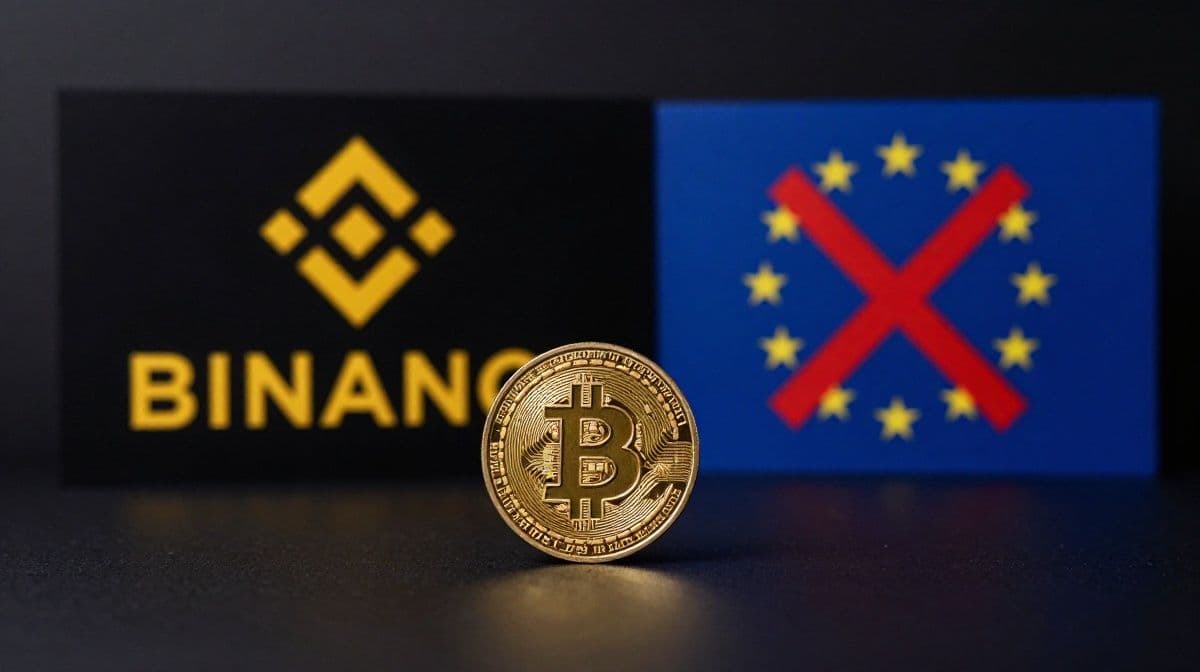
Binance Is Leaving the EU on July 1 — What It Means for Your Funds
Binance will stop serving EU customers from July 1 after failing to secure a MiCA licence. Here's what it means for your funds and your next move.
January 21, 2025 6:44 PM

Banks Are READY Yet Awaiting Crypto Regulations Under Trump's Pro-Crypto Administration, Says Bank of America CEO
Bank of America CEO Brian Moynihan discusses Trump’s economic policies and the banking industry’s readiness to adopt cryptocurrency. But with no regulations to date, what about the future of Crypto?
June 26, 2025 1:54 PM

Barclaycard to Block All Crypto Purchases – Here's What It Means for You
Barclaycard has announced it will block all cryptocurrency purchases made with its credit cards starting June 27, 2025. The bank warns users of potential debt and lack of consumer protections.
March 17, 2026 4:41 PM

Vietnam to Ban Foreign Crypto Exchanges as Local Banks Race for First Licenses
Vietnam is launching a pilot for local crypto exchanges while planning a ban on foreign platforms like Binance to control capital flows and boost adoption.
May 15, 2024 10:37 AM

Ripple Leads the Tokenization Revolution with XRP
Ripple is leveraging XRP to lead the tokenization revolution, transforming the future of finance with innovative cross-border payment solutions.
July 15, 2026 5:09 PM

Japan Recognizes Crypto as Financial Assets — Are Bitcoin ETFs and a 20% Tax Next?
Japan has passed a landmark crypto law. Could regulated Bitcoin ETFs and a lower 20% tax rate bring billions into the market?
June 1, 2024 12:17 PM
XRP SEC Lawsuit Update: A "Fire Gensler" Campaign & A Biden Veto
Ripple CEO Brad Garlinghouse calls on President Biden to replace SEC Chair Gary Gensler...Biden uses his veto right to the latest standalone legislation... Is Biden's veto decision good for Ripple?
April 10, 2026 8:12 AM

Japan Officially Reclassifies Crypto as Financial Assets: What This Means for Investors
Japan's Cabinet has approved a landmark bill reclassifying cryptocurrencies as financial assets, paving the way for a 20% flat tax and institutional growth.
May 22, 2024 11:41 AM

New Crypto Law: How Will It Reshape The Crypto Market?
The U.S. Congress has made a historic move by passing its first standalone crypto legislation, targeting the controversial SEC SAB 121. Here is a full understanding of this new legislation and its impact on the Crypto Market.
August 6, 2026 3:05 PM
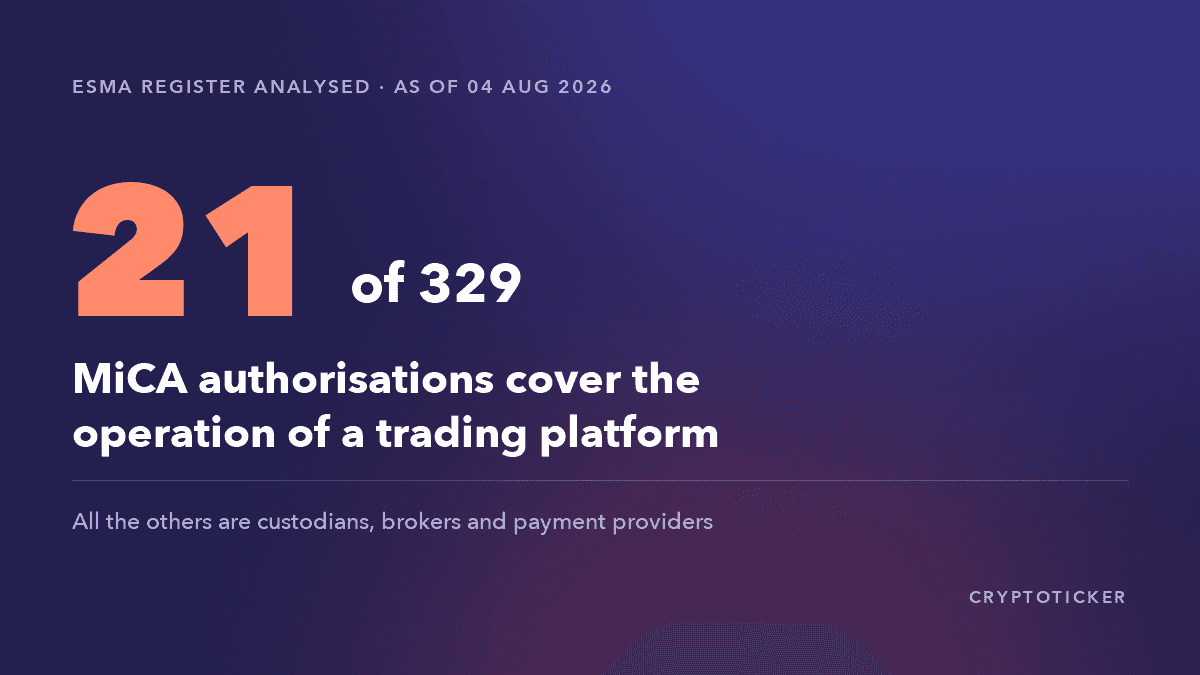
MiCA Register 2026: Only 21 of 329 Licences Are Real Exchanges
ESMA publishes the register of MiCA-authorised providers as an open file. We worked through all of it — and the result is not what the phrase “licensed crypto exchange” suggests.

October 13, 2018 10:27 PM

Crypto-tokens: The future of Indian Crypto-Finance
The Government of India is considering launching Crypto tokens for financial transactions in the country, even as the existing ban on cryptocurrency is likely to continue. “Crypto token operate in a closed system and doesn’t impact the country’s monetary policy […]

September 19, 2026 7:17 AM

Chainlink Jumps Above $12: What LINK Holders Should Check Now
Chainlink trades at $12.34, 7.4 percent higher than yesterday. What part of the move is the broad market rally, what Chainlink itself contributes, and the three things you should check as a LINK holder.
August 19, 2026 10:24 AM

Privacy Coins and EU Anti-Money-Laundering Law: An Assessment of the Ban From July 2027
Article 79 of the EU anti-money-laundering regulation bars crypto service providers from keeping accounts that obscure transactions, and it names anonymity-enhancing cryptocurrencies explicitly. This assessment separates the documented wording, including the 10 July 2027 application date, from what follows for individual coins.

July 10, 2026 10:30 AM
Binance Reveals Where Its EU Users Went After MiCA
Binance just revealed where most departing EU users moved their crypto after MiCA — and the answer is raising hard questions about the new rulebook.
June 25, 2026 11:19 AM

Binance Pulls Its EU Licence Bid: What It Means for Your Crypto
Binance just withdrew its MiCA licence application in Greece days before the EU deadline. Here's what it means for users, your funds, and the crypto market.
July 7, 2025 8:12 PM
BIG Crypto News: EU Approves 14 Stablecoin Issuers Under MiCA
Six months into the MiCA rollout, Europe’s crypto regulatory landscape is taking shape. From authorized stablecoin issuers to licensed crypto service providers, here’s the full July 2025 update.
September 29, 2026 11:45 AM

Tether Freezes $550 Million in Iran-Linked USDT as Senate Probe Turns Up the Heat
Tether says it helped freeze nearly $550 million in Iran-linked USDT in 2026, one day after Senate investigators called USDT central to Iran's shadow banking.
September 29, 2026 11:27 AM

California Bans Politicians From Launching Meme Coins: What the New Law Means
Gavin Newsom signed AB 2409, making California the first US state to bar public officials from issuing meme coins. Exchanges face listing limits from 2027.
September 24, 2026 7:12 AM

Litecoin Runs Against the Market: What MWEB Balances Mean for Exchanges, Holding Periods and AML Rules
Litecoin is the only one of the 19 scored top assets with a clear gain on September 24, 2026, while Uniswap, Dogecoin and XRP fall by double digits or close to it. We put the record balance in the MWEB layer in context and show what to check on deposits, holding periods and EU anti-money laundering law.
September 20, 2026 4:13 AM

Zcash Above $1,500: What ZEC Holders Should Check on Tax and Custody
Zcash rose above $1,500 on September 19 for the first time since 2016 and, after an intraday high of $1,590.80, trades back at around $1,474. For German holders three questions hang on that jump: the one-year holding period, the planned year-end cut-off and the EU anti-money-laundering regulation from July 2027.
September 6, 2026 7:11 PM

EUDI Wallet: The EU Deadline Falls on December 24, 2026, Germany Targets January 2, 2027
Two deadlines, both verifiable, and both counted from the implementing acts of December 2024 rather than from the day the regulation entered into force. Plus the honest answer to the question of whether crypto exchanges have to accept the wallet.
July 9, 2026 10:12 AM
MiCA Wiped Out 92% of Europe's Crypto Firms: Here's Who Survived and Who's Cashing In
The July 1 deadline turned 3,000+ EU crypto firms into a few hundred. Binance is out, Tether's gone, and a handful of winners now own the market.
July 6, 2026 11:17 AM

XRP Just Got a Massive EU Green Light — But There's a Catch Nobody's Talking About
Ripple scored preliminary MiCA approval to run crypto services across all 30 EEA countries — and $XRP is up ~8% this week. Here's what it really means.
February 22, 2025 3:35 PM
EU Approves 10 Stablecoin Issuers Under MiCA – But WHY Was Tether Left OUT?
The European Union has approved 10 stablecoin issuers under its MiCA regulations, notably excluding Tether's USDT. This decision raises questions about the future of stablecoin regulation and market dynamics within the EU.
More from CryptoTicker