
What is XRP? 100 billion coins, one ledger and the role of Ripple
XRP is the cryptocurrency of the XRP Ledger, built for payments in seconds and without mining. This profile explains Ripple, escrow, the SEC case and what to watch for when buying in Germany.


Which topics should we dive deeper into?
Select what genuinely interests you. Your picks feed directly into our editorial planning.
Crypto news that's actually worth your time.
Weekly. 60 seconds. Carefully curated by our editors: no hype, no promo flood, no spam.
XRP is the cryptocurrency of the XRP Ledger, a public blockchain built for fast and cheap payments. All 100 billion XRP were created in one go in 2012; there is no mining and there are no new coins. The company Ripple uses XRP as a bridge currency in cross-border payments, but it owns neither the blockchain nor the coin outright. On Wednesday, November 4, 2026, XRP cost about €1.14 according to CoinGecko and ranked fifth among all cryptocurrencies with a market capitalisation of roughly €72 billion.
This profile explains how the XRP Ledger works, what XRP is meant for in the day-to-day business of banks and payment providers, why the case brought by the US Securities and Exchange Commission (SEC) shaped the price for years, and what you need to keep in mind when buying in Germany. If you want to trade XRP, you will find regulated providers in our crypto exchange comparison; the editorial team's price scenarios are on the XRP prediction page.
XRP explained: the cryptocurrency of the XRP Ledger with 100 billion units
XRP is the native coin of the XRP Ledger (XRPL). A native coin is the currency a blockchain keeps itself and uses to pay fees. Unlike Bitcoin, XRP is not mined. According to the official XRP Ledger documentation, Jed McCaleb, Arthur Britto and David Schwartz built the network between 2011 and early 2012. All 100 billion XRP already existed at launch.
Total supply has been shrinking slowly ever since, because every transaction destroys a tiny amount of XRP. At the start of November 2026, CoinGecko lists just under 99.99 billion XRP as total supply, of which a little over 63.3 billion are in circulation. Most of the rest sits with Ripple, much of it in time-locked contracts on the blockchain.
XRP key figures
- Launch: June 2012, all coins created at launch
- Maximum supply: 100 billion XRP, slightly below that because of burned fees
- Circulating supply in early November 2026: about 63.3 billion XRP
- Settlement: three to five seconds, according to the XRP Ledger
- Standard fee: 10 drops, or 0.00001 XRP
- All-time high: $3.65 on July 17, 2025, according to CoinGecko
At about $1.28 in early November, XRP is roughly 65 percent below its all-time high. The figure shows how much the price swings, even for one of the largest coins on the market.
Ripple, XRP and the XRP Ledger: a company, a coin and a blockchain
In everyday use the three terms are often mixed up. The distinction matters, though, because it explains who decides what.
- XRP Ledger: the public blockchain. Its source code is open, anyone can run a server, and validators push through changes by voting.
- XRP: the coin of this blockchain. It serves as the fee currency, as the reserve for accounts and as a means of payment.
- Ripple: a company based in San Francisco, founded in 2012 as OpenCoin. Ripple develops software for payments and custody and is one of the largest holders of XRP.
According to the XRPL documentation, the founders gave Ripple 80 billion XRP so that the company would develop the network further, and kept 20 billion themselves. This initial distribution is still the source of the most common criticism of the project, covered further below. How the network works technically in detail is described in our explainer XRP Ledger explained of September 20, 2026.
A consensus protocol instead of mining: how validators confirm the XRP Ledger
Bitcoin uses proof of work: miners solve computational puzzles and receive new coins in return. The XRP Ledger runs its own consensus protocol. A consensus protocol is the procedure by which the computers in a network agree on a shared state of the ledger.
On the XRPL, this job falls to validators. Each server keeps a Unique Node List (UNL), a list of validators it trusts. When enough of these validators agree on the same transactions, a new ledger state counts as confirmed. According to the XRPL documentation, the default setting uses two published lists: one from the XRP Ledger Foundation and one from Ripple. The two lists are usually very similar or identical.
The approach has two consequences. First, the XRP Ledger needs no energy-intensive computation and no rewards in new coins, so there is no inflation from block rewards. Second, validators are not paid for their work. Banks, exchanges, universities and developers run them because they themselves depend on a functioning network.
What validators cannot do
Validators cannot move other people's funds or create new XRP. They only decide which validly signed transactions go into the next ledger state and in what order. New features arrive through so-called amendments: an amendment is a protocol change that only takes effect once a broad majority of validators has supported it over an extended period.
Transaction fees and reserves: why every payment burns a fraction of XRP
The smallest unit of XRP is called a drop; one million drops make one XRP. According to the XRPL documentation, the minimum fee for a normal transaction is 10 drops, or 0.00001 XRP. At the November 4 price, that is about a thousandth of a cent. Under heavy load the fee rises automatically, so that attackers cannot clog the network with masses of transactions.
Nobody receives the fee. The XRP paid are destroyed for good, so the total amount of XRP shrinks a little with every payment. Because the fee is so low, the effect is small: measured against CoinGecko's supply data, only about 14 million XRP have disappeared since 2012, a fraction of a per mille of 100 billion.
The reserve on every XRP account
An account on the XRP Ledger has to hold a minimum amount of XRP, the reserve. This protects the network from someone creating millions of empty accounts. According to the documentation, the current figures are a base reserve of 1 XRP per address and 0.2 XRP for each additional object, such as a trust line for a stablecoin. If you send XRP to your own wallet, at least 1 XRP is therefore locked and cannot be sent on. Validators set the size of the reserve by vote; the base reserve used to be 10 XRP.

Ripple Payments and bridge currency: what XRP is used for in payments
XRP's original purpose is cross-border payments. Traditional international transfers often pass through several correspondent banks, each of which has to hold balances in the target currency, known as nostro accounts. That money sits idle and costs interest.
With Ripple Payments (formerly On-Demand Liquidity), Ripple offers another route. A payment provider might exchange euros for XRP, send the XRP over the XRP Ledger in seconds and have them converted into local currency in the destination country. In this model XRP is a bridge currency: an intermediate step held for only seconds. Capital tied up in foreign currencies falls, but the provider bears the price risk for that short time.
One point matters for context: many Ripple customers use only the company's messaging and settlement software without buying any XRP themselves. A new bank partnership therefore does not automatically mean demand for the coin. Whether XRP is actually involved is usually only stated in the small print of the announcement.
RLUSD, AMM and tokenisation: what else runs on the XRP Ledger
The XRP Ledger has long been more than a payment rail. Since launch it has had a built-in decentralised exchange (DEX) on which users swap tokens directly on the blockchain. Automated market makers (AMMs) were added in 2024. An AMM is a liquidity pool in which users deposit two tokens and the price is set by a formula from the ratio of the two holdings.
A second building block is RLUSD, Ripple's US dollar stablecoin. A stablecoin is a token meant to be pegged one to one to a currency and backed by reserves. RLUSD launched in December 2024 on the XRP Ledger and on Ethereum. At the end of September 2026, its circulating supply stood at about $2.5 billion according to market data. For XRP holders this cuts both ways: RLUSD brings activity to the blockchain, but it partly takes over the bridge-currency role that was previously intended for XRP. How stablecoins work in principle and where to hold them is covered in our stablecoin comparison.
The third building block is the tokenisation of securities and funds. Our article of October 24, 2026 reported that Franklin Templeton is bringing $150 million onto the XRP Ledger through a fund. Such applications need small amounts of XRP for fees and reserves, but the bulk of the money sits in the tokenised fund itself.
 Compare exchanges to buy XRP
Escrow and supply: how Ripple releases up to 1 billion XRP a month
At the end of 2017, Ripple locked 55 billion XRP in escrow contracts on the XRP Ledger. An escrow is a trust arrangement on the blockchain: the coins are locked and only released at a predetermined time. Since then, up to 1 billion XRP have been released on the first of every month. Whatever Ripple does not need, it locks into new escrow contracts; according to reports, that has mostly been 60 to 80 percent of the released amount in recent months.
According to Ripple's own report, about 32.6 billion XRP were still in escrow at the end of June 2026. The regular releases are a constant topic in the market, since every tranche sold adds supply. Yet the mechanism also makes supply predictable: the date is known, the amount is capped, and every movement is visible to everyone on the blockchain, for instance in the XRPScan explorer.
Do not confuse circulating and total supply
Only circulating supply, a little over 63 billion XRP, counts towards market capitalisation. If you calculate with the total supply of just under 100 billion, the value is about 58 percent higher. This fully diluted valuation shows what all existing XRP would be worth together at today's price. For XRP, the gap between the two figures is larger than for Bitcoin, because a large part of the supply still sits with Ripple.
SEC vs Ripple: the 2023 ruling and the end of the case in 2025
No event has shaped the XRP price for as long as the SEC case. In December 2020, the agency sued Ripple and its executives Brad Garlinghouse and Chris Larsen, alleging that Ripple had sold XRP as an unregistered security. Several US exchanges delisted XRP at the time, and the price collapsed.
In July 2023, Judge Analisa Torres issued a split ruling. Sales of XRP on exchanges to anonymous buyers were not securities transactions in her view; direct sales to institutional investors were. Ripple was later ordered to pay a penalty of about $125 million, against the almost $2 billion the SEC had originally sought. In August 2025, both sides withdrew their appeals, which ended the case. The penalty and an injunction covering institutional sales remain in place.
For investors in Germany, the ruling matters mainly as history. It explains why XRP traded at a discount for years and why price reactions to court dates were so violent. Legally, Germany and the EU have their own framework in any case.

XRP ETFs and MiCA: how regulation is changing access in the US and the EU
After the case ended, the first spot XRP ETFs came to market in the US in November 2025. A spot ETF is an exchange-traded fund that holds the coin itself, not just futures contracts on it. By the end of August 2026, industry data show total inflows of about $1.4 billion to $1.7 billion into these funds; the figures from different data providers vary. Retail investors in Germany usually cannot buy the US funds because they lack the required key information document. Several issuers there offer exchange-traded products on XRP as ETNs or ETPs instead.
In the EU, the Markets in Crypto-Assets Regulation, or MiCA, has governed trading and custody since the end of 2024. The transition period for existing providers ended on July 1, 2026. On July 6, 2026, Ripple announced full authorisation as a crypto-asset service provider from Luxembourg's regulator CSSF, valid for all 30 countries of the European Economic Area. We analysed the preliminary approval in July in our article on Ripple's EU authorisation. Our overview of the MiCA licence summarises the obligations MiCA places on companies overall.
For you as a buyer, one thing counts above all: since July 2026, the exchange where you buy XRP needs a MiCA licence if it serves customers in Germany. You can check whether a provider is authorised in the register of the European Securities and Markets Authority (ESMA).
Criticism of XRP: centralisation, Ripple's holdings and selling pressure
XRP has a loyal following, but also persistent critics. Three points keep coming up.
Influence over the validators
The default validator lists come from the XRP Ledger Foundation and from Ripple. Critics see a dependency that does not exist in this form with Bitcoin. Supporters counter that every server operator can choose its list freely and that Ripple runs only a small share of the validators itself.
Large holdings at one company
Ripple received 80 percent of all XRP at its founding and, through escrow and its own accounts, still holds a large share. In the past, Ripple has regularly sold XRP to fund its business.
Use and price diverge
Ripple is growing through software, custody and its stablecoin without every one of these units needing XRP. The price therefore depends more on general market conditions, ETF inflows and Ripple news than on measurable use in payments. How this feeds into price scenarios is shown in the editorial team's XRP prediction, linked above.
 Find a hardware wallet for your XRP
Buying XRP in Germany: exchange, destination tag and holding period
XRP is one of the coins that practically every major exchange and many neobrokers offer. There are still some peculiarities when it comes to buying, custody and tax.
Destination tag for deposits and withdrawals
Many exchanges manage all their customers' XRP through a single address. To assign a deposit to your account, the exchange also requires a destination tag. A destination tag is a number transmitted together with the address that identifies the recipient within this pooled address. If it is missing, the XRP do reach the exchange, but not your account, and getting them credited back often takes days and a lot of patience. Check both details before every transfer.
Your own wallet and the reserve
If you hold XRP yourself, you need a wallet that supports the XRP Ledger. Most hardware wallets do. Remember the base reserve of 1 XRP: this amount is locked on the first deposit and stays on the address as long as the account exists.
Tax on XRP gains in Germany
Privately held XRP fall under private disposal transactions under Section 23 of the German Income Tax Act. If you sell or swap XRP within one year of buying, the gain is taxed at your personal income tax rate. Gains from such transactions remain tax-free if they total less than €1,000 in the calendar year. This is an exemption limit, not an allowance: if you exceed it, the entire gain is taxable. After a holding period of one year, the sale is tax-free. Swapping XRP for another coin or for RLUSD also counts as a sale.
XRP at €1.14: three steps from purchase to tax return
XRP is a large, liquid coin with a clear purpose in payments, a fixed supply and a company in the background that wields a lot of influence. The price swings sharply; the all-time high is about 65 percent above the level of November 4. If you want to get in, proceed in three steps:
- Choose a licensed exchange: Buy XRP only from a provider with a MiCA licence. The vetted providers are listed in the comparison of regulated crypto exchanges.
- Decide on custody: Larger amounts belong in your own wallet. The hardware wallet comparison shows which devices support the XRP Ledger. Remember the destination tag and the base reserve.
- Document your purchases: Record the date and price of every tranche so that you can prove the holding period and the exemption limit. A tool from our crypto tax software comparison does the maths for you.
(As of November 4, 2026. This article is not investment advice. Prices and fee structures change; check the terms with the provider before you buy.)
Frequently asked questions about XRP
Transparency note: This article was produced with the assistance of artificial intelligence and reviewed by our editorial team before publication. All figures and claims were checked against the primary sources linked in the text. The feature image was generated with AI.
More on XRP: All XRP news at a glance
Related articles
- Can XRP reach $100? The maths as of November 2026
- SEC v. Ripple explained: How a split ruling ended in a $125 million penalty
- What Is Tron (TRX)? The Blockchain Holding More Than Half of All USDT
- Crypto market cap explained: Bitcoin vs gold and Apple
- Bear market: what it means, how long it lasts and where stocks and Bitcoin stand in 2026
Which topics should we dive deeper into?
Select what genuinely interests you. Your picks feed directly into our editorial planning.
Crypto news that's actually worth your time.
Weekly. 60 seconds. Carefully curated by our editors: no hype, no promo flood, no spam.

November 6, 2026 1:34 AM

What Is Shiba Inu? SHIB, Shibarium and 410 Trillion Burned Tokens
Shiba Inu is a memecoin on Ethereum that has spawned its own layer-2 blockchain and three side tokens. This profile explains supply, burns, Shibarium and the risks, and sets out what applies to buying, storing and taxing SHIB in Germany.

November 3, 2026 3:31 PM

XRP price prediction: ledger fix backed by 33 of 35 validators as XRP outpaces bitcoin
Analysis: XRP breaks out of its tight range on Tuesday afternoon and outperforms bitcoin, a day before the ledger fix fixCleanup3_4_0 can go live. What the fix changes about the PaymentBurn gap and which levels now apply.
November 3, 2026 7:38 AM
XRP price prediction: Ripple locks 700 million tokens back up until 2029
Ripple relocked 700 million of the XRP released on November 1 the same evening, with terms running until 2029. That left 300 million tokens free, and this figure determines supply pressure in November.
November 2, 2026 5:52 PM

What is Hedera (HBAR)? Hashgraph, the corporate council and what HBAR is used for
Hedera orders transactions with a hashgraph method instead of blocks, and the network is governed by a council of 33 companies. This profile explains the technology, HBAR supply, fees and the tax rules that apply in Germany.
November 1, 2026 12:16 PM
XRP price prediction: 133 million tokens leave the exchanges, and what is behind it
Analysis: the exchange wallets attributed to Ripple shrank by 133 million XRP in the week to October 31, while the monthly release window opens on November 1 for more than a billion tokens. Both figures are documented; how this counter-movement should be read follows further down as the editorial team's assessment.
October 29, 2026 9:16 AM
XRP price prediction: Ripple targets $900 million, the token does not follow
Ripple expects an annualised product revenue run rate of around $900 million by the end of the year, while XRP trades at $1.29 on Thursday morning and sits 28.8 percent below the start of the year. This piece separates what Ripple has documented from what follows for the price.

October 29, 2026 7:16 AM
Ripple Is Now a Bank: Why XRP Price Keeps Falling Anyway
Ripple got final OCC approval for a national trust bank, BNY custody and a Moody’s rating in one week. XRP fell anyway. Here is why.
October 28, 2026 1:00 PM

XRP price prediction: the $1.29 zone decides, not the escrow release
Analysis: another Ripple escrow contract expires on November 1, and every time the question is whether the fresh supply weighs on the price. We laid the twelve releases of the past year against the price, and the result is more sober than the expectation.
October 27, 2026 12:31 PM
XRP Price Crashes Below $1.30: What Caused It and What Comes Next
XRP price has dropped below $1.30 after weeks of selling. Here are the factors behind the XRP crash and the next high and low price targets.
October 26, 2026 3:16 AM

What is Chainlink? Oracles, the LINK token and why banks use the network
Chainlink gives smart contracts the data a blockchain cannot see on its own. What the oracle network does, what the LINK token is paid for and what applies when you buy in Germany.
October 24, 2026 1:44 PM
Franklin Templeton Puts $150 Million on the XRP Ledger as XRP Price Slides
Franklin Templeton quadrupled its tokenised fund shares on the XRP Ledger in two days while XRP fell toward $1.28. Why usage and price are moving apart.
October 23, 2026 4:21 AM
What is Solana? The blockchain behind SOL: no supply cap, 589 million tokens in circulation
Solana settles payments in milliseconds and swapped out its voting mechanism on October 21, 2026. What the network is, what SOL is needed for, and what applies in Germany for buying, custody and tax.
October 22, 2026 1:45 PM
Cryptocurrency explained: how digital money works without a bank
A cryptocurrency is an entry in a public ledger that neither a bank nor a central bank controls on its own. This piece explains how that ledger works, what separates Bitcoin from the euro, and which rules apply in Germany to buying, custody and tax.
October 21, 2026 10:42 PM
What Is XRP? The Token, Ripple and Escrow Explained
XRP is the cryptocurrency of the XRP Ledger, Ripple the company with the largest stake. How many XRP exist, who holds them, what the end of the SEC case means and which risks remain.
October 18, 2026 4:29 PM
XRP price prediction: 398 XRP burned in a day against 1 billion from the escrow
The XRP Ledger destroyed 398.19 XRP for good on Sunday, measured by the difference between two ledgers. On November 1 the escrow releases 1 billion XRP. What that ratio means for the price and which level at $1.28 now counts.
October 17, 2026 10:17 AM

XRP Price Prediction: 1 billion XRP leaves escrow on November 1, how to check the net amount
Ripple's next escrow contract for up to 1 billion XRP expires on November 1. Twelve releases in twelve months show that only around 300 million tokens stay in circulation on average, and that is the number that counts for the price.
October 16, 2026 1:14 AM
XRP price at $1.3385, Ripple Prime opens 100 markets around the clock: the collateral is RLUSD
XRP stands at $1.3385 on Thursday evening after falling as low as $1.2827 in the morning. Ripple is opening perpetual swap trading on more than 100 reference assets, but the collateral posted there is the stablecoin RLUSD.
October 11, 2026 10:20 PM

QNT token: a £100 Overledger licence a year, 14.88 million supply cap
The QNT token pays the annual licence for Overledger and is to carry the fee for gas and execution in the Fusion Rollup. What it does, where the cap sits and why circulating supply differs by 2.47 million tokens depending on the source.
October 10, 2026 10:13 AM

XRP Ledger Closes a 2015 Flaw That Could Create XRP Out of Nothing: What It Means for Your Coins
The XRP Ledger has disclosed an overflow in its payment engine that sat in the code since 2015 and could have created spendable XRP far beyond the total supply. The flaw is closed with xrpld 3.4.1, with no indication of exploitation.
October 9, 2026 5:36 PM
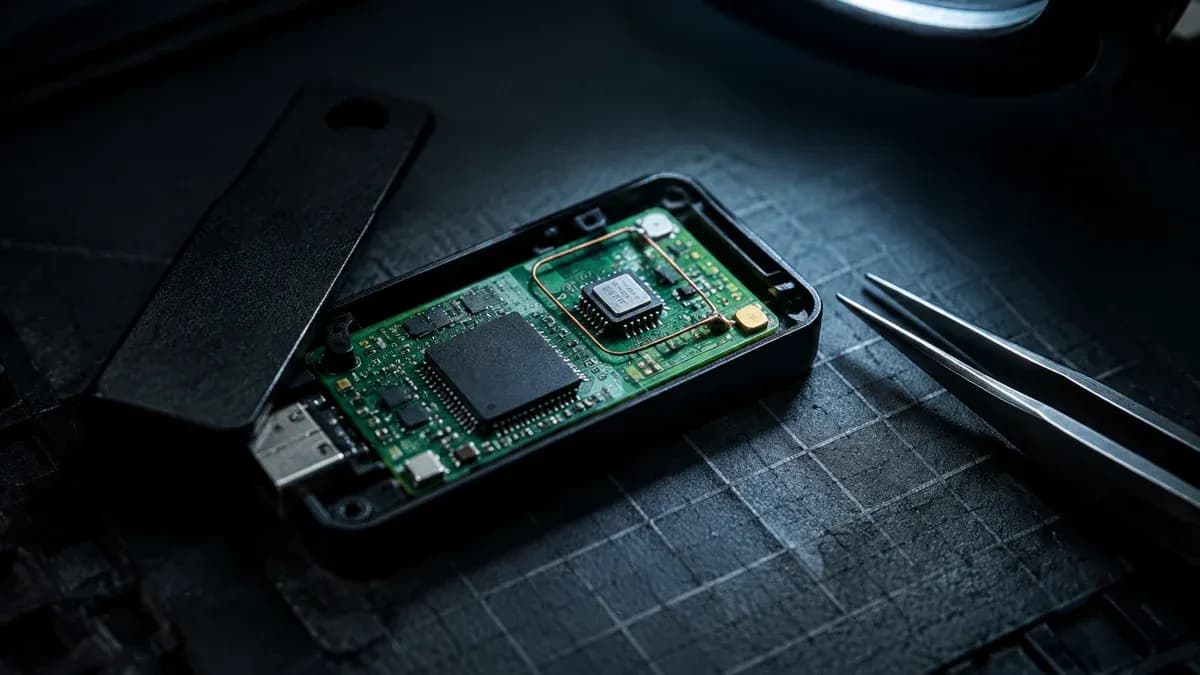
Ledger Hack? $86 Million Drained: What Is Behind the Tampered Wallets From Southeast Asia
Since Friday, Ledger users in Southeast Asia have been reporting empty wallets, and analysts count more than $86 million. Ledger has halted the reseller CryptoBilis. An implant inside the device reportedly reads the seed phrase. What is known, what CZ advises and what you should do now.
October 6, 2026 7:23 PM

XRP Price Prediction: Ripple's Credit Plan Arrives in 2027, the Lending Amendment Stands at 14 of 35 Validators
Ripple wants to use XRP as loan collateral from 2027, but the amendment needed for it in the XRP Ledger stands at only 14 of 35 validator votes. Two other updates, by contrast, go live on October 8 and 9.
September 29, 2026 7:20 PM

One Billion XRP Unlocks on October 1: The Level That Decides
XRP's next monthly escrow deadline expires on October 1, and up to one billion tokens can come free. What that means for the price at $1.52 and which levels to note down beforehand.
September 28, 2026 9:47 AM
XRP Price Drops Below $1.50: Where Is Ripple Heading This Week?
XRP price slips under $1.50 after a red weekend. Here is the XRP price analysis with the higher and lower targets that matter this week.
September 26, 2026 7:36 PM

XRP Price Prediction: Which Scenarios and Which Costs to Check Before the Quarter Ends
XRP trades at $1.55 on September 26, 2026, and on October 1 a release window opens covering up to 1 billion XRP. What the ETF inflows set against it, which levels count, and which costs really make an order more expensive.
September 21, 2026 4:13 AM
How to Buy XRP in Germany: Exchange, Destination Tag and Tax
Buying XRP works through a crypto exchange with MiCA authorisation, through a broker, or through an ETP in your securities account. This guide shows what matters on fees, the destination tag, custody and the German holding period.

More from CryptoTicker