
Trump Signs Executive Order to Integrate Crypto and Fintech Into Traditional Banking Infrastructure
President Trump signs a historic executive order directing the Federal Reserve and regulators to integrate digital assets and fintech into US payment rails.


Which topics should we dive deeper into?
Select what genuinely interests you. Your picks feed directly into our editorial planning.
Crypto news that's actually worth your time.
Weekly. 60 seconds. Carefully curated by our editors: no hype, no promo flood, no spam.
In a move that could fundamentally alter the plumbing of the United States financial ecosystem, President Donald J. Trump has officially signed an executive order titled "Integrating Financial Technology Innovation into Regulatory Frameworks." The directive aims to systematically dismantle the regulatory walls that separate financial technology (fintech) firms and digital asset companies from traditional banking infrastructure.
President Trump Orders Crypto Integration Into US Payment Systems
The executive order explicitly instructs federal financial regulators to update and streamline rules to merge digital assets and innovative technologies into traditional finance. For the digital asset markets, the immediate focus is on eliminating the "gatekeeper" status held by legacy tier-1 commercial banks, which have historically dictated which tech firms could access dollar liquidity and payment rails.
Streamlining Fintech Partnerships and Licensing
Under the first core mandate of the executive order, the heads of all federal financial regulatory agencies—including the SEC, CFTC, and OCC—have exactly 90 days to review existing guidelines, supervisory practices, orders, and no-action letters. The objective is to identify and modify rules that unduly impede fintech firms from entering into operational partnerships with insured depository institutions, broker-dealers, and investment advisers. Furthermore, the order demands a streamlined application process for alternative entities seeking national bank trust charters and federal insurance.
The Federal Reserve Master Account Mandate
The most critical aspect of the order is directed toward the Federal Reserve Board of Governors. The central bank has been requested to deliver a comprehensive evaluation within 120 days regarding the legal, regulatory, and policy frameworks that govern access to Reserve Bank payment accounts and payment services.
Crucially, this evaluation must explore how non-bank financial companies and uninsured depository institutions—specifically those managing digital assets—can directly access the Fedwire system and other central bank payment rails.

Why Fed Payment Access Matters for Crypto
For over a decade, the digital asset industry has suffered from localized "debanking" measures, often referred to by industry executives as Operation Chokepoint 2.0. Because digital asset firms could not gain direct access to Federal Reserve Master Accounts, they were forced to rely on intermediary partner banks under a Banking-as-a-Service (BaaS) model.
This infrastructure configuration introduced notable structural vulnerabilities:
- Counterparty Risk: Crypto companies remained exposed to the solvency and risk tolerances of third-party regional banks.
- Layered Transaction Fees: Multiple intermediaries increased the net cost of settlement for end-users transferring capital between fiat and digital assets.
- Single Points of Failure: Regulatory crackdowns on a handful of fintech-friendly partner banks routinely disrupted liquidity pipelines for the entire digital asset economy.
By evaluating direct access to Reserve Bank payment accounts, the administration is laying the groundwork for digital asset custodians and stablecoin issuers to settle transactions directly at the central bank level. This could effectively harmonize the legal standing of compliant digital asset institutions with that of traditional commercial banks.
The Broader Impact on Digital Assets and Markets
The regulatory restructuring comes at a time when institutional adoption of digital assets is already accelerating. Following the conditional approval of several crypto-related national trust bank charters by the OCC, this executive order provides a clear policy runway for top-tier digital asset service providers.
Institutions utilizing deep liquidity pools across major assets will benefit from more robust fiat on-ramps and off-ramps. Traders checking the Bitcoin price or assessing overall market shifts can expect reduced tracking errors and tighter spreads as institutional settlement bottlenecks disappear. For those seeking safe custody options amid these sweeping systemic upgrades, evaluating secure storage via the hardware wallets comparison remains a recommended baseline.
Furthermore, direct integration into payment channels gives clear utility advantages to compliant stablecoin issuers and settlement networks. This operational framework complements legislative progress in Washington, positioning the domestic digital dollar ecosystem to effectively scale commercial settlement speeds.
Partner links: some links on this page are partner links. If you become a customer through one of them, we may earn a commission at no extra cost to you. Selection, ratings and ranking are decided independently by our editorial team. Ethics and Independence · Ownership and Funding
For later? Save this article and find it again in your profile.
Related articles
- Deutsche Bank now holds bitcoin and ether in custody, but retail clients are left out
- Financial crisis and recession: bitcoin lost 77 percent in the 2022 rate turn
- Banking Crisis in Paraguay: 3 Million Customers Locked Out, President Peña Offers to Resign, What Crypto Can Do
- Chainlink launches CustodySync with Anchorage: “Institutions should not have to choose between qualified custody and on-chain liquidity”
- South Korea Makes Stablecoins an Official Means of Payment: What the New Rule Really Says
Which topics should we dive deeper into?
Select what genuinely interests you. Your picks feed directly into our editorial planning.
Crypto news that's actually worth your time.
Weekly. 60 seconds. Carefully curated by our editors: no hype, no promo flood, no spam.

October 22, 2026 7:41 AM
CLARITY Act: what the US crypto law would do and where it stands in the Senate
In context: what the CLARITY Act would do, how the House and the Senate voted, and what the SEC and CFTC are pushing ahead without a law. With a timeline, the vote arithmetic and a comparison with the EU regulation MiCA.
October 21, 2026 10:13 PM

Revolut wins a crypto licence in Gibraltar, but your German account stays with Cyprus
The Gibraltar Financial Services Commission has authorised Revolut Global Digital Assets Limited for order execution, custody and staking. For customers in Germany the Cypriot EU entity remains the counterparty, and that is what decides which regulator and which MiCA rights apply to your balance.
October 18, 2026 7:15 PM

“To effectively combat cross-border tax evasion”: Bundestag opens crypto tax reporting to non-EU states
On 8 October 2026 the Bundestag passed the treaty act on the international reporting framework for crypto-assets, opening the exchange of tax data to states outside the EU. This piece sets out which details flow, from when they flow, and what records a data match requires.
October 16, 2026 1:35 PM

Kraken parent Payward buys Saldo Bank: the first crypto firm with a bank of its own in the EU
Payward, the parent of Kraken, agreed on October 14 to buy the Lithuanian Saldo Bank and would be the first crypto firm with a bank of its own in the EU. What is established, what stays open until the planned completion in 2027 and what may change for the protection of your euros.
October 5, 2026 4:16 PM

World Liberty Financial US Trust Bank: What the Abu Dhabi Report Leaves Open
The reported Abu Dhabi stake in World Liberty Financial raises questions. Here is what OCC filings show about the trust company, USD1 reserves and the authorisation to open.
October 3, 2026 10:20 PM

2027 start for the UK stablecoin regime: what the Bank of England mandate means
The Bank of England's new innovation objective is a signal for digital payments, not a stablecoin licence. What still decides the outcome are the FCA rules, supervision and the timetable running to 2027.
September 28, 2026 10:26 AM

Phantom Wallet and Solscan: What a Solana Transfer Really Costs and Where It Fails
A transfer on Solana costs 0.000005 SOL, a new token account ties up 0.00148844 SOL once — both values measured on-chain by us today. This practical guide shows how to set up Phantom, how to get there from the exchange, how to read Solscan and what applies for tax in Germany.
September 24, 2026 10:29 AM

Bank Closed Your Account Over Crypto: Your Rights and the Route to a Replacement Account
After a withdrawal from a crypto exchange, banks repeatedly end the banking relationship, usually without giving a reason. What the German Payment Accounts Act guarantees you anyway, which notice period applies, and in what order you approach the supervisor, arbitration and the courts.

September 19, 2026 10:26 PM
World Liberty Financial: Trump's WLFI Stake Locked Until 2028, Voting Rewards From October
Donald Trump's WLFI stake, a good 14 billion tokens, is contractually locked until May 2028. From October 1, holders are to receive rewards for locking their tokens for 180 days and voting. What both mean for the price and what to check before you buy.
September 13, 2026 1:13 PM

Sparkasse Crypto Custody: Why You Get No Key to Your Bitcoin and What to Check First
From October, Sparkasse customers are to be able to buy Bitcoin and Ether inside their own banking app, with DekaBank acting as custodian. What you get is a custody position rather than a private key. What that means in practice and what you should settle before your first purchase.
September 10, 2026 4:15 PM

BW-Bank Opens Bitcoin Trading Inside the Securities Account: What to Check Before Your First Buy
Since September 9, 2026, BW-Bank customers have been able to trade ten crypto assets through their securities account, executed and held in custody by Bitpanda. The familiar securities-account setting hides three points you should settle before your first order.

August 29, 2026 5:02 PM
CLARITY Act Senate Vote of September 15: Failed 49 to 50, and What the Bill Would Have Done
The US Senate rejected the CLARITY Act 49 to 50 on September 15, 2026. Here is what the bill would have done and why the market had bet against it.
August 24, 2026 4:13 AM

Volksbank Crypto: Which Banks Already Offer Bitcoin in the VR App
Three of 14 cooperative banks we checked ran a public page on crypto trading with meinKrypto on August 23, 2026, and a fourth points to a different route. What the service can do, what it costs and which question to ask before your first purchase.
August 21, 2026 4:27 PM

Wallet App Without BaFin Authorisation: When Holding Crypto-Assets Requires a Licence
On 19 August 2026 BaFin published two consumer notices on wallet offerings. Who controls the means of access decides whether an authorisation is needed.
August 19, 2026 4:45 PM

E-Evidence From August 18: Which User Data Investigators Can Request From Crypto Exchanges
From August 18, 2026 public prosecutors can request user data directly from service providers in other EU states, without the detour through mutual legal assistance. Article 2 of the regulation, however, contains a sector exemption for financial services, and the German implementing act limits the role of the tax authorities to criminal tax proceedings.
August 18, 2026 2:48 PM

Citi Bitcoin Custody Confirmed for 2026: BTC Price Impact
Citi Bitcoin custody is going live later this year via its new Custody+ platform. Here is what a $24 trillion custodian holding BTC means for crypto prices.

August 11, 2026 2:48 PM
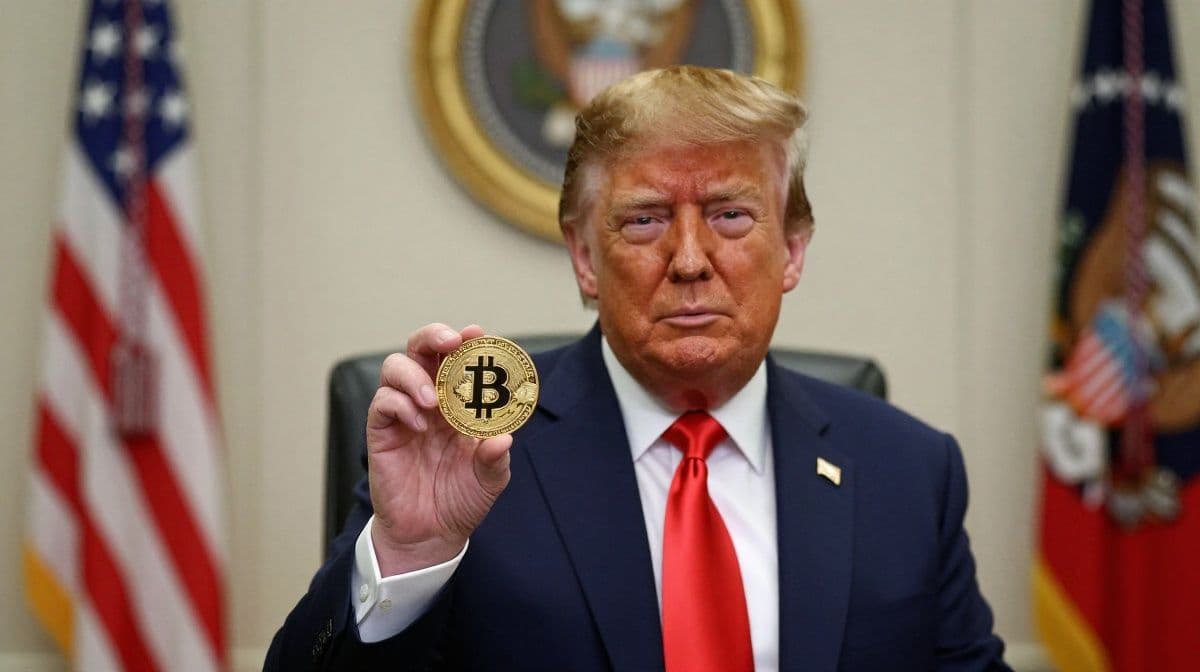
How Many Bitcoins Does Donald Trump Own?
Trump Media disclosed 14,139 BTC on August 10. The president's own filings report value brackets, not coin counts. The figures, examined.
August 7, 2026 1:08 PM

The Crypto Bill Washington Promised Just Got Pushed Back Again
The Senate walked away from the CLARITY Act before recess. Here is what stalled the crypto market structure bill and what happens in September.
August 5, 2026 6:05 PM

Gold Price Jumped 4.4% in a Day — Why Bitcoin Stalled at $64,000
Gold gained 4.4%, adding roughly $1.3 trillion in market value, while Bitcoin remained near $64K. Here is why crypto failed to follow.
August 5, 2026 11:20 AM
CLARITY Act Countdown: The Senate Has Days Left to Move Crypto's Biggest Bill
The Senate breaks for recess on Friday and the CLARITY Act still has no cloture motion filed. Galaxy just cut its 2026 passage odds from 50 to 30 percent.
July 28, 2026 5:16 PM
Russia Just Passed Its Own Crypto Clarity Act While the US Senate Keeps Stalling
Russia's crypto trading law is on its way to Putin's desk while the US CLARITY Act sits unvoted on a shelf. Here is what the split means for prices.
July 25, 2026 7:02 PM
AI Stocks Went From A Few Trillion To $22 Trillion. Can The CLARITY Act Do The Same For Crypto?
The CLARITY Act is one Senate floor vote from law. Here is what the viral AI-stock comparison gets right — and what it gets badly wrong.
July 23, 2026 6:19 PM

Oil Hits $100 as Iran Tensions Escalate — Why Bitcoin and Altcoins Are Falling
Oil surged above $100 as US-Iran tensions intensified, pushing Bitcoin below $65,000 and triggering losses across the crypto market.
July 11, 2026 12:43 PM

Circle Just Became a Bank: What the OCC Trust Bank Approval Means for USDC
The USDC issuer just cleared a milestone no stablecoin company has reached at this scale — and it changes how the biggest regulated stablecoin is backed.
May 29, 2026 1:12 PM

Best Crypto-Friendly Business Accounts for Corporates (2026 Guide)
Looking for a crypto-friendly business account? Discover how platforms like Revolut Business streamline corporate onboarding and digital asset management.
May 9, 2026 10:16 AM
Crypto Clarity Act Vote: Could May 14 Finally Push US Crypto Regulation Forward?
The Crypto Clarity Act heads to a May 14 Senate Banking vote as banks, Coinbase, and lawmakers clash over stablecoin rewards.
March 7, 2025 8:24 AM

BREAKING: President Trump Crypto Reserve is Officially Signed, BUT Why are Cryptos Crashing?
President Trump has signed an executive order to establish a Strategic Bitcoin Reserve, marking the biggest milestone in crypto history. But why is the crypto crash still happening?
More from CryptoTicker