
Base Hard Fork on September 30: Binance Freezes Base Transfers an Hour Before Cobalt
The Base network switches to Cobalt on September 30, 2026 at 18:00 UTC. Binance freezes deposits and withdrawals over Base from 17:00 UTC and resumes them without announcement — what that means for your balance, your holding period and your node.





Which topics should we dive deeper into?
Select what genuinely interests you. Your picks feed directly into our editorial planning.
Crypto news that's actually worth your time.
Weekly. 60 seconds. Carefully curated by our editors: no hype, no promo flood, no spam.
The Base network receives a hard fork on Tuesday, September 30, 2026, at 18:00 UTC. It is called Cobalt, and for you as a holder it means one thing above all: deposits and withdrawals over Base will stand still for some time that evening. Binance has announced the freeze from 17:00 UTC, an hour before the switch. Trading continues; only transfers between the exchange and your own wallet pause. Your tokens do not disappear in the process, they are not swapped, and no second coin appears. If you want to move something over Base that evening, do it beforehand or wait until the next morning.
The real stumbling block lies elsewhere: the exchange resumes transfers without further announcement as soon as the network is running stably. There is no starting gun you could wait for — you have to look yourself. This article sets out what actually happens in a hard fork, why exchanges regularly cut the bridge at such moments, and what the date means for your balance, your holding period and your own node.
Base hard fork Cobalt: the timetable for Sepolia and mainnet
Cobalt is the Base hard fork that follows Beryl. Beryl was the June 2026 upgrade that brought the B20 token standard and the Reth V2 node software to the chain. Cobalt builds on it and was re-scoped in two rounds in September before its contents were settled.
Activation is not a loose plan but a fixed timestamp compiled into the node software. For the Sepolia testnet (chain ID 84532) the value there is 1790186400, which is September 23, 2026 at 18:00 UTC. For mainnet (chain ID 8453) it is 1790791200, that is September 30, 2026 at 18:00 UTC. Exactly seven days apart.
That sequence is why the mainnet date is more reliable than an announced date usually is: the testnet already went through the fork on September 23, and the maintenance window closed cleanly at 20:00 UTC. An upgrade that has cleared the testnet is rarely pulled at short notice. That is a difference from networks where an activation date is computed from an ongoing validator vote and can shift as soon as approval falls below a threshold.
What a hard fork is, and why it is not a new coin
A hard fork is a change to a blockchain's rules under which the new rules are no longer compatible with the old ones. Every node that wants to validate the network's blocks needs the new software for that. A node on an old version regards the new blocks as invalid and drops out of the network.
The opposite term is the soft fork: there the rules are merely tightened, old nodes still accept the new blocks, and the network stays on one line even without a complete update. A soft fork is backwards compatible, a hard fork is not.
From this incompatibility grew the misconception that a hard fork automatically produces a second coin. That happens only when a meaningful share of participants deliberately continues under the old rules — that is how Bitcoin Cash (BCH) emerged from Bitcoin in 2017. Such a chain split presupposes two camps that both want to carry on, each with miner or validator support and with exchanges that list the split-off chain.
None of that is visible at Cobalt. There is no competing version of the Base network, no group wanting to stay on the old software, and nothing you could "claim". It is a pure maintenance upgrade, of the kind Ethereum has carried out regularly for years. Anyone offering you a "fork airdrop" for a planned network upgrade, or asking you to connect your wallet to unlock tokens, is attempting fraud.
The Binance transfer freeze begins an hour before the fork
Binance has announced that it will support the Base upgrade and has set the freeze for September 30, 17:00 UTC — one hour ahead of the fork at 18:00 UTC.
Affected are deposits and withdrawals of tokens over the Base network. That is a network statement, not a token statement: the same coin you cannot withdraw over Base may under some circumstances still be moved over Ethereum or another supported chain — at different fees and with a different duration. If your exchange offers several networks for the same token, that is the way out on this particular evening.
How long the pause lasts, nobody commits to in advance. Experience from comparable upgrades ranges from about an hour to several hours, depending on how quickly the exchange's nodes follow the new chain and how many confirmations it waits for before release.
Trading continues, only deposits and withdrawals stand still
The point often gets swallowed in reports on network upgrades although it is the most important in practice: trading on the exchange is not affected by a network hard fork. Buying, selling and swapping run in the exchange's internal book without any transaction arising on the blockchain. So as long as your balance sits on the exchange, you can keep trading.
What stands still is only the way out and the way in: the withdrawal to your own wallet and the deposit from it. Precisely those two operations are real transactions on Base, and precisely those the exchange pauses until it is certain its nodes see the right chain.
From this follows simple scheduling. If all you want to do on Tuesday evening is watch, the fork does not concern you at all. If instead you want to bring a balance from the exchange into self-custody — onto a hardware wallet, say — then the afternoon is the right moment, not the evening. A transaction that starts at 16:55 UTC but would only be confirmed at 17:05 UTC can get stuck in the exchange's queue.
Network upgrade and deposits: why the bridge between exchange and chain is cut
An exchange is liable for every credit it books into a customer's account. A deposit is credited only once its own nodes see the transaction in a block and that block counts as sufficiently secured. In the minutes around a hard fork, precisely that foundation is uncertain.
Two things can happen. First, a reorganisation can occur: the network discards a short sequence of blocks and replaces it with another. A transaction that looked confirmed a moment ago is then no longer included. Had the exchange already credited it, the balance in the account would no longer be matched by a transaction on the chain. Second, an exchange node can simply be stuck on the old software: it then sees a chain the rest of the network no longer follows.
The pause is therefore not a sign of a problem but the opposite — it is the precaution. You find the same pattern at every larger network upgrade, whatever the chain. We have traced it among others at the BNB Chain and at MultiversX, and in the sharper variant at an emergency hard fork at Core DAO that came without the usual lead time. The sequence is the same every time: freeze shortly before the date, switch, observation, quiet resumption.
 Crypto exchanges compared
What Cobalt brings technically: B20 extensions and conditional transactions
Cobalt's scope covers four areas according to the network's technical documentation. For holders they are all unremarkable; for developers and node operators they are not.
- A series of additions to the B20 token standard, introduced with the preceding Beryl upgrade.
- Conditional transactions: transactions that only become valid once the state of the chain matches a previously defined condition. For you as a user that is invisible at first; it is a tool for applications meant to execute only under certain market conditions.
- A first step towards decoupling fork timestamps from the node software. Until now an activation date such as September 30 is hard-compiled — every future upgrade therefore forces a software update. If that value becomes dynamic, dates can be adjusted without every operator having to install a new version.
- A new registry for TEE prover signatures, in which attestation is verified directly on chain.
What deliberately does not appear on this list: any change to balances, to addresses or to the validity of existing tokens. A hard fork of this kind does not touch your holdings. Your address stays the same, your seed stays the same, and you need to change nothing in your wallet.
Balances in your own wallet: what happens to your tokens during the fork
If your tokens sit in a self-custodied wallet on Base, the least changes for you. The chain runs on, your balance stays at the same address, and transactions remain possible — apart from possibly brief interruptions around the moment of the switch, when individual nodes and RPC providers are still catching up.
There is one qualification nonetheless. Your wallet usually does not speak to a node of its own but through a provider's RPC endpoint. If that provider is stuck on the old software after the fork, you may see an outdated balance or a transaction that does not go through. That is a display error on the way to the chain, not a loss: your tokens sit on the chain, not in the app. If it happens, a look at a block explorer as a second source helps before you repeat anything.
What you should expressly not do in that situation: send the same transaction several times because it does not appear. In the period of increased throughput after an upgrade, a transaction can sit in the pool longer and then execute after all. Anyone who pushes another one through ends up with two transfers and two lots of fees paid.
Node operators need the minimum version, everyone else waits
Anyone running a Base node themselves is the only party with a real task before the date: the software must run on a version that knows Cobalt. A node on an older version regards the blocks after 18:00 UTC as invalid and is thereafter cut off from the valid chain.
Important here: the minimum versions for testnet and mainnet are not identical according to the technical documentation. Anyone running both networks should check the figures separately and not rely on a version that sufficed on Sepolia also being enough on mainnet.
For everybody else — and that is the great majority — there is no task. You need to update nothing, confirm nothing and sign nothing. Experience shows this is exactly where fraud attempts start: fake "upgrade portals" that demand a wallet connection for an announced fork, supposedly to make your tokens fit for migration. A genuine network switch never requires a signature from end users. How to check a provider before the first euro is set out in the comparison of crypto exchanges; Base itself is the Ethereum layer 2 developed by Coinbase, which explains its link to Ethereum — an overview of the ecosystem is in the piece on the tokens on Base.
 Hardware wallets compared
Tax and holding period: a hard fork is not a sale
The question comes up at every network upgrade, and in the Cobalt case the answer is pleasingly short: a protocol upgrade without a chain split is not a disposal. You swap nothing, you receive nothing, your token stays the same. Your holding period under Section 23 of the German Income Tax Act therefore also runs on unbroken — the one-year period, after which a gain from the sale of privately held crypto assets remains tax-free in Germany, does not start again.
The case would be different only at a genuine split, where you receive a new token in addition to your existing one. The German Federal Ministry of Finance has addressed this in its circular on crypto assets; classifying such allocations is demanding in the individual case and belongs in the hands of a tax adviser. At Cobalt the question does not arise, because no new chain comes into being.
One practical note remains nonetheless. If on September 30 you withdraw your position from the exchange before the freeze, that transfer is not a sale either — a transfer between two of your own wallets triggers no tax. The operation should, however, be recorded in your documentation as a transfer and not as a disposal, otherwise software will later compute a gain for you that never existed.
The hard fork cluster: what Core DAO, MultiversX and the BNB Chain have shown
This Base date is the latest instance of a pattern that has repeated several times in 2026, and the cases differ in exactly one point: the lead time.
At the BNB Chain and at MultiversX the date was fixed weeks in advance, the exchanges announced the freeze, and the process was unspectacular. At Core DAO the hard fork came as an emergency measure — there holders had barely any time, and the transfer freeze caught many without warning. The Base case lies at the calm end of this series: announced, tested on the testnet, with a moment fixed to the minute.
The transferable lesson is less technical than organisational. Anyone leaving a balance permanently on an exchange depends on its schedule at every such date — and learns of the end of the freeze only when they look themselves. Anyone self-custodying is not affected by the freeze but carries the responsibility for their own access credentials. That is not a recommendation in either direction, but the trade-off that sits behind every one of these dates.
Base hard fork: how to proceed now
- Check by Tuesday afternoon whether you need to move anything over Base that evening. If so, do it before 17:00 UTC, or switch to another network, provided your exchange offers the token there as well. Which venues support which networks is shown in the comparison of crypto exchanges.
- Decide where your balance should sit after the date. Anyone repeatedly caught out by such freezes is holding more on the exchange than they actually want to. The alternative and its costs are in the comparison of hardware wallets.
- Record your transfers cleanly in your documentation. A withdrawal to your own wallet is not a sale and must not appear as one. Tools that keep transfers and disposals apart are among the crypto tax tools.
And if you have nothing planned for Tuesday evening: then the right action is to do nothing. The fork runs without you, your balance stays where it is, and by Wednesday morning deposits and withdrawals are highly likely to have been open again for a while.
(As of September 28, 2026. This article is not investment advice. Prices and fee structures change; check the terms with the provider before you buy.)
Sources: Binance announcement on the Base network upgrade and the technical overview of the Cobalt upgrade.
Transparency note: This article was produced with the assistance of artificial intelligence and reviewed by our editorial team before publication. All figures and claims were checked against the primary sources linked in the text. The feature image was generated with AI.
Related articles
- Core DAO: CORE Transfers Frozen, Emergency Hard Fork Announced. What Our Chain Measurement Shows
- Seven Days of Waiting: Base, Basescan and the Cheapest Way Onto Coinbase's Network
- Zcash NU7 Upgrade on November 5, 2026: What You Must Do With Your ZEC
- Mina Hard Fork on September 3, 2026: What Happens to Your MINA During the Network Halt
- MultiversX Supernova of September 10: What EGLD Holders Should Know After the Hard Fork
Which topics should we dive deeper into?
Select what genuinely interests you. Your picks feed directly into our editorial planning.
Crypto news that's actually worth your time.
Weekly. 60 seconds. Carefully curated by our editors: no hype, no promo flood, no spam.

September 14, 2026 1:16 PM

Layer 2 Withdrawal Times: Up to Ten Days Between the Finalized Stamp and Your Money
The block explorer reports “finalized” after twenty minutes, yet your balance is still days away. Our own measurement across six Layer 2 networks shows how far the display and the real waiting time drift apart – and how to count backwards correctly before an exchange deadline.
September 28, 2026 7:24 AM
Base Token: No Date, No Quota, but 6.27 Billion Dollars on the Chain
There is no Base token, only the statement that Coinbase is exploring one. What is measurable instead is 6.27 billion dollars of deposited capital, fees in the hundredths of a cent and an AERO price that has risen 68 percent in thirty days.
August 28, 2026 1:33 AM
Sending Crypto: Why the Wrong Network Costs You the Balance on 51 of the 100 Largest Crypto Assets
When you withdraw from a crypto exchange, the network you pick decides whether your balance arrives or is lost for good. Our own analysis of August 26, 2026 shows that 51 of the 100 largest crypto assets exist on several chains at once.
August 23, 2026 4:14 AM

Glamsterdam Has a Date: Ethereum Forks Sepolia on September 28, 2026
The Ethereum upgrade Glamsterdam has a date for the first time: the Sepolia test network is due to fork on September 28, 2026 at 14:44:48 UTC. We show you where the number comes from, why September 3 is the more important date and what changes for you as an ETH holder.
September 12, 2026 1:36 AM

Ethereum Upgrade Glamsterdam: What Stakers Need to Check on Their Client Now
Glamsterdam is due to go live on the Sepolia test network on October 6, 2026, while the main network still has no date. We counted the version levels of all ten major Ethereum clients and show what stakers should check now, and what they should not.
September 5, 2026 10:33 AM
ZIL Withdrawals Frozen: Why Your Zilliqa Balance Is Stuck After the Hard Fork
The Zilliqa hard fork of September 2, 2026 moved the ZIL balances of ten exchanges to new addresses. Three days later, deposits and withdrawals were still halted at the three venues we checked: what that means for your balance, what self-custodians are waiting for, and why the announced compensation is not a decision yet.
September 4, 2026 4:55 AM
Silicon Network Is Shutting Down: You Have Until December 31 to Bridge Your Balance Out
The Ethereum layer 2 Silicon Network is ceasing operations: since September 2 the bridge has accepted no deposits, and the withdrawal window closes on December 31, 2026. Our own measurement shows a chain that keeps ticking by the second while carrying nothing at all.
August 19, 2026 10:16 PM

Ethereum upgrade after Glamsterdam: what is actually decided in Hegotá
66 proposals are circulating for Hegota, yet on August 16, 2026 the Ethereum developers' official planning document holds exactly one firmly scheduled entry. We counted EIP-8081 ourselves and show you how to read the four stages of an upgrade and place future reports in minutes.

March 6, 2025 7:00 PM
What is Ethereum Pectra Upgrade?
Ethereum's Pectra upgrade is set to revolutionize the network with enhanced scalability, lower fees, and smart accounts. Here's all you need to know about the Ethereum Pectra upgrade.
August 11, 2023 8:53 PM

Quick Guide: How to Use Base Network?
The Base platform is set to offer an array of features to its users. In this article, we talk about how to use Base network.
September 9, 2026 10:33 PM

Binance Halts Deposits on Selected Networks: What AVA, GNS and TOWNS Holders Should Know After September 14
Recap as of September 27, 2026: according to its notice, Binance has no longer accepted several networks for AVA, Gains Network and Towns Protocol since September 14, 2026, 08:00 UTC. Deposits over those routes are not credited; this piece works out which route stays open for each token and what it costs.
August 22, 2026 1:23 AM

Binance Withdrawal Deadline September 9: What ALCX, ARDR, NFP and POND Holders Should Know Now It Has Passed
Recap as of September 27, 2026: Binance had announced it would stop withdrawals of ALCX, ARDR, NFP and POND on September 9, 2026 at 03:00 UTC. Spot trading in these tokens had been suspended since July 10, and the exchange is winding down its EU business. This article describes the situation before the deadline.

September 2, 2026 1:47 PM

Pi Network Protocol 27 on September 15: What Our Measurement on Mainnet and Testnet Shows
The Pi mainnet is on protocol 26 on September 2, the first testnet on 27, the second still on 26. We dated all seven protocol jumps of the past five months to the exact ledger and show what node operators and holders can read from them.
August 22, 2026 10:29 AM
Bitcoin Fork: What Happens to Your Coins When the Chain Splits
On October 31, 2026 a new chain called ECX splits off from Bitcoin, and every holder is credited automatically. Who actually receives the coins depends on the private keys, on voluntary replay protection and on a tax rule many overlook.
August 20, 2026 1:17 AM

Crypto Withdrawal Fees: What Moving Coins to Your Own Wallet Really Costs
We measured the withdrawal fees for 475 assets on August 17, 2026 and set them against the actual network fee. For Bitcoin, the exchange charged eight to sixteen times what a transaction cost in the same minute.
September 25, 2026 4:46 PM
Binance Funding Account Becomes Stocks Account: What to Check Before September 29
From September 29, 2026, Binance moves crypto balances out of the Funding Account into the Spot Account; in January 2027 the account is renamed Stocks Account. What to check beforehand, why an outdated app version hides your balance, and what happens to savings plans and API connections.

March 10, 2026 1:49 PM

Pi Network Price UP ahead of Pi Day: More Upside to $0.24?
Pi Network (PI) rises 2.15% to $0.221. Speculation around Pi Day on March 14 and the v20.2 upgrade is fueling bullish momentum for the mobile-mining token.
October 4, 2026 1:13 AM
EGLD withdrawals frozen, Upbit decides from October 19: What is going on with MultiversX?
The MultiversX chain is running again, but not every exchange is: EGLD transfers are frozen at Bitvavo and on Binance's native network, while Kraken has been open since October 1. Upbit decides between October 19 and October 23 whether trading continues.
September 30, 2026 7:16 PM
Mint Chain closes its withdrawal portal on October 20: October 10 is the last safe day to submit
Mint Chain has accepted nothing but withdrawals since April 2026, and the operator says the portal closes on October 20, 2026. Because settlement runs in weekly batches and takes up to ten days, October 10 is the last day on which a request safely arrives.
September 10, 2026 7:17 PM
Binance Delists USDP: You Have Until November 24 to Withdraw Your Pax Dollar
Binance is removing the Pax Dollar stablecoin from its platform altogether. For holders in the European Economic Area the date that counts is the withdrawal deadline on November 24, 2026, well after the trading halt on September 24.
August 31, 2026 7:27 PM
Bitcoin Fork with BLAKE2b: What the September 1, 2026 Launch Means for Your Bitcoin
Supporters of the Bitcoin Knots software plan to launch their own chain on September 1 and to swap the hashing algorithm from SHA-256d to BLAKE2b. For holders that means: move nothing, but check four things.
August 22, 2026 1:27 PM

Binance Delists ICX, SCRT and STORJ: From August 21, One Door Closes After Another
Binance removes ICON, Secret and Storj from spot trading on September 3, 2026 at 03:00 UTC. The wind-down starts on August 21 with margin and direct purchase, and ICX holders face a second deadline through the ICON shutdown.
August 20, 2026 1:36 AM

VANRY Migration to Base: Why the Swap Window Closes Five Weeks Before the Binance Withdrawal Deadline
The swap of VANRY to Base runs through a portal operated by the project and ends on September 10, 2026 at 13:00 UTC. Binance delisted the token today but is not handling the swap, and still allows withdrawals until October 17.
November 23, 2025 5:11 PM
Cardano Network Split After Software Bug – FBI Gets Involved
Cardano suffered a rare network split after a staking transaction triggered a hidden software bug. While the issue is now contained, Charles Hoskinson has involved the FBI. Here’s what happened.

January 14, 2022 8:58 AM
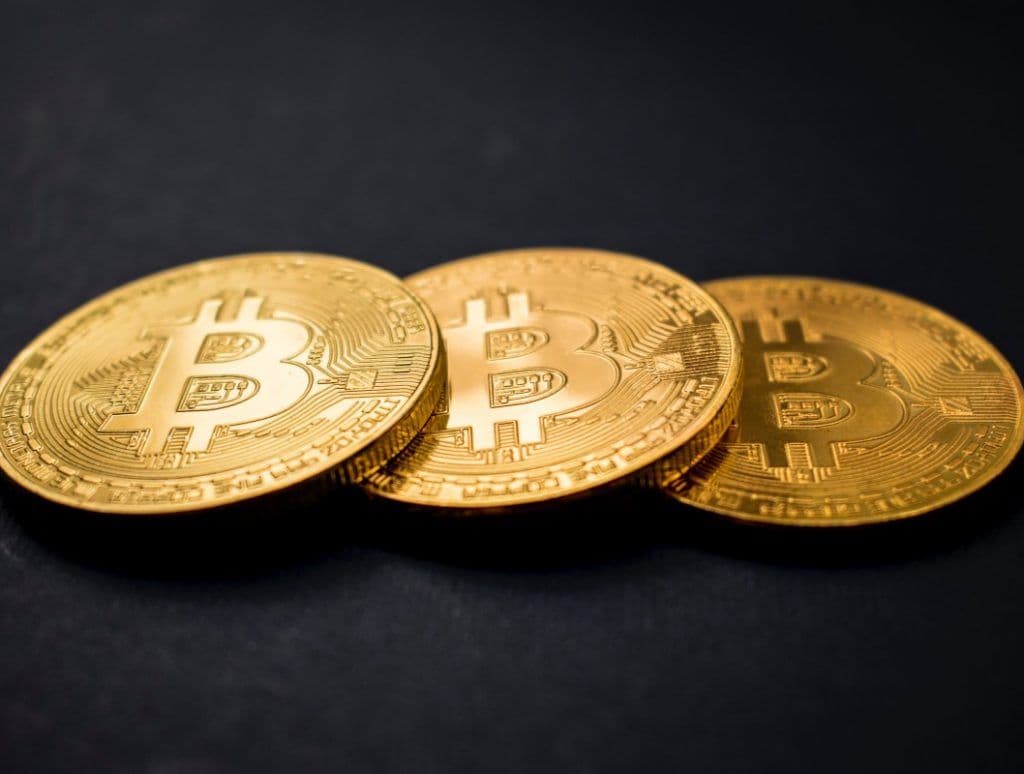
What are Bitcoin Forks? Here’s a Deep Dive into what Forks are
In this article, we will be looking into Bitcoin Forks and the entire fork in the history of the digital asset. What are Bitcoin Forks?

January 15, 2019 1:20 PM

What is the Difference Between an Airdrop and a Fork?
Airdrop and a cryptocurrency fork are two important pillars of the crypto world. Hard Forks and Airdrops are both ways of obtaining new coins. They are related but imperceptibly different. This has driven to chaos among people in the cryptocurrency […]
October 4, 2026 4:27 AM

VANRY on Kraken: withdrawals stay blocked until five minutes past the deadline — what you can do now
Kraken has blocked VANRY withdrawals until December 10, 2026, 15:05 UTC, five minutes after its own withdrawal deadline. Selling is ruled out, withdrawing is blocked, and forced liquidation follows in December.
More from CryptoTicker