
What is Proof of Stake?
The proof of stake method is drawing a lot of recognition these days, with Ethereum shifting over to this method from the proof of work method.





Which topics should we dive deeper into?
Select what genuinely interests you. Your picks feed directly into our editorial planning.
Crypto news that's actually worth your time.
Weekly. 60 seconds. Carefully curated by our editors: no hype, no promo flood, no spam.
The proof of stake method is drawing a lot of recognition these days, with Ethereum shifting over to this method from the proof of work method. Proof of stake is a substitute method for transaction confirmation on a blockchain. It is developing in recognition and being utilized by various cryptocurrencies. To know the proof of stake, it is essential to know the fundamental meaning of proof of work. The proof of work arrangement is utilized by Bitcoin and most other significant cryptocurrencies.
Story and concept
Proof of Stake (PoS) was first achieved in the crypto project Peercoin by an unidentified developer named Sunny King. The white paper was published on 19 August 2012. However, PoS as a consensus mechanism was already explained in 2011 in bitcoin trips.
The majority needed for a decentralized consensus is essentially created by PoS over the credit rather than by the hash function as in Proof of Work. Therefore, the more credit you have, the more likely you will be able to create a block. For the selection of those who are allowed to produce the block in the network, there are different approaches.
Peercoin, for example, is not 100% PoS but also incorporates PoW with variable target hash area. The target hash depends on the coinage and the coins endured. Coinage or age of coins designates how long the coins are already on an address. The higher the Coinage * Coins sum of his address, the greater the target hash area of the possible block generator. So, of course, for someone who keeps a lot of coins long, it’s easier to find a block. Mining is optional in PoS. It may be that the coins have all been produced in advance. Peercoin, for example, pays the block producers.
Proof of Stake
Unlike the proof of work method, in which the user authenticates transactions and produces distinct blocks by executing a definite amount of computational operation, proof of stake method needs the user to designate possession of a definite number of cryptocurrency factors.
The producer of a new block is determined in a pseudo-random process, depending on the user’s assets, also described as ‘stake’. In the proof of stake method, blocks are stated to be reproduced or created, not mined. Users who authenticate transactions and generate new blocks in this method are mentioned as forgers.
In most proof of stake circumstances, cryptocurrency sections are built at the launch of the currency and their quantity is decided. Hence, rather than utilizing cryptocurrency factors as a prize, the forgers accept transaction fees as prizes. In several events, new currency blocks can be produced by mounting the coin accumulation, and forgers can be compensated with new currency blocks produced as prizes, rather than transaction charges.
Benefits of PoS
Disadvantages of PoS
Above all, proof of stake is still a vague concept. There are only rare projects that realize PoS mainly because of the following problems:
Conclusion
If one highlights the disadvantages of PoS one sees only the efficiency of Nakamoto’s PoW. The above-mentioned problems solved by PoW are yet to be solved in PoS or must still be shown that they are solvable at all. Peercoin is considered as a central system with its checkpoints. Crypto enthusiasts are looking forward to Ethereum with his PoS protocol Casper and Cardano with Ouroboros.
Ethereum and Cardano are working on the implementation of a functioning PoS because a decentralized PoS is possible, this would put an end to the enormous energy waste of PoW.
Of all the papers IOHK Research has written, this one is the most significant. It's a major advancement for Proof of Stake https://t.co/QNIPonatF6 now PoS has nearly identical properties to PoW. https://t.co/zAP7dSxR3y Welcome to the age of Ouroboros Genesis
I don't believe in proof of work!
Disclaimer: This information should not be interpreted as an endorsement of any cryptocurrency. It is not a recommendation to trade. The crypto market is full of surprises and overhyped assets. Do your research before buying anything. Do not invest more than you can afford to lose.
Follow us on Twitter, Facebook, Steemit, and join our Telegram channel for the latest blockchain and cryptocurrency news.
- In case of a fork, the next block producer can simply steal both chains. In PoW the block producer would have to mine on both chains, which would give him higher energy costs. POS eliminates these additional costs. In PoS, therefore, an economically minded staker always accepts both chains, no matter which chain commands in the end. Because if the branch controls, on which he did not remain, the reward is gone. This problem is also called a “nothing at stake” problem and it has not yet been convincingly resolved.
- In PoW, an attacker has to spend more than a block to restructure the chain, as has been done by the entire network since that block. Computing is as good as the only thing one can not fake or simulate with computers. In PoS, on the other hand, one could simulate the whole chain and all historical processes on it with a computer, or in this way generate a chain with more stake than the existing ones. So it would be unclear to the network which chain is now honest. This is currently solved with checkpoints. The nodes get block hashes of the valid chain they save. They do not accept an alternative chain that does not contain these block hashes. They have to be online all the time. In Peercoin there is a central instance that radiates these block hashes in the network.
- Another problem is the choice of the block producer. In PoW it is random. If you find a valid block hash first, you can produce the block. For pure PoS systems, the selection is difficult. It is important that the choice happens by chance. The algorithm must be publicly known so that all can authenticate the choice. It is extremely difficult to involve a random process within the consensus mechanism that can not be manipulated. For example, consider a system that takes the block hash of the current block to determine the next block producer. Now the current block producer could search for hashes, which in turn makes him or a preferred party the next block producer. In this case, we would have an indirect PoW.
Related articles
Which topics should we dive deeper into?
Select what genuinely interests you. Your picks feed directly into our editorial planning.
Crypto news that's actually worth your time.
Weekly. 60 seconds. Carefully curated by our editors: no hype, no promo flood, no spam.

September 25, 2019 2:39 PM

What is Proof of Burn?
While most blockchain arrangements either adopt a Proof of Work (PoW) or a Proof of Stake (PoS) consensus algorithm, the Proof of Burn (PoB) is being examined as a viable option to those. Proof of burn is one of the […]
June 9, 2019 2:39 PM

Proof of transaction: Explained
For every cryptocurrency, there is a consensus mechanism, a process in which the system recognizes upon which transactions are appended to its shared record. In Bitcoin, that mechanism is Proof of Work, but other cryptocurrencies have tried some other options. […]

April 27, 2020 9:50 AM

Cryptocurrency Staking : Tezos Leads With $1.38B Locked, EOS Second
CryptoDiffer released a report based on data from Staking Rewards on Apr 24, detailing the crypto-assets employing Proof of Stake (POS) consensus mechanism and their ranking, based on the percentage of the circulating supply and the resultant USD value of […]

September 15, 2022 3:52 PM

How was Ethereum Merge? Here’s a Quick Summary
In this article, we'll give you a detailed summary on how was Ethereum merge, the events surrounding the merge, and future expectations.

November 16, 2022 11:56 PM

Cardano News Ticker – CryptoTicker
Cardano is a delegated Proof of Stake blockchain (dPoS), that supports smart contracts similar to Ethereum. Get all the news here.
October 8, 2022 7:41 AM
Ethereum Merge: Is Ethereum Mining Still Worth it?
What are the Ethereum miners doing now and is Ethereum mining still worth it? Let's take a look at it in more detail.
April 3, 2022 3:04 PM

What is Cardano Staking? Here’s a Guide to Earning JUICY INTEREST!
Cardano is a project that gained many loyal followers over time. Cardano staking is an interesting aspect of the project, let's talk about it.

June 4, 2021 7:14 PM

Charles Hoskinson says: “Cardano isn’t killing Ethereum. Ethereum is killing itself”
Cardano’s founder has made some vital points recently in the interview with Yahoo finance about how Cardano is more sustainable. Is it true?
August 2, 2022 11:06 AM

Does MATIC have a Future after Ethereum Merge?
Now that Ethereum is making the move towards PoS, can Polygon still exist? Does MATIC have a future after Ethereum Merge? Let's find out!

February 18, 2024 11:00 PM

OKX Continues to Impress with its Transparent Growth
Dive into OKX's latest move in enhancing transparency with their 11th PoR report, showcasing a notable growth in their crypto assets. Discover how OKX is setting new standards in the crypto industry.
June 14, 2022 3:39 PM

Consensus 2022 Review: Here’s How it Went
Consensus 2022 review: we at CryptoTicker participated in the entire conference schedule and will bring you up to speed on how it went.
March 19, 2022 6:01 PM
When is Ethereum 2.0 coming? – 2022 update on the Development State
Despite Ethereum's size and influence, Ethereum network still has some problems to solve. Ethereum 2.0 update should solve them all!
July 15, 2020 3:18 AM

Ethereum 2.0 May Launch By Nov 2020 or Jan 2021, Core Devs Reveal
In an Ask Me Anything (AMA) session hosted by Ethereum core developers on Reddit on Jul 10, it was revealed that Ethereum 2.0 Phase 0 may launch either by Nov 2020 optimistically or Jan 2021 realistically. The timeframe has been […]

October 29, 2019 2:55 PM
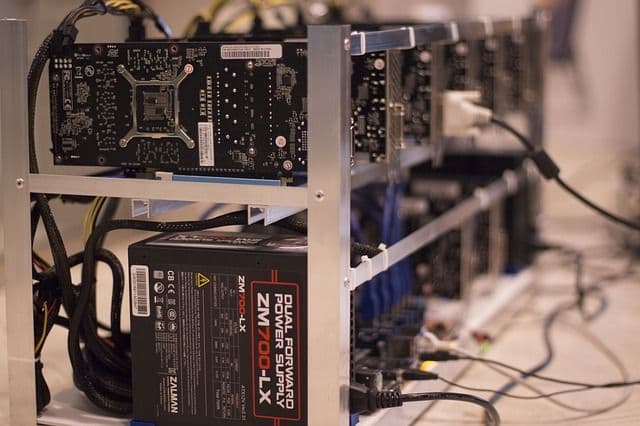
Top 4 Cryptocurrency Staking Pools: A-Z Guide
At a high level, staking as a service is basically when a firm (i.e., a cryptocurrency asset custodian) posts the ‘stake’ or ‘bond’ required to validate transactions and receives the requisite return via a PoS-based protocol network. Staking Pools require […]
December 11, 2023 8:25 AM

What is Rocket Pool? Will RPL Price Explode in 2024?
This article is all about What is Rocket Pool, the RPL price prediction for 2024. Let's take a look at this.
October 10, 2023 4:07 PM
This Study Shows that Ethereum is becoming Centralized! Here’s Why…
Recent upgrades to Ethereum, specifically the Merge and Shanghai, have reportedly led to an increased centralization of the network.
January 31, 2023 5:59 PM

Cardano or Polygon: Which Blockchain is BETTER?
When it comes to cryptos, which blockchain is better, Cardano or Polygon? In this article, we will provide an introduction to decentralized platforms.
September 15, 2022 3:53 PM

100% in 7 Days – Ethereum Miners Moving to mine Ravencoin after ETH Proof-of-Stake Merge?
Some Ethereum miners could split off or some miners are already moving to mine Ravencoin after ETH merge. Let's take a look.

January 17, 2022 11:11 PM

What You Should Know About Avalanche Crypto
In this article, we will be discussing at length about the Avalanche crypto project and why it has generated so much hype across the market.
July 12, 2021 7:37 PM
Ethereum Update – EIP1559 Poised For August Release And Sygnum Bank Offers ETH Staking!
Ethereum Update: EIP1559 poised for August release, first ever traditional bank Sygnum offers ETH2 staking and staked ETH keeps rising!

August 17, 2018 3:44 AM

Microsoft’s Azure Introduces Ethereum Proof-of-Authority Algorithm
The latest Ethereum algorithm will allow efficient permit ways and build decentralized applications (Dapps) for private or consortium networks.
January 27, 2023 5:16 PM
Ethereum Prediction for February 2023 – Are things looking good for ETH?
Will Ethereum price continue to rise or will there be a crash? Let's analyze in this Ethereum prediction for February 2023.
March 7, 2021 8:07 PM

Crypto Staking – The DEFINITE Guide on How to MAKE money staking
If you want to know how to make money with cryptos, this is your complete guide to staking on Binance & earn passive income. What is Staking?
December 30, 2022 9:45 PM

Rumor: Facebook Unexpectedly Reveals a Crypto Project in Switzerland
Facebook has been keeping secrets about its new cryptocurrency, which is not how the company usually goes about doing business. Unlike Apple who only releases products without releasing much information to the public, Facebook has a habit of making public […]
March 29, 2019 6:59 AM

C³ Crypto Conference 2019 Highlights
The C3 Crypto Conference 2019, the prominent crypto conference of Germany, took place on March 27th & 28th 2019 in Berlin. This year’s conference represented the highlight of the Berlin Blockchain Week 2019. Organized in Maritim hotel, the event brought […]
August 28, 2019 11:40 AM

How to verify cryptocurrency transactions?
This article will take you through the easy but crucial method of validating cryptocurrency transactions in the Blockchain. This is you achieving your complete claims from the technology that allows absolute transparency. Blockchain explorers are tools that allow you to […]

More from CryptoTicker