
$6.5 billion in October: the infrastructure failed, not the smart contract
An in-house count of DefiLlama's hack register for October 2026 finds 32 incidents with $6.5 billion in losses. 99.5 percent of that flowed out through compromised infrastructure, while smart contract flaws cost less than $16 million.





Which topics should we dive deeper into?
Select what genuinely interests you. Your picks feed directly into our editorial planning.
Crypto news that's actually worth your time.
Weekly. 60 seconds. Carefully curated by our editors: no hype, no promo flood, no spam.
In October 2026 the crypto market lost just under $6.5 billion, and almost all of it flowed out through compromised infrastructure: through staff computers, signing systems, build processes and websites. Only a small share of the damage traces back to flaws in smart contracts, the part of the stack the industry has been debating for years and pays audit reports for. For investors that means one thing: a project with a clean audit can still lose your money if access to its servers is open.
cryptoticker.io compiled this analysis itself on October 30, 2026. The basis is DefiLlama's public hack register, which records every reported incident with a date, a loss figure and an attack route. All 32 entries dated between October 1 and October 30, 2026 were counted.
$6.46 billion out of $6.50 billion: seven incidents carry almost the entire loss
The month's 32 incidents add up to $6.495 billion. Of that, $6.461 billion falls on seven entries the register files under frontend and infrastructure. That is 99.5 percent of the total from 22 percent of the cases.
The counter-calculation sharpens the picture. All the categories in which the program logic of a contract actually failed or was exploited come to less than $16 million together: faulty share calculations in ten cases ($5.1 million), governance attacks in three cases ($4.8 million), two bridge incidents ($4.6 million), one price oracle manipulation ($1.3 million), plus one case each of missing input validation and faulty payout logic. Four further incidents run under compromised keys and cost $17.3 million, the largest of them $16 million at the Indian exchange CoinDCX on October 21.
Frontend and infrastructure: what sets this category apart from a smart contract bug
A smart contract bug is a flaw in program code that sits on the blockchain. It is publicly readable, it can be audited, and whoever finds it can exploit it until the contract is replaced.
An infrastructure attack targets everything that stands around that code: a developer's computer, the server that triggers payouts, the software library a website is built from, the system that signs transactions. The code on the blockchain stays unchanged throughout. It merely executes what an attacker instructs it to do from a position the system treats as authorized.
That is the decisive difference when you assess a provider: in the first case an audit report helps. In the second, what counts is how well a company controls its internal access rights, its approval processes and its suppliers, and none of that appears in any public document.
The Binance incident of October 29: $6.3 billion to $6.36 billion through the signing system
The month's largest single item is the attack on Binance on the evening of October 29. The hack register lists $6.36 billion, Binance itself puts the impact at around $6.3 billion, and analytics firm Chainalysis arrives at $5.9 billion according to media reports. The funds left the exchange's wallets within about 20 minutes across ten blockchains.
On the cause, Binance has published a preliminary finding: through the compromised computer of a DevOps employee, an attacker is said to have gained access to a service container and triggered unauthorized payouts from there. No leak of private wallet keys has been demonstrated so far, the company said; the investigation of the full attack path is still running. How the computer was compromised, and how long the access lasted, is open. The exchange has pledged to cover all losses through its reserve fund and its own funds, has temporarily suspended withdrawals and has rebuilt the withdrawal service. On company figures around $3 billion has been frozen, of which $2.54 billion was most recently confirmed as verified. cryptoticker.io has traced the technical reconstruction of the signatures in detail.
Security firm TRM Labs attributes the attack, in its own words with high confidence, to the North Korea-linked group TraderTraitor. That is the assessment of a private analytics house, not an official finding; no state confirmation exists so far.

Supply chain attack: $93 million through a tampered software library
A supply chain attack pushes malicious code into a component that many providers use in common, and so reaches all of their users at the same time. The month's second-largest item falls into this category: on October 9, $93 million flowed out through an attack attributed to wallet maker Ledger. What happened there and which users were affected is what cryptoticker.io wrote up at the time of the incident.
The same pattern shows up three more times further down the month's list: at trading bot Bloom on October 26 with $953,000, at prediction platform Polymarket on October 29 with $2.7 million on the register's figure and $3.0 million to $3.1 million according to media reports, and at Predict Fun on October 27 with $400,000. At gambling platform Gamdom, $4.2 million was lost on October 13 through a key that leaked via the infrastructure.
One point in this is practically important for you: in a frontend attack the website looks exactly as it always does. The address in the browser bar is right, the certificate is right, and the page sits on the correct server. The only thing that has changed is what the page presents to your wallet for signature.
 Compare hardware wallets for your own custody
Smart contract audits cover the code, not the build pipeline
An audit checks what a contract does when it runs unchanged on the blockchain. The build pipeline, meaning the path from the source code of a website or app to the version that arrives in your browser, sits outside that scope. Nor does it include an employee's computer, a company's access management or an exchange's signing system.
The October figures therefore do not say that audits are useless. The finding is a different one: the audit badge on a project page tells you nothing about the biggest source of loss that month. Anyone drawing a conclusion from that 99.5 percent for their own custody does not end up with a better contract, but with the question of how much third-party infrastructure they expose their holdings to at all. An overview of devices that keep keys from leaving your own home is in the hardware wallet comparison.
MiCA: what an exchange in Germany owes on custody
Since the European legal framework MiCA took effect, providers that hold customer funds in crypto assets need a licence and must keep customer holdings separate from their own. That prevents no attack. It does determine who is liable in the event of a loss, who has to answer to the supervisor and which reporting duties apply after a security incident.
One important difference from a bank account remains: there is no statutory deposit protection for crypto balances. Reserve funds such as Binance's are voluntary pledges by a company, not a state guarantee. Whether a platform operates under regulation in Germany is something you can check before depositing; which providers work with a European licence is shown by our comparison of regulated crypto exchanges.
Blind signing: the hardware wallet shows what the app withholds
Blind signing means confirming a transaction whose content the device does not display in plain text. This is exactly where a frontend attack takes hold: the tampered interface shows you a harmless operation, while the data presented for signature does something else.
A hardware wallet only helps against this attack if you actually read the device screen and compare it with what the website claims: recipient address, amount and type of operation. If one of those differs, you cancel. The device serves as the second, independent display; its value lies not in owning it but in looking at it.

Token approvals: the lever an attacker keeps longest
A token approval allows a smart contract to move a certain amount of your tokens. Many applications ask for an unlimited approval because it is convenient and saves fees. That permission stays in place until you revoke it, and it still works long after you have stopped using the application.
If somebody takes over the frontend of an application you hold an open approval with, they do not need your key. That is why the list of approvals you have granted is one of the few things you can check and trim yourself without specialist knowledge. It makes sense to limit approvals to the amount an operation genuinely needs, and to revoke old ones regularly.
Market reaction: the price shows the damage only faintly
The largest theft in the industry's history came through to prices comparatively quietly. Bitcoin traded at around $77,800 on the morning of October 30, 2.5 percent below its level 24 hours earlier, and ether at around $2,222, about 3.9 percent lower. Part of the explanation lies in the frozen funds: stablecoin issuers can block balances on request, and billions that are never liquidated create no selling pressure either.
The second half of the explanation is less comfortable. When an incident of this size barely moves the market, platforms lack the immediate financial incentive to secure their internal access routes at expense. There is no proof of that; it is an assessment, not an established fact.
 Find an exchange with a European licence
What remains of the October figures in November
The register logs seven infrastructure incidents in a single month, and several of them hit platforms that are advertised in Germany. A repeat is neither announced nor ruled out. What can be decided today, by contrast, is the question of how much of your holdings sits on a platform whose inner workings you cannot inspect.
A rule of thumb from the figures: holdings you intend to trade in the coming weeks belong on a licensed exchange. Holdings you keep for longer belong where no third-party service container can trigger a payout.
Crypto hacks: 99 percent of the damage ran through the infrastructure
- Split your holdings. Decide what share stays on the exchange and what share moves into your own custody. For the second part, the hardware wallet comparison gives you the choice of devices.
- Check the platform's licence. Look up whether your provider works with a European licence and keeps customer holdings separate; the comparison of regulated crypto exchanges places the large providers.
- Trim your approvals. Go through the token approvals your wallet has granted, revoke old ones and limit new ones to the amount required.
The raw data for this count is in DefiLlama's public hack register; the attribution of the Binance attack comes from the analysis by TRM Labs.
(As of October 30, 2026. This article is not investment advice. Prices and fee structures change; check the terms with the provider before you buy.)
Protect yourself: Storing crypto safely, and guarding against hacks like the one at Binance.
Frequently asked questions about infrastructure crypto hacks
Transparency note: This article was produced with the assistance of artificial intelligence and reviewed by our editorial team before publication. All figures and claims were checked against the primary sources linked in the text. The feature image was generated with AI.
Related articles
- Breaking: Trust Wallet Chrome Extension Hack Drains $7M, Full Reimbursements Promised
- Polymarket attack via a third-party provider: what users should watch now
- $1.26 Billion in Three Months: Crypto Hacks Hit Their 2026 High
- Railway hack hits crypto bots and wallets: what to check and replace now
- D'CENT App Wallet: How to Tell If Your Recovery Phrase Has to Move Now
Which topics should we dive deeper into?
Select what genuinely interests you. Your picks feed directly into our editorial planning.
Crypto news that's actually worth your time.
Weekly. 60 seconds. Carefully curated by our editors: no hype, no promo flood, no spam.

May 27, 2024 11:56 AM

Wave of Crypto Hacks and Exploits Hits Influencers and Memecoins: WATCH OUT!
A series of hacks on crypto influencers, celebrities, and a major memecoin exploit have raised serious security concerns within the cryptocurrency community. Here is what you need to watch out for!

November 2, 2026 12:27 AM

Tampered hardware wallet bought in a store: your rights as a buyer under German law
On October 28, Singapore police found malicious hardware components in hardware wallets sold in stores, with losses of around 3.5 million Singapore dollars. What German sales law gives you against the retailer, and why it does not replace the lost coins.
October 9, 2026 5:36 PM
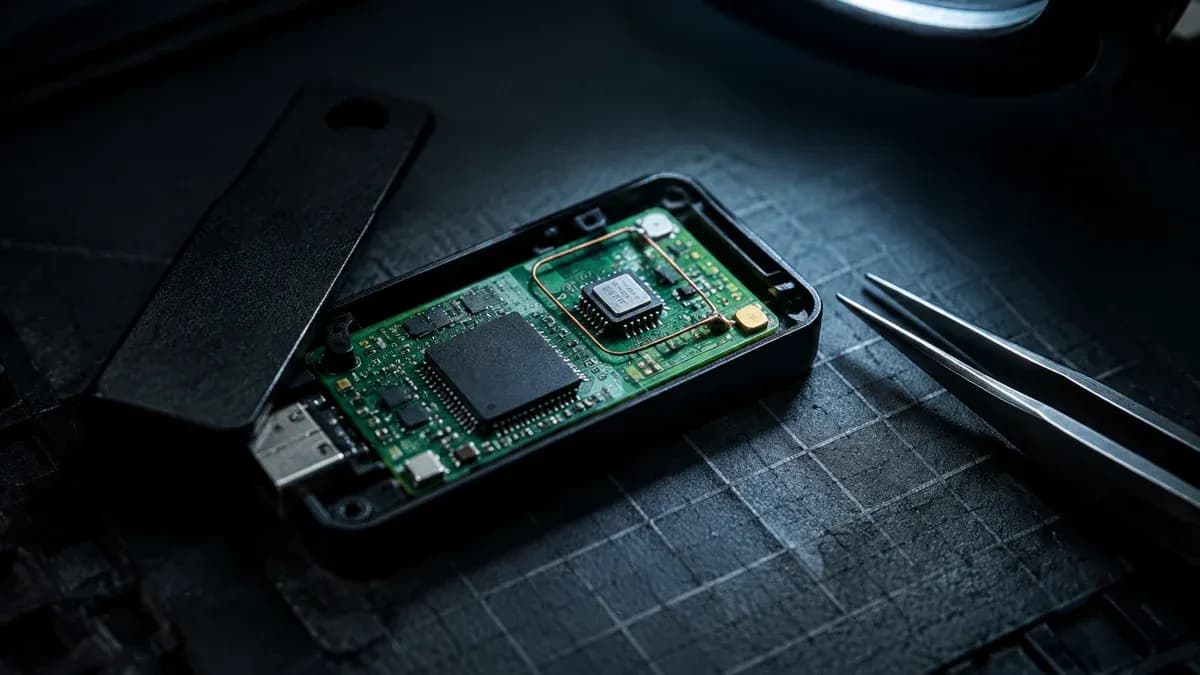
Ledger Hack? $86 Million Drained: What Is Behind the Tampered Wallets From Southeast Asia
Since Friday, Ledger users in Southeast Asia have been reporting empty wallets, and analysts count more than $86 million. Ledger has halted the reseller CryptoBilis. An implant inside the device reportedly reads the seed phrase. What is known, what CZ advises and what you should do now.
September 7, 2026 7:26 PM
Stolen Keys Beat Code Flaws: Why the Private Key Is the Way In for 2026 Crypto Hacks
Compromised private keys overtook smart contract code flaws as the most common attack route for the first time in 2026. What sits behind the shift, and how to check your own setup for its single point of failure.
November 3, 2026 7:48 AM

Name.com domains hijacked: drainer on twelve DeFi sites, approvals from October 31 should be revoked
Attackers redirected the DNS records of at least twelve DeFi sites at registrar Name.com during the night to October 31 and sent visitors to copies running Step Drainer. The damage is between $138,000 and $202,000; anyone who signed there should revoke their approvals now.
September 29, 2026 10:14 AM
Bitget discloses the flaw at its supplier and sets out the timetable for withdrawals
Bitget has disclosed how the attackers reached its withdrawal systems on September 24: through a previously unknown flaw in a security product it had bought in. The second stage of the withdrawal schedule opens today at 08:00 UTC, and for the balance you keep on any exchange the case changes the arithmetic.
November 3, 2026 1:58 AM

Crypto Hack News: Every Attack Since the Binance Hack and How to Stay Safe
Binance, Mercado Bitcoin, BTCPay Server, a WordPress plugin and hijacked WhatsApp accounts: since 29 October hardly a day has passed without a crypto hack. Every case with its status, the loss and the steps that keep you safe now.
October 20, 2023 9:53 PM
How to Keep Crypto Safe
After the $6.3 billion Binance hack: how to keep crypto safe. Hardware wallets compared, wallet scanners such as MetaMask security alerts, the exchange settings that matter and a seven-step checklist.
November 2, 2026 9:43 PM
How to store crypto safely: protect yourself from hacks like the one at Binance
After the $6.3 billion hack at Binance: how to store your cryptocurrencies safely. Hardware wallets compared, wallet scanners such as MetaMask Security Alerts, the key settings on your exchange account and a seven-step checklist.
September 27, 2026 4:40 AM

Crypto Dates in Q4 2026: The Days That Decide Supply, Rates and Tax Duties
From the end of the lock-ups at DoubleZero and Ethena through two rate decisions to the first reporting year under the German Crypto Asset Tax Transparency Act: this calendar lists eighteen dates before New Year's Eve with magnitude and source. You also learn how to tell whether a date will hold at all.
September 25, 2026 1:47 PM

Magic Eden and Limit Break exploit: 530 WETH and thousands of NFTs drained, how to revoke your approvals
A bug in Limit Break's Payment Processor, the protocol behind Magic Eden's former Ethereum marketplace, has been draining NFTs and WETH since Thursday. Our blockchain analysis shows 911 affected wallets. What happened, why hardware wallets do not protect you and which two approvals to revoke now.
September 14, 2026 10:13 AM

Revoke Token Approvals on Ethereum: A Revocation Now Costs 0.52 Cents
Every decentralized exchange, every lending pool and every bridge asks for a token approval, and it keeps running after the swap is done. We counted 5,910 approvals and worked out what a revocation really costs today.
May 23, 2025 6:49 PM
Cetus Hack on Sui Network: What Happened and Why SUI Price Is Crashing
A $260 million exploit on Sui’s top DEX, Cetus Protocol, has triggered panic across the ecosystem. Here's what really happened, how Sui is responding, and what it means for the SUI token price.
September 30, 2026 10:24 PM

$766 Million Lost to Crypto Hacks in One Month: What It Means for Your Custody
CertiK counts around $766.4 million in damage for September 2026, the highest monthly figure of the year. Two incidents carry more than 92 percent of it, and both hit a place where your balance could be sitting too.
September 10, 2026 10:12 AM

Lisk Is Shutting Down Its Blockchain: Why Your Real LSK Deadline Is October 21
The Lisk Chain will be switched off for good on October 31, 2026, and whatever is still sitting on it is lost beyond recovery. Because unstaking takes three days and the bridge to Ethereum at least seven, your window really closes ten days earlier.
August 13, 2026 4:59 PM

Trezor Data Breach: First 13,689 Customers, Then Roughly 67,000 More Exposed
A breach at Trezor shipping partner ShipMonk exposed names, phone numbers and home addresses of 13,689 customers in August; in September Trezor reported roughly 67,000 more in the US. Devices are safe, phishing risk is not.
October 12, 2026 10:40 PM
Shiba Inu and the Fake Airdrop of October 12: “no such airdrop. this is a drainer”
An account on X advertised a supposed SHIB airdrop on October 12. An adviser to the project calls the page a wallet drainer. What is behind it and how to check and revoke your token approvals.
October 6, 2026 4:29 PM

Setting up MetaMask: the twelve words that control your coins
MetaMask is set up in ten minutes, and in those ten minutes you make the decisions that later determine what happens to your balance. This guide walks through installation, the recovery phrase, networks, approvals, fees and the German tax position.
October 2, 2026 4:32 AM

NEAR Intents halts withdrawals after a $3.8 million exploit: here are the reasons
NEAR Intents confirms an exploit of more than $3.8 million and holds deposits and withdrawals on eleven networks. Reimbursement is promised, a date for it is not.
September 26, 2026 7:24 AM

FF Unlock on September 29: What the End of the Lock-Up at Falcon Finance Means
On September 29, 2026, 203 million FF leave the one-year lock-up at Falcon Finance, which is 6.47 percent of circulating supply. What exactly is released, who receives it, and how to recalculate the release schedule yourself instead of trusting a headline.
September 25, 2026 4:11 AM
Bitget Pauses Withdrawals: Where Existing Customers in Europe Stand
Bitget reports unauthorised outflows of around $351.6 million (later revised to $387.5 million) and has suspended withdrawals. For existing customers in Europe, that closes the one route MiCA had left them.
August 31, 2026 10:12 AM

Fake AML Checks for Crypto Wallets: How to Spot the Scam Sites
Fraudulent websites pose as money-laundering screening services for crypto addresses and ask you to connect your wallet. A genuine check needs only the public address, and three of the domains named by Malwarebytes still respond twelve days later.
August 23, 2026 1:16 PM
Address Poisoning: Why Seven of Forty Characters Were Enough to Divert $2 Million
A fake wallet address matched the real one in just seven of forty characters and still intercepted 2 million USDC. Our own count of the affected wallet shows that a third of all counterparties in its history belong to such look-alikes.
August 20, 2026 1:45 AM

Wallet Drainers: What You Really Approve When You Confirm, and How to Take It Back
Most emptied wallets were never hacked. Their owners confirmed it themselves, granting an approval that is unlimited and never expires. What sits behind "Approve" and a signature request, and how to get rid of old approvals.
August 26, 2024 7:44 PM

DOGS Token Major 120% Surge Within Hours Of Its Listing: BUY NOW?
The DOGS token experienced a dramatic surge of over 120% on Binance following its listing. How did the Telegram Open Network (TON) drive this surge?
May 2, 2024 7:23 AM

Top 3 Crypto Hacks that Made Millions
The world of cryptos has seen its fair share of hacks, with some resulting in staggering losses. Here are the biggest 3 hacks since 2020.
November 2, 2026 9:25 AM
Trezor Safe 5 implant reported at CryptoBilis: who needs a new wallet now
Trezor is warning everyone who has ordered from former reseller CryptoBilis since March 2026: an extra board with a cellular module in a Safe 5 is said to read the recovery phrase. Who is affected, why weighing the device does not help, and how to move to a new wallet.
More from CryptoTicker