
Binance Hack Conspiracy Theories: Fact-Checking CZ, Trump and the Midterms
Inside job, staged hack, money for the Trump family, timing before the midterms: we checked the theories about the Binance hack against the evidence. What is documented about Binance, CZ and World Liberty, and what is not.





Which topics should we dive deeper into?
Select what genuinely interests you. Your picks feed directly into our editorial planning.
Crypto news that's actually worth your time.
Weekly. 60 seconds. Carefully curated by our editors: no hype, no promo flood, no spam.
Update 3 November, 01:08 UTC: New in this fact check: the story of the North Korean spy. Since 1 November a claim has been spreading on X that a Binance engineer had an affair with a North Korean agent and left his laptop open as a result. We checked it: Claim 6. Also new: North Korea rejects the FBI's accusations. Every crypto hack since the Binance hack, with status and safety tips, is in Crypto hack news.
Within hours of the largest crypto theft in history, theories spread on social media: the Binance hack was an inside job, Binance staged it to hide losses, money flows to the Trump family are behind it, and the timing five days before the US midterm elections is no coincidence. Our fact check of the evidence available on 31 October 2026 shows: there is no public evidence for any of these claims. Blockchain investigators attribute the attack to North Korea, and US authorities are tracing the stolen funds. What is documented, however, are close business ties between Binance, its founder Changpeng Zhao (CZ) and the Trump family's crypto company World Liberty Financial. They explain why the theories find fertile ground.
Fact check at a glance
- "It was an inside job": no public evidence. TRM Labs attributes the attack with high confidence to North Korea's TraderTraitor group.
- "Binance staged the hack": no evidence. About $3 billion was frozen by third parties within hours; Binance promises a proof of reserves by Monday.
- "CZ bought his way out of prison": false as stated. CZ served his four-month sentence and was released in September 2024; the pardon came in October 2025.
- "The Trump family profits from the hack": no evidence. World Liberty froze 27.8 million USD1 held by the attacker.
- "It is about the midterms": no evidence of a political motive; North Korean hackers steal to finance their state.
- Documented: a $2 billion investment in Binance settled in the Trump family's stablecoin USD1, and a presidential pardon for CZ.
Everything known about the attack itself is in our overview North Korea behind the Binance hack; all major cases are on our page on crypto hacks.
Why the Binance hack fuels conspiracy theories
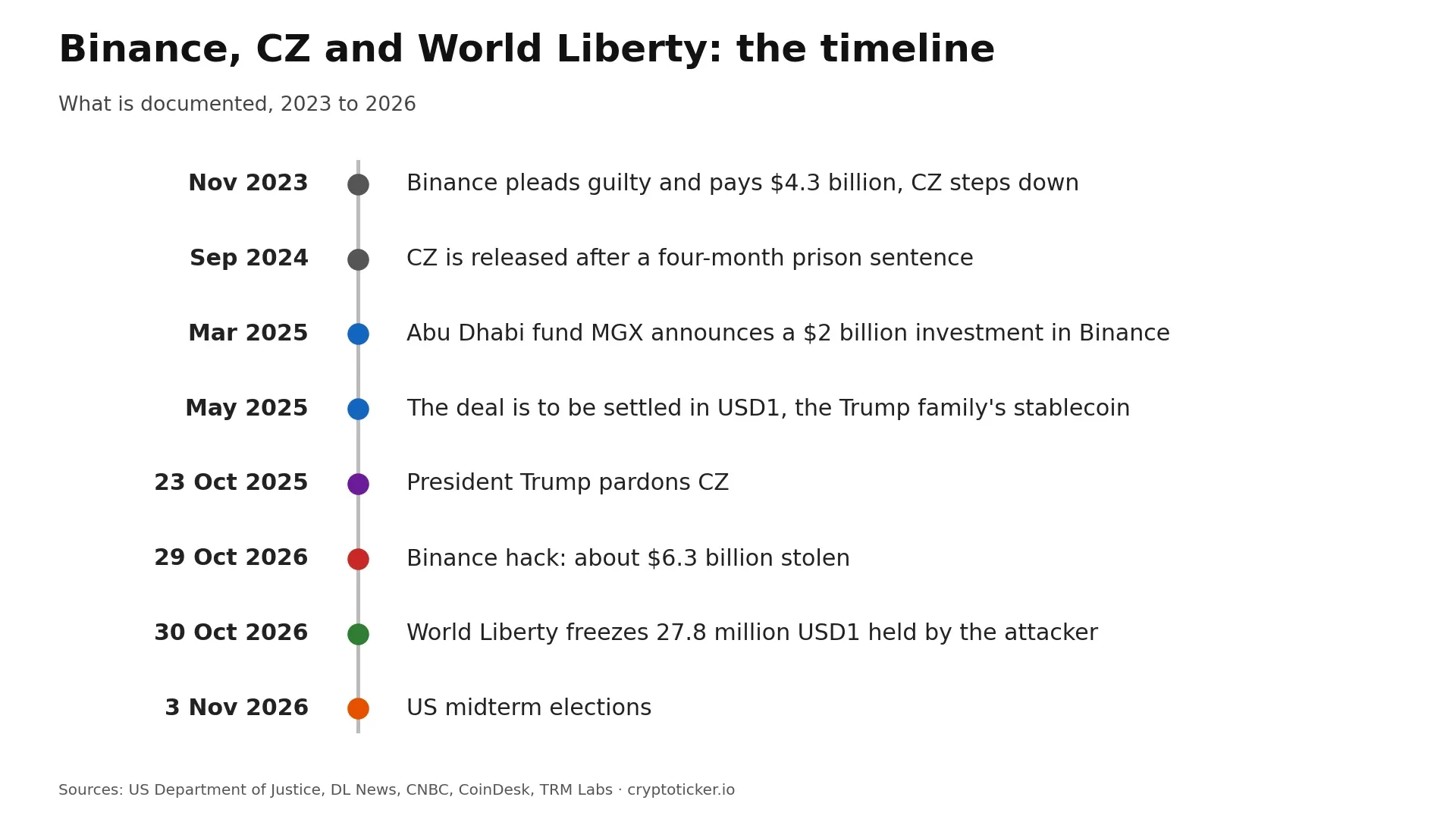
The ground for the theories was prepared long before the hack. In November 2023 Binance pleaded guilty to violations of US anti-money laundering and sanctions laws and agreed to pay $4.3 billion, according to the US Department of Justice. CZ stepped down as CEO, was sentenced to four months in prison and released in September 2024, as DL News summarises.
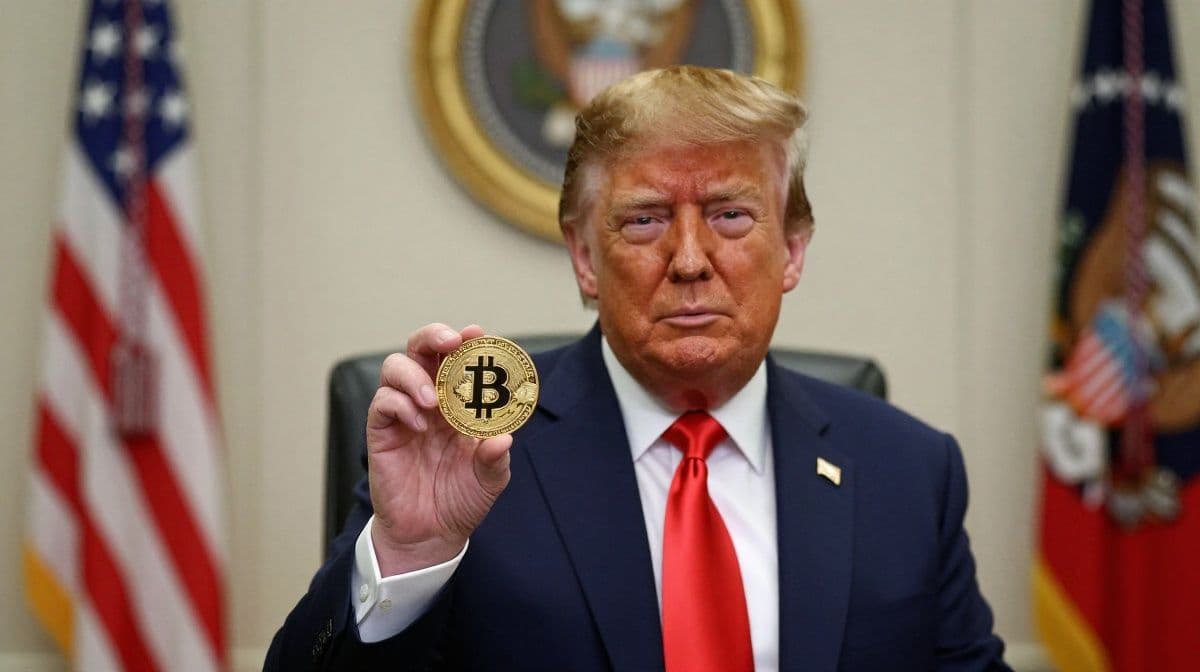
In March 2025 the Abu Dhabi investment firm MGX announced a $2 billion investment in Binance. In May 2025 it emerged that the deal would be settled in USD1, the stablecoin of World Liberty Financial, the crypto company co-founded by the Trump family. According to a Bloomberg report cited by Cointelegraph, Binance also helped to create and promote USD1. On 23 October 2025 President Trump pardoned CZ. Democratic congresswoman Maxine Waters called it "the payoff", Yahoo News reported. Binance's CEO Richard Teng rejected the claim that the exchange had boosted USD1 to obtain the pardon, according to CNBC, and Trump said in an interview that he had "no idea" who CZ was.
 Regulated crypto exchanges compared
Claim 1: the Binance hack was an inside job
Verdict: no public evidence. According to Binance's own first findings, the attackers gained access through a compromised laptop of a DevOps engineer and from there to a service container that authorised withdrawals; there is no sign that private wallet keys were leaked. This is exactly the method of North Korea's TraderTraitor group, which the FBI held responsible for the $1.5 billion Bybit hack in February 2025. TRM Labs attributes the Binance attack to that group with high confidence. Chainalysis sees the same group as the likely perpetrator; its strongest evidence is that the stolen funds were mixed with money from last month's Bitget exploit, as SecurityWeek reports. An employee's device being the entry point does not make it an inside job: TraderTraitor typically targets staff with fake job offers and malicious files. Gizmodo sums it up: there is no public evidence of an inside job.
Claim 2: Binance staged the hack to hide losses
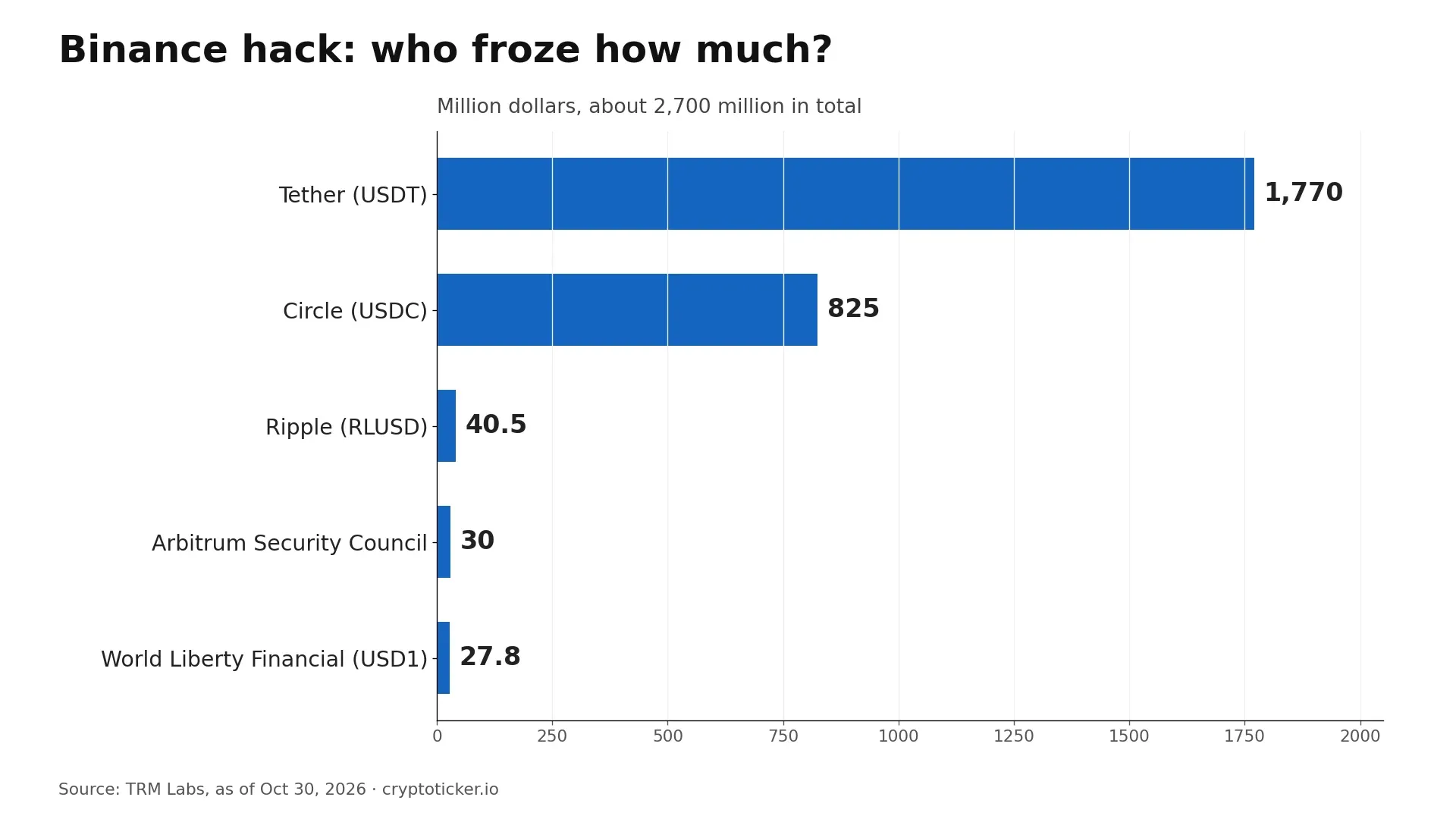
Verdict: no evidence, one point still open. A staged hack would have to explain why third parties froze about $3 billion of the loot within hours: Tether and Circle alone blocked more than $2.3 billion, Ripple, the Arbitrum Security Council and World Liberty smaller amounts, according to TRM Labs. The US Secret Service says it is working with private partners to "identify, freeze, trace and recover" the funds, NBC News reports. Binance says it has set aside $6.34 billion of company funds to cover the losses. Rumours that Binance is insolvent are not new: earlier in 2026 a forged cease-and-desist letter circulated, which Binance publicly called a fake, as FinanceFeeds reported. The open point: co-CEO Teng has promised a full proof of reserves by Monday, 2 November. Only then can the claim be checked against figures.
Claim 3: CZ bought his way out of prison
Verdict: false as stated, the business ties are real. CZ did not get out of prison through a deal. He served his four-month sentence and was released in September 2024, more than a year before the pardon. The pardon of 23 October 2025 erased the conviction, it did not end a prison term. The money he paid was part of the 2023 settlement: $4.3 billion from Binance and a $50 million fine for CZ personally, both public. What critics see as a quid pro quo is the order of events in 2025: the $2 billion MGX investment settled in USD1, then the pardon. Binance, MGX and CZ deny any connection; Democratic senators led by Elizabeth Warren have asked the companies and the government for documents. There are no charges.
 Hold your coins yourself: hardware wallets compared
Claim 4: the Trump family profits from the hack
Verdict: no evidence, the facts point the other way. World Liberty Financial froze 27.8 million USD1 in the attacker's receiving wallet on Thursday evening and then blocked USD1 in the compromised Binance wallet, according to CryptoSlate. President Trump said on Friday that his administration was "looking at" the incident and that he was reassured by Binance's pledge to reimburse losses. A company that freezes the attacker's money is a poor candidate for a beneficiary. Indirectly, World Liberty does depend on Binance, because most USD1 activity takes place there, according to blockchain data; a weakened Binance would hurt the Trump family's stablecoin rather than help it.
Claim 5: the timing before the midterms is no coincidence
Verdict: no evidence of a political motive. The midterm elections on Tuesday, 3 November, decide control of Congress and therefore the pace of crypto regulation. The crypto industry is spending heavily: the super PAC Fairshake backs 32 House candidates from both parties, CNBC reported. But North Korea's hacking groups do not follow the US election calendar. They steal to finance their state and have struck at all times of the year, from Bybit in February 2025 to Bitget in September 2026. In Washington, the hack is used politically after the fact: CFTC chairman Michael Selig cited it to promote his plan for federal oversight of offshore exchanges, Decrypt reports. Using a crisis is not the same as causing it.
Many readers also asked whether the hack and Friday's crash on Wall Street are connected. We have checked that separately: Binance hack, then a stock market crash: coincidence or connection?
Claim 6: a Binance engineer fell for a North Korean spy
Verdict: no evidence, and the supposed source never said it. On 1 November at 14:03 UTC the account AlphaWire on X spread the claim that a Binance DevOps engineer had a romantic relationship with a North Korean agent and left his laptop unattended on the day of the attack. The post itself calls the allegations unverified and had passed 800,000 views by 3 November. A Community Note now sits below it: the details are unverified and falsely attributed to the investigator ZachXBT, and they appear neither in his posts nor in official reports.
Binance co-founder Yi He replied less than two hours later that the story was more dramatic but not true, and that ZachXBT had not said it. The only confirmed part is what Binance wrote in its first update on 30 October: a DevOps engineer's laptop was compromised, which gave the attacker access to a service container and let him submit unauthorised withdrawals. How the device was infected, the exchange has not said. ZachXBT himself wrote about frozen funds and the mixing with loot from the Bitget attack, not about an employee's private life.
Why the story still sticks: the method has a true core. Back in 2017 North Korean hackers approached staff at South Korean crypto exchanges through fake Facebook profiles of attractive women, the news agency AFP reported, citing the intelligence service. Today the bait is usually a fake job offer: the FBI warned in 2024 that these groups pick out employees with access to critical systems and send them coding tests or programs laced with malware. So the lesson of the rumour is not an engineer's love life but your own inbox: a file from a job offer, a chat or a new acquaintance never belongs on the computer that runs your wallet or your exchange account.
Since 2 November North Korea has rejected the accusations. Kim Yo-jong, sister of leader Kim Jong Un, called the attribution a trite provocation by the US, according to the BBC. That does not change the FBI's assessment, which names the group TraderTraitor; Pyongyang has denied such accusations for years. What is known about the attackers is in North Korea behind the Binance hack?.
What would change the picture
- Proof of reserves: promised by Monday, 2 November. Gaps in the reserves would be a real finding.
- Technical report: Binance has announced a detailed analysis of the attack.
- Official attribution: the FBI has so far only confirmed that it is involved; an attribution like the one after Bybit would settle the question.
- Senate inquiries: documents on the MGX deal and the pardon could clarify the business ties.
Our view: scepticism towards Binance is understandable given its history, and the ties between the exchange and the Trump family deserve scrutiny. But the evidence on the hack points to an external attacker, not to a plan. If you keep coins on an exchange, the lesson is a different one: only coins in your own wallet are out of reach of an exchange hack; our hardware wallet comparison shows the options.
FAQ: Binance hack conspiracy theories
Transparency note: This article was produced with the assistance of artificial intelligence and reviewed by our editorial team before publication. All figures and claims were checked against the primary sources linked in the text. The feature image was generated with AI.
Related articles
- North Korea Behind the Binance Hack? Everything We Know About the $6.3 Billion Theft
- World Liberty Financial: Trump's WLFI Stake Locked Until 2028, Voting Rewards From October
- Trump-Linked WLFI Token Goes Live: Here’s What to Know
- Binance hack: FBI names North Korea and lists more than 600 addresses
- World Liberty Financial US Trust Bank: What the Abu Dhabi Report Leaves Open
Which topics should we dive deeper into?
Select what genuinely interests you. Your picks feed directly into our editorial planning.
Crypto news that's actually worth your time.
Weekly. 60 seconds. Carefully curated by our editors: no hype, no promo flood, no spam.

October 29, 2026 9:54 PM
Biggest Crypto Hack Ever? Binance Joins the List of Exchange Hacks
At about $2.8 billion the suspected Binance hack would be the largest theft a crypto exchange has ever suffered. The biggest crypto hacks at a glance, why exchanges are hit more often, what Tornado Cash has to do with it and what past cases meant for prices.
October 19, 2026 7:31 PM

USD1 stablecoin loses $401 million: almost $200 million traces back to a single address
The market capitalisation of the dollar stablecoin USD1 has fallen 9.1 percent in two weeks without the price losing its dollar peg. Just under $200 million of the redemptions came from a single address, according to Onchain Benchmark, and its owner is unknown.

April 22, 2026 8:42 AM

Justin Sun Sues World Liberty Financial Over Frozen $WLFI Tokens
Tron founder Justin Sun filed a lawsuit against World Liberty Financial, alleging his $WLFI tokens were wrongfully frozen.

October 13, 2024 12:30 PM

Trump-Backed World Liberty Financial Starts Token Sale Next Week
The WLFI token sale is just around the corner, open exclusively to those on the project's whitelist.
September 17, 2024 11:36 AM
Trump Family-Backed World Liberty Financial Confirms Token Launch
Project officials confirmed in a highly anticipated X Spaces session that their non-transferable governance token will be launched under an SEC Regulation D exemption.
September 16, 2026 7:30 PM

Is World Liberty Financial a Good Buy at the Current Price?
Is World Liberty Financial a good buy? WLFI trades far below its 200-day average and only just above its twelve-month low. What the chart position, the RSI and the supply overhang mean for an entry.

December 26, 2025 1:50 PM
Breaking: Trust Wallet Chrome Extension Hack Drains $7M, Full Reimbursements Promised
A supply-chain attack hit Trust Wallet’s Chrome extension, draining $7M from users. Binance’s CZ says all victims will be reimbursed.
February 21, 2025 9:55 PM
Bybit Hack Revealed: Here's the Mastermind Behind the $1.46 Billion Theft
The Bybit hack has been traced back by the blockchain investigator ZachXBT, with conclusive evidence linking the hackers to the $1.46 billion theft. Full details revealed...
January 21, 2025 6:44 PM

Banks Are READY Yet Awaiting Crypto Regulations Under Trump's Pro-Crypto Administration, Says Bank of America CEO
Bank of America CEO Brian Moynihan discusses Trump’s economic policies and the banking industry’s readiness to adopt cryptocurrency. But with no regulations to date, what about the future of Crypto?
October 29, 2026 9:40 PM

Crypto Crash After Binance Hack: $628 Million Liquidated in One Hour
At 20:24 UTC a Binance hot wallet was drained of about $2.8 billion. Within an hour Bitcoin fell below $79,000 and BNB lost 6.3%. Here is the minute-by-minute timeline, the prices of all major coins and what could come next as Asia wakes up.
October 30, 2026 1:50 AM

Binance Hack On-Chain Analysis: 50 Signatures, 197,460 ETH and $2.83 Billion Frozen
What really happened in the Binance hack? We analyzed the blockchain ourselves: 50 signatures in one transaction, $2.83 billion frozen, 197,460 ETH with the attacker and an Aave trick. Plus the key voices from X and our conclusion.
October 20, 2026 10:27 PM
Ethereum from the Drift hack: the attacker moves up to $61 million into Tornado Cash
Wallets attributed to the Drift attacker forwarded between 13,400 and 25,700 ether to Tornado Cash on October 20 after two quiet months. Around 81,500 ether still sit with the attacker.
October 5, 2026 1:29 AM
Chainalysis attributes $387 million from the Bitget hack to North Korea: what matters now for investors in Germany
The analytics firm Chainalysis attributes the theft of around $387 million at Bitget to actors with ties to the DPRK and puts the annual total above one billion dollars. What that means for custody, choice of exchange and record-keeping in Germany.
September 19, 2026 10:11 PM
North Korean Hackers Drain 7,000 Crypto Wallets: What to Check on Job Offers and Coding Tests
Seven agencies, among them Germany's BND and BfV, warn about the WaterPlum group: 30,000 infected machines, more than 7,000 drained wallets. The bait is a job offer, the trap a coding test.
October 24, 2025 9:09 AM

Will Rising Inflation Spark a WLFI Comeback or Sink It Further?
Inflation is back at 17-month highs, and the Fed’s next move could flip the entire crypto market.
August 23, 2025 11:00 PM
OKX Lists $WLFI Pre-Market Perpetuals as Tate Brothers Jump In
OKX has just announced the listing of $WLFI pre-market perpetuals with up to 5x leverage. The move has already attracted big names like Tristan Tate.
October 30, 2026 9:14 AM

How Much Would It Take to Bankrupt Binance? The $6 Billion Hack Explained
Binance lost $6.3 billion in the biggest crypto hack ever. How much would it take to bankrupt the exchange, and what does it mean for the crypto market?
October 30, 2026 3:32 PM

Binance puts the hack at $6.3 billion: what you can do now
Binance names a cause itself for the first time: a compromised laptop belonging to a DevOps engineer is said to have opened access to a service container, while private wallet keys are said not to have leaked. The exchange estimates the total damage at around $6.3 billion, with about $3 billion considered frozen.
October 29, 2026 10:40 PM
Binance Withdrawals After the Hack: Solana and XRP Paused, Bitcoin and Ethereum Open
Binance has confirmed the hack: co-founder Yi He says the exchange will cover all losses, and deposits and withdrawals are temporarily suspended. What it means for users, which networks were already paused and what to watch out for now.
November 1, 2026 5:07 AM
Binance Reopens Withdrawals: 15 Networks First, 95% of Stolen Funds Replaced
Three days after the $6.3 billion hack, Binance is reopening withdrawals in phases. Phase one starts on 1 November between 06:00 and 09:00 UTC with Bitcoin, Ether, USDT, USDC, BNB, Solana, XRP and eight more networks. What customers need to know now.
October 31, 2026 11:36 PM
Tron Price Falls Below Pre-Hack Level: Binance Attacker Still Holds 475 Million TRX
TRX has erased its post-hack spike and trades at $0.302, below the $0.331 before the Binance attack and the lowest since March. The attacker still holds about 475 million TRX and sells them every 96 seconds. Why the market discounts ten times the stash, and which levels matter now.
October 31, 2026 12:36 AM
Binance Hack, Then a Stock Market Crash: Coincidence or Connection?
The largest crypto theft in history on Thursday evening, Wall Street's worst day since June on Friday. Are the Binance hack and the stock market crash connected? Our analysis of timeline, sizes and money flows, and where crypto and stocks really meet.
September 27, 2024 12:41 PM

Binance Founder CZ Zhao To Be Released on Friday?
Did you know? If an inmate's release date falls on a weekend or holiday, the Federal Bureau of Prisons may release them on the previous weekday
November 3, 2026 1:58 AM

Crypto Hack News: Every Attack Since the Binance Hack and How to Stay Safe
Binance, Mercado Bitcoin, BTCPay Server, a WordPress plugin and hijacked WhatsApp accounts: since 29 October hardly a day has passed without a crypto hack. Every case with its status, the loss and the steps that keep you safe now.
October 31, 2026 12:37 AM

Binance Alternatives: 4 MiCA-Licensed Exchanges Compared
After the hack of 29 October 2026, many Binance customers are looking for a new home for their coins. Bitpanda, Kraken, Bitvavo and Coinbase are licensed under MiCA. Here are their fees, supervisors and a five-step guide to moving.
October 29, 2026 9:38 PM

Binance Hack: Around $2.8 Billion Drained From a Hot Wallet
On Thursday evening, roughly $2.8 billion left the Binance wallet “Binance 14” within minutes. The attacker had tied the wallet to their own contract via EIP-7702. Tether and Circle have frozen about $2.4 billion, and Binance says it is investigating.
More from CryptoTicker